Home Blog Page 259

Lawmakers Warn Clearview AI Could End Public Anonymity

Lawmakers Clearview AI public anonymity

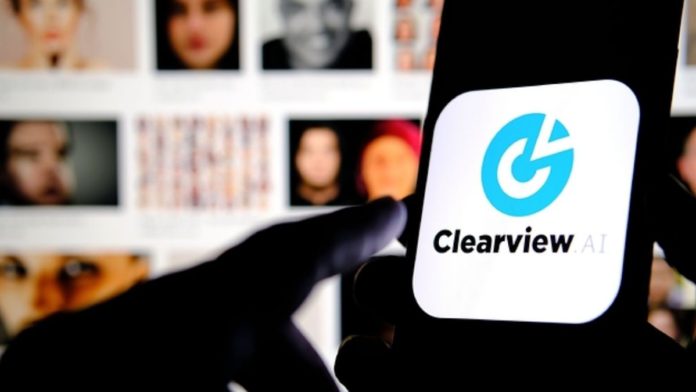
Lawmakers of the United States claim that artificial intelligence-powered facial recognition system developing company Clearview AI could possibly end public anonymity if the federal government does not ditch it. 

Recently, democratic senators are stepping up their efforts to limit the federal government’s collaboration with the infamous surveillance company Clearview AI. Clearview Ai has been into multiple controversies over the years regarding its practices that violate citizens’ right to privacy. 

Despite all criticism, the company was awarded a US patent for its one-of-a-kind technology earlier this month. Lawmakers said, “In conjunction with the company’s facial recognition capabilities, this trove of personal information is capable of fundamentally dismantling Americans’ expectation that they can move, assemble, or simply appear in public without being identified.” 

Read More: Python Libraries for Machine Learning

The lawmakers demanded that the Departments of Justice, Defense, Homeland Security, and the Interior stop using the company’s technology through multiple letters sent on Wednesday. 

According to them, Clearview Ai poses a massive threat to the security of citizens regarding their privacy. Senators Ed Markey and Jeff Merkley, along with Representatives Pramila Jayapal and Ayanna Pressley, signed the letters. 

Lawmakers suggest that Clearview AI’s collaborations with government agencies are particularly concerning because citizens would start to believe that their government is spying on them. Hence, they would be less likely to engage in civic discourse or other activities protected by the First Amendment. 

United States-based artificial intelligence-powered facial recognition solution developer Clearview Ai was founded by Hoan Ton-That and Richard Schwartz in 2017. The firm specializes in providing a research tool primarily used by several law enforcement agencies to identify perpetrators and victims of crimes. To date, the company has raised more than $38 million over three funding rounds from investors, including Kirenaga Partners, Hal Lambert, and many more. 

CEO and Co-founder of Clearview AI, Hoan Ton-That said, “We are proud of our record of achievement in helping over 3,100 law enforcement agencies in the United States solve heinous crimes, such as crimes against children and seniors, financial fraud, and human trafficking.”

Advertisement

Python Libraries for Machine Learning

A study suggests that the Machine Learning market size is expected to grow from $8.81 Billion by 2022, at a CAGR of 44.1%. Machine learning is a subset of artificial intelligence that focuses on developing systems that can learn without human supervision or assistance. Python as a programming language focuses on code readability, functionality, and scalability, making it the most preferred language for developing machine learning models. Machine learning models require continuous data processing, and Python libraries for machine learning such as pandas, TensorFlow, Keras, NLTK, etc., help developers access, handle, analyze, and transform data.  

Python, a general-purpose programming language, was released in 1991 and designed to optimize the code readability. It’s ranked #2 in the list of best programming languages by Ubuntu Pit. One of the features that make Python stand out as the best programming language is that it’s open-source and has an extensive set of libraries. These inbuilt libraries can be used for data mining, data manipulation, and machine learning. 

This article will cover the top 10 Python libraries for machine learning:

SciPy

SciPy is the top Python machine learning library for scientific and analytical computing. It contains different modules for linear algebra, integration, special functions, signal and image processing, Fast Fourier transform, Ordinary Differential Equation (ODE), optimization, statistics, etc., other computational tasks in science and analytics. The multi-dimensional array provided by NumPy is the underlying data structure that SciPy uses for array manipulation subroutines. It is also perfect for image manipulation.

SciPy comes with various sub-packages that offer functions and tools for interpolation, linear algebra, signal processing, algorithms for nearest neighbors, convex hulls, numerical integration routines, etc. 

Read more: Top Python Image Processing Libraries

Scikit-learn

Scikit-learn, an extension of SciPy, is one of the most popular machine learning libraries for classical ML algorithms. It is used for data mining and analysis, making it an excellent tool for developers starting their ML journey. Scikit-learn is built on two basic Python libraries: NumPy and SciPy. It supports most of the supervised and unsupervised learning algorithms, providing an easy and robust structure that helps ML models learn, transform, and predict with the help of data. 

Scikit-Learn provides various functionalities that help create classification, regression, and clustering models for applications like preprocessing, model assessment, statistical analysis, and much more. It has a consistent, easy-to-use interface that is suitable for designing pipelines. However, Scikit-learn is heavily dependent on the SciPy stack, and it can’t employ categorical data to algorithms.

Theano

Theano is one of the popular machine learning libraries in Python that enables users to define, evaluate and optimize mathematical expressions with the help of multi-dimensional arrays. Developers use it to detect and diagnose errors with unit-testing and self-verification. However, it’s more efficient on GPU to perform complex computations than CPU. 

Theano is a powerful Python machine learning library partly because of its integration with NumPy. Due to this integration, it can be used in large-scale computationally intensive scientific projects. However, Theano has a steep learning curve, and it’s comparatively slower in the backend. 

TensorFlow

TensorFlow, one of the best Python libraries for machine learning, was developed by the Google Brain team at Google for high-performance numerical computations. It’s one of the best open-source Python libraries for machine learning that involves defining and running computations involving tensors. Various startups and companies since have started using TensorFlow in their technology stacks. It is a flexible ecosystem community and tools that allow, in general, to build and deploy machine learning-powered solutions. With TensorFlow, companies can put their models in production mode in the cloud or on-premises and the browser or on-device.

It can visualize ML models using TensorBoard and implement reinforcement learning. However, its computational graphs are comparatively slower when executed. 

Keras

Keras is a Python library used in machine learning that provides an interface of TensorFlow Library focused on neural networks that can also run on CNTK and Theano. It is a user-friendly library that allows fast and easy prototyping and can run seamlessly on both CPU and GPU. Keras is a portable framework that also provides multi-backend support. 

Keras is among the best Python libraries for machine learning that is highly compatible with other third-party tools, libraries, and low-level deep learning languages. This Python library for machine learning has tools like neural layer, objectives, batch normalization, dropout, and pooling for creating a neural network. 

PyTorch

PyTorch is an open-source, popular machine learning library for Python based on Torch; an open-source ML library implemented in C with a wrapper in Lua. It’s one of the Python libraries for machine learning that comes with an extensive choice of tools that support Natural Language Processing (NLP), Computer Vision, and many more ML programs. PyTorch allows developers to perform computations on Tensors with accelerated processing via GPU acceleration and it’s easy to integrate with the rest of the Python ecosystem. Features such as distributed training and hybrid frontend are reasons for Pytorch popularity. It’s also famous for its quick execution speed and the capability of handling powerful graphs. 

NLTK

NLTK or Natural Language Toolkit is one of the Python libraries used in machine learning to work with natural language processing in Python. This library supports various text processing such as tokenization, software removal, stemming, POS tagging, classification, lowercase conversion, etc. It is a suite of programs and libraries for statistical and symbolic natural language processing for the English language. NLTK is one of the Python libraries for machine learning that can also be used for analyzing reviews, text classification, sentiment analysis, text mining, etc. NLTK offers a wide range of linguistic resources such as WordNet, Word2Vec, and FrameNet. However, NLTK can only split text by sentences and can’t analyze the semantic structure. In addition, it doesn’t support neural network models.

Pandas

Pandas is a popular Python machine learning library that provides high-level data structures and a wide variety of tools for data analysis. It was developed specifically for data extraction and preparation. It also provides various inbuilt methods for data manipulation such as groping, combining, iterating, integration, reindexing, and filtering. It uses DataFrames, a handy and descriptive data structure, to create models for implementing functions. Pandas also provide data writing and reading using sources such as HDFS and Excel. It can be implemented in a wide range of areas like education and business because of its optimized operation. 

It supports operations such as Aggregations, Re-indexing, Concatenations, Iteration, Sorting, and Visualizations. One of the outstanding features of this top Python machine learning library is translating complex data operations using one or two commands. Pandas have many inbuilt methods for grouping, combining, and filtering data. However, it has a very steep learning curve and poor 3D matrix compatibility.

PyCaret

PyCaret is a top Python machine learning library that is open source and low code. It is an end-to-end ML and model management tool that increases the efficiency of an experiment cycle and increases productivity. With PyCaret, developers can replace hundreds of lines of code with a few lines, making experiments exponentially faster and more efficient. It allows the model to be evaluated, tuned, and compared to a given data set with just a few lines of code. 

NumPy

NumPy is one of the top machine learning Python libraries that Keras and TensorFlow use to implement operations on tensors. It is an interpreter and interactive library that can execute complex mathematical operations on extensive multi-dimensional data in a simple manner. It also offers features like discrete Fourier transformation, basic linear algebra, sorting and selecting capabilities, and support for n-dimensional arrays. 

NumPy has tools for integrating Fortran, C, and C++, making it one of the most popular Python libraries for machine learning among the scientific community. It has a massive community of programmers who share experiences and help developers resolve issues. However, the major drawback is that the data types are not Python native, increasing cost when entities have to be translated back to Python relevant entities. 

Conclusion

In this blog, you learned the best Python libraries for machine learning. Each machine learning Python library has its functionalities, features, and disadvantages. While Keras allows fast calculations and prototyping, Scikit-learn is used for basic ML algorithms like regression, classification, clustering, etc. NLTK is the top Python machine learning library for natural language processing, and TensorFlow works with deep learning to train and employ artificial neural networks. You should take the functionalities and routines of each library into account before selecting the suitable Python machine learning library for designing your models. 

Advertisement

Actable AI Raises $1.2 million in Pre-seed Funding

Actable AI Raises $1.2 million

Artificial intelligence and machine learning company Actable AI raises $1.2 million in its pre-seed funding round led by London-based venture capital firm, Begin Capital. 

Other investors like Charlotte Street Capital, Malta Enterprise, and several more from the United Kingdom, Singapore, and the United States also participated in the funding round. 

Actable AI wants to use the newly raised funds to make data analytics more accessible for one billion spreadsheet users across the world. 

Read More: Refinitiv launches AI assistant in Microsoft Teams for Market Insights

Actable AI allows spreadsheet users with no prior knowledge of statistics and programming to analyze data using advanced AI-based analytics directly in Google Sheets and Excel. Additionally, the company plans to launch its Google Sheets Add-on, Excel Plugin, and several other plugins this year. 

Partner at Begin Capital, Alex Menn, said, “The computing power and learning ability of software may fundamentally disrupt the role of experts. Various software applications will enable an average worker to replicate the skills of a professional. Actable AI is standing at the intersection of two beloved VC trends: the rise of new professions and AI no-code solutions.” 

He further added that the Begin Capital team is delighted to assist the founders at this early stage of their firm, and they are very optimistic about the future prospects. Actable AI intends to democratize a wide range of analytics jobs, making them available to everyone, everywhere, rather than just data experts. 

United Kingdom-based artificial intelligence company Actable AI was founded by Armen Poghosyan and Trung Huynh in 2020. The firm specializes in providing a cloud-based, no-code, powerful data analytics platform. 

Actable AI’s platform enables millions of analysts to quickly clean and analyze their data using our cutting-edge AI and deep learning technologies without having to program. 

CEO and Co-founder of Actable AI, Armen Poghosyan, said, “We are really excited about this funding as it will allow us to continue to grow and bring advanced analytics to companies all around the world. It will also help us to democratize the data science market, making it easier for SMEs and business professionals to use their data to tackle real-world issues.”

Advertisement

PUBG Creator Krafton to build AI-powered Virtual Humans

Krafton build AI Vitual Humans

World’s one of the most popular battle royale games PUBG’s developer Krafton plans to build new artificial intelligence-powered virtual humans. This is the company’s first attempt at entering the metaverse environment. 

Krafton will concentrate on developing lifelike virtual avatars for usage in games, eSports, and as virtual influencers and singers. Krafton plans to use hyperrealism character manufacturing technology to build digital avatars of humans. 

To further improve the communication capabilities of virtual humans, the company intends to leverage various technologies, including text-to-speech, speech-to-text, voice-to-face, and artificial intelligence. 

Read More: Tesla Excluded a Microchip required for Autonomous Driving in some of its China-made vehicles

Creative Director at Krafton, Shin Seok-jin, said, ”We are geared up for realizing an interactive virtual world (Metaverse) in stages and will continue to introduce more advanced versions of virtual humans and content based on the belief in the infinite scalability of such technologies.” 

According to the company, its virtual human will come with multiple realistic features like motion-captured dynamic movements, pupil movements, a wide range of facial expressions, and skin hair. Recently, Krafton announced it invested $2.5 million in Seoul Auction Blue and $4.1 million XBYBLUE. 

Additionally, the company also signed an agreement to develop non-fungible token (NFT) oriented projects. Krafton CEO CH Kim earlier said that the business would actively harness new technology to provide unique experiences to gamers and creators. As the consent of Metaverse is gaining popularity, multiple companies across the globe are making their moves to tap into this new technology. 

Krafton says that digital humans will play an essential role in the Metaverse, representing real people in the virtual world. At first, virtual avatar customization choices would be limited to outfits and skins. The company believes that as Metaverse becomes more accessible to people, the demand for virtual avatars will skyrocket.

Advertisement

Refinitiv launches AI assistant in Microsoft Teams for Market Insights

Refinitiv Microsoft Teams AI Assistant

Financial markets data and infrastructure providing company Refinitiv announces the launch of its new AI assistant, Refinitiv AI Alerts, in Microsoft Teams for delivering impactful market insights. 

The company has partnered with human-centered artificial intelligence company ModuleQ to develop the new Ai assistant. Refinitiv AI Alerts empower financial professionals with personalized, timely, and actionable market insights. 

ModuleQ’s patented algorithms and Refinitiv’s Intelligent Tagging service create user-specific content suggestions and alerts, which are then linked back to Refinitiv Eikon and Workspace for further analysis and action. 

Read More: NVIDIA Cancels the Acquisition of Arm

Refinitiv AI Alerts asks for permission to learn the user’s specific priorities from their Microsoft 365 interactions, keeps that information private, and suggests content based on planned meetings and frequent email chats. 

“We welcome partner solutions such as Refinitiv AI Alerts, which combine the best of market-leading data, AI, and workflow to provide our mutual customers with even more value from our relationships,” said Corporate VP of Worldwide Financial Services at Microsoft, Bill Borden. 

The tool can seamlessly provide professionals with a competitive edge in their research and consumer interactions. London Stock Exchange Group’s subsidiary Refinitiv was founded by David Craig in 2018. The firm specializes in providing insights, trading platforms, and open data and technology platforms for the finance industry. Refinitiv has a customer base of more than 40,000 institutions spread across 190 countries worldwide. 

Group Head of Data and Analytics at London Stock Exchange Group, Andrea Remyn Stone, said, “Refinitiv AI Alerts brings critical content and insights to Refinitiv’s customer base within this platform, with the goal of allowing users to discover and act on timely information across Teams, Refinitiv solutions and Microsoft 365 seamlessly.” 

She further added that Microsoft Teams has become a must-have platform for workers in the financial services industry, and institutions are quick to adopt it. Therefore the newly launched Refinitiv AI Alerts will be very beneficial for Teams users.

Advertisement

Human Brain’s secret to lifelong learning can now come as Hardware for AI

AI hardware learning

Researchers from Purdue University recently demonstrated a method that allowed microchips to dynamically rewire themselves like the human brain to take in new data. The newly demonstrated technology allows artificial intelligence to learn over time. 

It is a groundbreaking technology that can reshape the future of artificial intelligence and other high-end technologies. 

The human brain constantly establishes new connections between neurons to facilitate learning. In contrast, the circuits on microchips do not change. 

Purdue University researchers have created unique hardware that electrical pulses can reprogram on demand. It is a tiny rectangular device made with a hydrogen-sensitive material named perovskite nickelate. 

Read More: University of Florida partners with IBM to solve Society’s Biggest Challenges

Shriram Ramanathan, a professor in Purdue University’s School of Materials Engineering, said, “The brains of living beings can continuously learn throughout their lifespan. We have now created an artificial platform for machines to learn throughout their lifespan.” 

Ramanathan is an expert in figuring out how to make materials that resemble the brain for better computing. According to him, the device’s adaptability will allow it to do all of the activities required to create a brain-inspired computer. 

“If we want to build a computer or a machine that is inspired by the brain, then correspondingly, we want to have the ability to continuously program, reprogram and change the chip,” said Ramanathan. 

The device can shuffle a concentration of hydrogen ions in nanoseconds by applying electrical pulses at varying voltages. This helps create states that the researchers found could be mapped out to corresponding activities in the brain. 

The technology can act similar to a connection between neurons called synapses to store information in complicated neural circuits, with less hydrogen at that place. In this study, researchers also demonstrated that as new problems arise, a dynamic network may “pick and choose” which circuits are most suited to solving them.

Advertisement

Tesla Excluded a Microchip required for Autonomous Driving in some of its China-made vehicles

Tesla exclude microchip China vehicles

Self-driving car manufacturing company Tesla revealed that it opted to remove a few microchips from some of its vehicles that are required for fully autonomous driving. 

In Tesla’s Model 3 and Model Y vehicles, the manufacturer removed a few electrical control components from the steering wheels. 

According to a CNBC report, Tesla was forced to do this due to the ongoing global chip shortage, and It was under pressure to meet its sales objective for the fourth quarter. Two Tesla employees and internal correspondence seen by CNBC revealed this information. 

Read More: DoD selects Veritone for $249 million deal to Boost AI Capabilities

The removal of microchips was meant for cars in the Chinese market, but it is still unclear whether they were also made in cars for other markets. According to the report, a few vehicles might have also reached other countries like Germany, Australia, the United Kingdom, and others. 

Tesla chose not to inform concerned customers about the chip’s removal as it would not pose a safety risk because it is part of a pair and serves as a backup for existing Tesla driver-assist systems. The affected vehicles will not be able to use Level 3 autonomous driving when they are updated ‘over-the-air.’ 

In order to make the affected vehicle capable of fully autonomous driving, the company has to retrofit the missing components in the cars. Tesla owners can currently only use Level 2 autonomous driving features, which do not require the dual-control electronic steering system for its functioning. 

CEO of Tesla, Elon Musk, said, “My personal guess is that we’ll achieve full self-driving this year at a safety level significantly greater than a person. So the cars in the fleet essentially becoming self-driving via a software update, I think, might end up being the biggest increase in asset value of any asset class in history.”

Advertisement

University of Florida partners with IBM to solve Society’s Biggest Challenges

University of Florida partners IBM

The University of Florida (UF) partners with technology giant IBM to tackle multiple society’s biggest challenges. 

As a part of this partnership, the University of Florida and IBM will jointly launch a comprehensive skills program aimed at extending UF’s vision of being a global leader in artificial intelligence, data science, fintech, and other related technologies. 

This new development is a step towards the University’s goal of becoming the nation’s foremost AI University. According to the University, this partnership will be very beneficial in transforming the country’s workforce and boosting research capabilities. 

Read More: Apple acquires Artificial Intelligence Startup AI Music

The multi-year partnership with IBM includes plans to develop at least one new AI degree course and also online courses, tools, lecturers, and case studies from IBM’s Academic Initiative. 

President of the University of Florida, Kent Fuchs, said, “By deepening our progress in artificial intelligence and other critical information technology, it will give our professors, scientists and students the right tools at the right time — benefiting everyone from teachers preparing schoolchildren for career success to doctors providing patients the very best health care to farmers growing more sustainable, healthier, productive crops.” 

He further added that this new partnership with IBM puts them on the fast track to becoming a global leader in assisting the world in addressing the most significant challenges of the twenty-first century. 

IBM and UF will collaborate to help instructors and students acquire varied and in-demand capabilities in artificial intelligence, cybersecurity, quantum cloud computing, and data science that align with industry demands and trends. 

According to the plan, the partnership will extend to West Palm Beach in the coming future. IBM has pledged software and tools to UF in a memorandum of understanding, including hybrid cloud, to support the University’s AI and data science work. 

Additionally, IBM will also assist in constructing a campus center devoted to financing and technology teaching, and research.

Advertisement

DoD selects Veritone for $249 million deal to Boost AI Capabilities

DoD Veritone $249 million deal

The United States Department of Defense selects artificial intelligence company Veritone for its new $249 million worth Blanket Purchase Agreement (BPA). 

This fresh deal will help DoD to further expand the AI capabilities of the newly established Joint Artificial Intelligence Center (JAIC). The Veritone aiWARE, an AWS-certified platform, and essential applications for Test & Evaluation (T&E) capabilities will now be available to JAIC, allowing it to speed the government’s adoption of new AI technologies such as machine learning, deep learning, neural network, and many more. 

Head of Government at Veritone, Jon Gacek, said, “To keep up with the ever-increasing velocity and influx of multi-intelligence (INT), the DoD must employ a platform that can accommodate bespoke AI models to extract actionable insights from each INT type, while also having the capability to test and evaluate all resulting model predictions at scale.” 

Read More: Apple acquires Artificial Intelligence Startup AI Music

He further added that they are honored to be one of the DoD’s chosen companies to help it achieve its mission of accelerating the delivery of AI-enabled technologies, scaling the department’s AI impact, and synchronizing DoD AI initiatives to extend Joint Force advantages. Earlier this month, DoD also selected data infrastructure provider Scale AI to boost the government’s artificial intelligence capabilities

Veritone’s aiWARE platform allows customers to seamlessly enhance and automate deployment, integration, testing, assessment, and monitoring performance at scale while adhering to ethical standards and best practices. 

The company also announced recently that its synthetic voice solution named MARVEL.ai will now support NVIDIA Omniverse Audio2Face. United States-based enterprise artificial intelligence solutions developing company, Veritone was founded by Chad Steelberg, Patrick Lennon, Ryan Steelberg, and Zeus Peleuses in 2014. 

Multiple industry-leading companies worldwide use Veritone’s AI-powered platforms to carry out their operations. “In addition to our recent successes within the DoD, Veritone aiWARE is gaining tremendous momentum within the civilian agencies too, including our FedRAMP authorization sponsored by the Department of Justice,” said President of Veritone, Ryan Steelberg. 

Advertisement

NVIDIA Cancels the Acquisition of Arm

NVIDIA cancel Arm acquisition

Technology company NVIDIA announces that it has canceled its plans to acquire semiconductor company Arm. NVIDIA and SoftBank revealed this new development that provided much clarity on this matter. 

Earlier, NVIDIA planned to acquire Arm from SoftBank Group through an acquisition deal worth $40 billion. However, reports surfaced earlier this month pointing towards this outcome as NVIDIA was unable to get approval for the deal. 

Despite their best efforts, the parties agreed to terminate the agreement due to significant regulatory difficulties preventing the transaction from completion. As previous speculations materialize, SoftBank is preparing for Arm’s initial public offering. 

Read More: IIM Bangalore launches new Artificial Intelligence for Managers Program

Founder and CEO of NVIDIA, Jensen Huang, said, “Arm is at the center of the important dynamics in computing. Though we won’t be one company, we will partner closely with Arm. The significant investments that Masa has made have positioned Arm to expand the reach of the Arm CPU beyond client computing to supercomputing, cloud, AI, and robotics.” 

He further added that Arm has a great future ahead of them, and NVIDIA will continue to support them as a proud licensee for many years to come. SoftBank, in a statement, mentioned that the deposit worth $1.25 billion paid by NVIDIA is non-refundable according to the signed agreement. Therefore the amount will be recognized as profit in the fourth quarter of the fiscal year ending March 31, 2022. 

SoftBank believes Arm’s technology and intellectual property will remain at the forefront of mobile computing and artificial intelligence development. 

“Arm is becoming a center of innovation not only in the mobile phone revolution, but also in cloud computing, automotive, the Internet of Things and the metaverse, and has entered its second growth phase,” said Representative Director, Corporate Officer, Chairman & Chief Executive Officer of SoftBank Group, Masayoshi Son. 

He also mentioned that he wishes Jensen and his excellent team at NVIDIA all the best in their future endeavors.

Advertisement