Leading biopharmaceutical company BioNTech and artificial intelligence solutions developing firm InstaDeep develops a new early warning system that is capable of detecting COVID-19 variants.
According to the companies, their system effectively identifies potentially dangerous COVID-19 variants at an early stage to help tackle the challenge. Early detection of such potentially threatening variants is critical for properly managing the spread of COVID-19 across the globe.
While testing the newly developed Early Warning System (EWS), it was found that the system could successfully identify 12 of the 13 COVID-19 variants that the World Health Organization has declared to be potentially dangerous, that too before WHO came to a conclusion.
Co-founder and Chief Executive Officer of BioNTech, Ugur Sahin, said, “Early flagging of potential high-risk variants could be an effective tool to alert researchers, vaccine developers, health authorities, and policymakers, thereby providing more time to respond to new variants of concern.”
BioNTech and InstaDeep mentioned that their EWS was able to identify Omicron as a dangerous variant on the same day when its DNA sequence was made available. Co-founder and Chief Executive of InstaDeep, Karin Beguir, said, “More than 10,000 novel variant sequences are currently discovered every week, and human experts simply cannot cope with complex data at this scale.”
The EWS uses a molecular simulation method to accurately identify the structure of spike proteins from DNA sequences of viruses to identify dangerous variants. Identifying spike proteins is crucial for understanding the threat of variants, and spike proteins are the part of the virus that infects human cells and is targeted by antibodies to neutralize it.
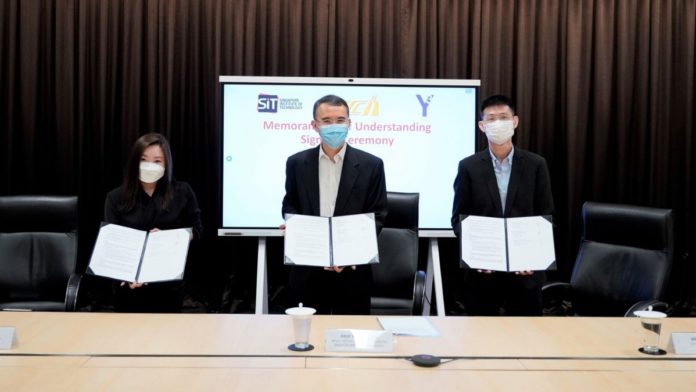
The Singapore Institute of Technology announces that it will offer two new undergraduate courses in applied artificial intelligence and digital supply chain. The two newly launched three-year courses named B.Sc in Applied Artificial Intelligence and B.Sc in Digital Supply chain will be offered from this year.
SIT recognized the requirement of training professionals in the artificial intelligence and digital supply chain domains and has meticulously designed the curriculum of the newly launched courses to meet the industry demand.
According to the institute, initially, it would accept 40 students a year for each of the courses. The AI course will teach learners how to implement the technology into software systems, and the DSC course will primarily focus on technologies like logistics and supply chain sectors.
Prof John Thong of SIT said, “The project-intensive curricula we have designed places industry at the core of our students’ learning. By intensifying and deepening their training through industry exposure at multiple touchpoints during the student’s candidature, we instill in students a mindset of learning by doing and enhancing their industry-readiness.”
He also mentioned that the Singapore Institute of Technology is committed to nurturing industry-ready graduates who will help Singapore become a Smart Country. The application process will begin from 10th January and will be valid till 19th March 2022.
Interested candidates register for the open house session from the official website of SIT and apply directly from there for the B.Sc courses. Due to the ongoing pandemic, SIT has decided to virtually conduct the open house session for 2022.
The B.Sc courses also come with an eight-month Integrated Work-Study Program where students get real-world industry exposure, helping them secure jobs after completing their studies.
“We are delighted to see higher education institutions like SIT taking the initiative to integrate AI and machine learning into their education programs to help develop the next generation of cloud computing professionals,” said Regional Managing Director of Amazon Web Services Worldwide, Peter Moore, regarding the programs.
Indian artificial intelligence company Fractal acquires data analytics services providing firm Neal Analytics. This new acquisition will help Fractal considerably increase its cloud AI offerings.
According to the company, this new acquisition will allow Fractal to further strengthen its engineering capabilities on Microsoft’s multi-cloud ecosystems and also enable its customers to scale artificial intelligence and power decisions. The acquisition will enable Fractal to increase its market share across various parts of the world, especially in the Pacific Northwest region and Canada.
Co-founder and group chief executive of Fractal, Srikanth Velamakanni, said while talking about Neal Analytic, “They have built a great client-centric, people-oriented culture, and have an impressive track record of solving and scaling AI engineering challenges, especially on the Microsoft platform, for marquee clients.”
He also mentioned that they are incredibly excited about this new partnership with Neal Analytics. This would help them accelerate their capabilities to power data-driven decisions end-to-end for their Fortune 500-sized clients.
United States-based data analytics company Neal Analytics was founded in 2011 and currently has more than 200 employees working in various parts of the world, including the US, Canada, and India. It specializes in helping companies with digital transformation by converting data into valuable assets using its expertise in machine learning and engineering.
Neal Analytics can solve some of the most complex business challenges and optimize operation across numerous industries using their competence in data science, business intelligence, cognitive service, practical AL, and many more.
“This is an exciting opportunity to empower our people and work alongside like-minded practitioners to transform businesses with cloud, data, and AI. It will enable Neal Analytics and Fractal to grow and achieve more together,” said CEO of Neal Analytics Dylan Dias.
Indian electric flying taxi developing startup The ePlane Company has successfully raised $5 million in its pre-series A funding round led by technology venture capitalist Speciale Invest and Micelio. Other investors like 3one4 Capital, University of Tokyo Edge Capital, Naval Ravikant, Anicut Capital, Infoedge, Prashant Pitti, Thought Ventures, and Java Capital participated in the funding round.
The funding round was held on 10th January 2022, and the Company aims to build the world’s most compact flying taxi with the funds. According to The ePlane Company, the newly raised capital will be used to boost the research and development of its products and also in hiring new talents to strengthen its engineering team.
Last year, the Company raised $2 million in its seed funding round. The Company has already built a prototype of its e200 and is all set to develop a full-scale prototype by April 2022.
Founder of The ePlane Company, Pranjal Mehta, said, “The USP is that we are making the most compact flying taxi in the world which has a hybrid design that uses both rotors and wings and a subscale prototype that enables it to fly slower than e-planes with compact wings would normally require.”
He further added that the Company’s mission is to explore efficient, safer, and carbon-neutral mobility solutions for intra-city transportation. The Company claims that its product will not require any specialized infrastructure and will be able to considerably reduce the time consumed in city transportation at affordable prices.
The ePlane Company’s flying taxi will have a range of around 200Km with vertical take-off capabilities. India-based flying taxi developer, The ePlane Company, was founded by Satya Chakravarthy and Pranjal Mehta in 2017, but it was launched in 2019.
“The cargo carrier is expected to be rolled out by February 2023, the passenger version is expected by December 2024,” said co-founder of The ePlane Company Satya Chakravarthy.
Artificial Intelligence-powered solutions developing firm for mortgage lenders, Daily AI, acquires customer relationship management platform for mortgage professionals Whiteboard CRM. The acquisition will help Daily AI increase its capabilities in various critical business operations, including sales and marketing processes.
Whiteboard CRM offers a robust platform for mortgage professionals that allows them to effectively manage leads, client relationships, team production, revenue generation, and many other tasks involved in the domain.
With the integration of the two platforms, Daily AI will provide unmatched performance and user experience to its customers. Additionally, the acquisition of Whiteboard CRM will help Daily AI increase its global market share and provide better service to customers with its automation suite.
Strategic partner at Whiteboard CRM, Kevin Ducey, said, “The Daily AI product represents a turning point for our industry regarding the capabilities it offers to originators and enterprises. We’re excited to start operating as a combined company and provide this value to Whiteboard customers.” He further added that Whiteboard CRM had developed a strong customer relationship with its clients in the mortgage industry since 2018.
United States-based artificial intelligence solutions developer Daily AI was founded by Spencer Dusebout and Brannon Lee in 2019. Since its launch, Daily AI has grown exponentially and last year marked a record growth of 1000% in the total number of users globally.
The acquisition of Whiteboard CRM is the company’s first successful acquisition that would undoubtedly help Daily AI further accelerate its growth and pool in new customers using Whiteboard CRM’s client base. Interested individuals can register for a personalized demo session of Daily AI from its official website.
“With the combined power of our sales, development, product, marketing, and customer success teams, we believe we will be an unstoppable force in the mortgage lending industry to create automation and AI-driven products and services of significant value to our customers,” said co-founder and CEO of Daily AI Spencer Dusebout. He also mentioned that the entire team of Daily AI is looking forward to partnering with Whiteboard CRM.
IBM recently announced that LG Electronics has partnered with IBM Quantum Network. The partnership aims to boost the research and implementation of advanced quantum computing solutions across various industries.
This new partnership will now provide LG access to IBM’s expertise in quantum computing, IBM’s quantum computing systems, and IBM’s open-source quantum information software development kit named Qiskit. Unlike classical computing, which calculates in bits, quantum computing is an advanced technology that uses qubits for calculation. This allows quantum computers to solve problems that traditional computers cannot handle.
LG will now be able to provide top-notch training to its team in quantum computing for developing solutions to support artificial intelligence, big data, smart cars, IoT, robotics applications, and many more.
Vice President of Quantum Computing at IBM, Jay Gambetta, said, “The relationship between IBM and LG Electronics will permit LG to explore new types of problems associated with emerging technologies and will help strengthen the quantum capabilities in Korea.”
He further added that they are delighted to welcome LG Electronics to a rapidly growing quantum computing ecosystem in the country. The partnership will allow LG Electronics to leverage IBM’s quantum computing software, hardware, and applications in accordance with IBM’s quantum roadmap.
Last year, IBM showcased its new ‘Eagle’ quantum computing processor with 127 qubits, making it one of the best quantum computing processors in the world during IBM Quantum Summit.
“We aim to provide customers with value that they have not experienced so far by leveraging quantum computing technology in future businesses,” said CTO and Executive Vice President of LG Electronics, Byoung-Hoon Kim. He also mentioned that LG would use IBM Quantum to develop competency in quantum computing based on their open innovation strategy.
Indian cloud retail software providing company Ginesys plans to invest more than $10 million over the next three years in CASA Retail AI. The new development will help Ginesys considerably increase its customer and rewards management capabilities.
Ginesys will integrate CASA’s omnichannel AI-driven customer retention and delight platform with its own end-to-end retail OMS, ERP, and POS solution. According to the company, this new investment will help Ginesys enhance its one-of-a-kind retail solution named Ginesys One. The two platforms’ integration will allow Ginesys to optimize attracting, retaining, and rewarding consumers for more than 1200 brands and retailers on Ginesys One.
Founder and CEO of CASA, Sathiyanarayanan Vijayaraghavan, said, “A fluid omnichannel experience with Ginesys will lead to better consumer satisfaction and help in building long-term relationships across segments, thereby enabling brands to achieve their omni-channel ambitions.” He also mentioned that the company aims to allow the right set of customers to reach websites and offline stores of brands.
Gurugram-based retail solution provider Ginesys was founded by Harsh Nahata, Nikhil Raghavan, Prashant Lohia, and Soumyadip Bhattacharya in 2006. It is the country’s leading retail software platform that has a customer base of more than 700 companies and over 30,000 users.
Some of the biggest customers of Ginesys include Vmart, Manyavar, Mufti, BIBA, Being Human, Global Desi, Bazaar Kolkata, RS Brothers, and Soch. To date, the company has successfully acquired two firms, namely Browntape and Zwing.
CEO and founder of Ginesys, Prashant Lohia, said, “The year 2021 has accelerated the digital adoption for the sector with digital and in-store technologies used by retailers for smooth business continuity, better business outcomes and customer reach increase. Now it is important to understand that both, brick & mortar, and e-commerce retail have to work hand in hand in delivering value to consumers.” He further added that this new partnership would help them create the best multichannel customer retention and delight platform in India.
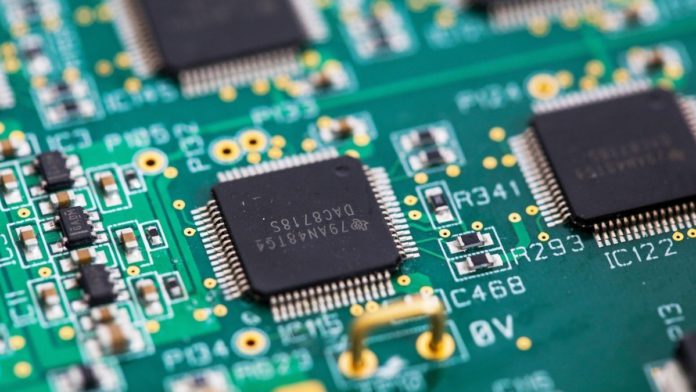
Semiconductors are an integral part of all electronic devices we use. From computers, home appliances to automobiles, semiconductors are used to power their products in every industry. However, a chip shortage has been witnessed over the past year that has caused a delay in delivery and price hike of multiple products across the globe. The severity of the chip shortage is affecting even technology giants like Samsung, which had to delay the launch of its flagship smartphone, and bike manufacturing company Royal Enfield is facing serious late delivery issues. Building new semiconductor manufacturing facilities is a highly costly affair that has also worsened the chipset shortage globally. To tackle this rising issue, the Government of India recently approved a new Rs 76,000 crore production linked incentive scheme for semiconductor manufacturing. This initiative will allow global semiconductor manufacturers to open production facilities in the country to make India a hub for semiconductor manufacturing. This article will provide a detailed list of top semiconductor companies in India 2022.
Bharat Electronics Limited
Bharat Electronics Limited is India’s one of the oldest semiconductor manufacturing companies founded in 1954. It was established in Bengaluru, which used to design communication equipment and germanium semiconductors in its early days. The company started manufacturing semiconductors in 1962. Since its establishment, the company has brought in various innovations in semiconductor manufacturing and has become one of the leading semiconductor manufacturers in India.
NXP Semiconductors
NXP Semiconductors is one of the largest semiconductor companies in India that has made its presence felt for the last 50 years in the country. It is a multinational semiconductor manufacturing company with its headquarters in the Netherlands. Current NXP Semiconductors have four sites in India at various locations like Bengaluru, Noida, Pune, and Hyderabad. The company has a workforce of over 2500 engineers and has filed more than 500 patents over the years. According to NXP Semiconductors, their prime focus is to develop innovation for the automobile, IoT, and smartphone industries.
The Noida Center of NXP Semiconductors specializes in designing, validating, and enabling, specifically around automotive and edge processing. At the same time, the Bengaluru unit is a hub of innovation for NXP’s connectivity, security, advanced analog and radio frequency products, with the automotive and IoT markets as key drivers. The core team of NXP Bengaluru is experts in SoC, IP, and system-level design. NXP acquired Marvell’s wireless business in 2019 to open its new center in Pune. The acquisition allows NXT to further widen its expertise in end-to-end Wireless LAN and Bluetooth solutions at its Pune center.
The Hyderabad division of NXP specializes in the company’s edge processing and advanced analog businesses. The plant also develops and manufactures SoCs for the automotive industry to help connect vehicle systems more efficiently.
Broadcom
Broadcom is one of the world’s largest fabless semiconductor manufacturers having its headquarters in the United States. The company has a manufacturing hub in Bengaluru, India, which is a premier semiconductor manufacturing center in the country. The Indian branch of Broadcom performs various operations involved in semiconductor manufacturing, including designing, development, and fabrication. The company was founded back in 1991 and acquired by Avago Technologies in 2016. Apart from semiconductor manufacturing units, Broadcom provides various other services like data centers, smartphone component manufacturing, and many more. Last year, Broadcom also announced its plans to buy analytics software company SAS Institute.
Samsung Semiconductor
Samsung Semiconductors India is in the Samsung Research and Development center located in Bengaluru, Karnataka. Samsung not only develops products and applications for its own devices, but also provides services to various clients through its Indian R&D center. The chip manufacturing company was originally established in 1983 and had its headquarters in the United States. It is a fabless semiconductor company that offers multiple services such as designing application-specific integrated circuits (ASIC) and several more involved in semiconductor manufacturing. The semiconductors designed by Samsung are world-class and are used in multiple electronic devices, including smartphones, computers, and various others, making it a leading semiconductor company in India.
Micron Technology
Micron Technology is an American semiconductor and computer products manufacturing company that has its office in Bengaluru, India. The company specializes in developing cum manufacturing SoCs for various computer products, including storage, flash drives, RAM, and many more. Micron Technology uses DRAM technology to design and manufacture microchips. A globally acclaimed semiconductor manufacturer Micron Technology had earlier collaborated with technology giant Intel IM Flash Technologies. Additionally, the company’s consumer products are sold under the brand name Crucial and Ballistix.
Wipro
Wipro is a world-renowned multinational company having its headquarters in Bengaluru, India. It is currently one of the top semiconductors companies in India. The EngineeringNXT team of the company has been developing and manufacturing top-notch microchips in the country for several years. According to Wipro, the company provides 8 of the top 10 semiconductor companies with transformational technology-led solutions for various departments, including product development, IT infrastructure, cloud transformation, new-age semiconductor technology, engineering, and many more. The company’s highly advanced engineering team takes care of all semiconductor manufacturing needs like silicon, firmware, host software, drivers, board and system design, testing, and pre-certification. Over the years, Wipro has acquired a massive client base that relies on Wipro’s expertise in semiconductor manufacturing.
Sankalp Semiconductor
Sankalp Semiconductors is a division of HCL Technologies Company that provides complete end-to-end semiconductor service. Founded in 2005 with its headquarters in Hubli, Karnataka, Sankalp Semiconductors has become one of India’s leading chip designing companies. The company is capable of transforming concepts into prototypes in the semiconductor industry. Sankalp Semiconductors offers various services to its clients, including digital, analog, high-speed physical interface IP, Embedded Memory Compiler, and EDA modeling. Apart from India, the company has its centers in various countries, including the United States, Canada, and Germany. Sankalp Semiconductor has a massive client base from multiple industries such as automobile, consumer electronics, IoT, medical electronics, and many more.
Solex
Solex Energy is an Indian manufacturing company founded in 1998. The company specializes in manufacturing semiconductors, solar panels, and multiple other electronic products. Apart from semiconductor manufacturing, the company is also well acclaimed for its capabilities to manufacture solar cells.
Semtronics MicroSystems
Semtronics MicroSystems is a fabless semiconductor company located in Bengaluru. The semiconductor manufacturing company was founded by Avinash Brahma and Mahendra Karanam in 2010. Semtronics Micro Systems specializes in developing and manufacturing integrated circuits from the power, automotive, and communication industries. The company’s strengths are its expertise in system definition in power management, rapid market launch, focused customer relationships, and integrated circuit capabilities in mixed-signal engineering. The highly talented and capable team of Semtronics MicroSystems allows it to achieve recognition in the field of mixed-signal engineering.
Applied Materials
Applied Materials is a United States-based semiconductor manufacturing company founded in 1967 that has its office in Bengaluru. The Indian subsidiary of Applied Materials has fueled the growth of semiconductor designing and manufacturing in the country over several years. The company specializes in manufacturing and designing semiconductors for various products, including displays, smartphones, televisions, solar panels, and many others. Apart from India, the company also operated numerous facilities in countries like Japan, Israel, China, Italy, Korea, etc. The company provides various services such as removal, addition, and modification of integrated circuits, making it an all-in-one service provider for chip designing and fabrication.
TSMC
Taiwan Semiconductors Manufacturing Company (TSMC) is one of the world’s leading chip manufacturers. According to recent developments, the Indian and Taiwanese governments are in close talk to open a manufacturing facility of TSMC in India as a step to further expand the two-way economic engagement. The yet to be established manufacturing hub will skyrocket the growth of semiconductor designing and manufacturing in India. TSMC is a large-scale manufacturer of semiconductors that has supplied world-leading companies like Apple. Setting up the TSMC manufacturing facility in India will attract customers from various parts of the world, including the United States, helping India become a global hub for semiconductor manufacturing.
One of the leading crypto exchange platforms, Binance’s United States branch, builds an office in the Solana-based metaverse named Portals. Metaverse combines multiple forms of technology like virtual and augmented reality that allows users to explore and interact with others in a virtual environment.
The Portals metaverse is a one-of-a-kind platform that allows users to visit different buildings and interactive rooms. The company has revealed no information regarding the cost of acquiring the virtual space for their office.
The news was disclosed by the Portals’ Head of Community and Partnerships, Chris Lund, through a tweet. Solana-based Portals is an NFT collection that provides 5000 access keycards, providing users access to pre-designed and customizable spaces in the virtual world.
The high-end features offered by Portals make it one of the primary choices for companies across the globe to start their metaverse journeys. According to Binance.US, it plans to provide the latest developments, charts, and events through the office built-in Portals.
Zachary Tindall, a spokesman for Binance.US, said, “We are creating a space in the metaverse for the Binance.US community to come together. It’s the first of many steps we’re taking to be forward-looking as we build and reach our community in new environments.”
Multiple industry-leading brands have started entering the metaverse, including Adidas, Nike, and Meta (formerly known as Facebook). Few months back, Samsung also launched a metaverse version of its Samsung 837 location in Decentraland, a metaverse platform based on Ethereum.
A blockchain consulting firm, Moonrock Capital, recently purchased one of the Degenerate Ape Academy NFTs for 5,980 SOL, making it the first million-dollar NFT sale on Solana.
Video-based health and wellness monitoring platform Binah.ai launches its new contactless blood pressure monitoring system. The newly launched platform uses artificial intelligence technology to accurately detect the blood pressure of individuals based on video captures using smartphones, making the platform accessible to a larger customer base across the globe.
The AI solution was revealed during the CES event held in Las Vegas, United States. Last year, during Bina.ai’s series B funding round, the company hinted about launching its blood pressure monitoring tool soon.
Additionally, users can access this AI-powered video-based blood pressure monitoring tool from their laptops and tablets. It is a robust platform capable of performing several tasks, including tracking heart-rate variability, oxygen saturation, respiration charge, sympathetic stress, parasympathetic exercise, pulse respiration, and many more.
Founder and CEO of Binah.ai, David Maman, said, “The ability to now add video-based blood-pressure-monitoring capabilities, using only the device’s camera, to our already robust Health Data Platform, takes us into a new frontier of what is possible for health and wellness.”
He further added that the launch of this new platform is a step towards the company’s aim of providing essential and universally accessible health and wellness services for everyone in the world.
The company claims the platform to be a self-assessment tool that generates results in less than a minute, making health and wellness tracking effortless for users. Interested individuals can book a demo session for the AI-powered contactless blood pressure monitoring system from the official website of Binah.ai.
The solution will also help users drastically reduce the cost involved in medical checkups, and they can conduct simple tests seamlessly and cost-effectively using Binah.ai’s video-based solution.
Israel-based AI-powered health and wellness solutions providing company, Binah.ai was founded by David Maman, Konstantin Gedalin, and Michael Markzon in 2016. To date, the company has raised total funding of over $13 million from investors like Maverick Ventures, Global IoT Technology Ventures, and many others.