Microsoft, along with the collaboration of NVIDIA and Neal Analytics, open-sourced Azure DeepStream Accelerator (ADA). ADA allows developers to build Edge AI solutions with native Azure Services integration quickly.
Microsoft’s main objective is to support developers utilizing existing Azure services to use the potential of computer vision at the edge via DeepStream.
With Azure DeepStream Accelerator, developers can create NVIDIA DeepStream AI-based solutions and integrate them with many Azure services like Blob Storage and Monitor. The Azure DeepStream Accelerator project includes tools developers can leverage to build, manage and deploy their AI solutions to NVIDIA’s AGX Orin edge devices.
Azure DeepStream Accelerator also provides support for more than 30 pre-build AI models out of the box and has the potential to bring your model for deployment to IoT edge devices. The Azure DeepStream Accelerator project is readily available on GitHub. If you are interested in DeepStream and want to learn more about it, you can check NVIDIA’s documentation and DeepStream SDK.
Last week, the World Tennis League (WTL) and the NFT platform Akshaya.io joined hands to offer “Phygital” NFTs.
Fans could purchase 3D digital NFTs and authentic World Tennis League team jerseys that the players have autographed through this “Phygital” marketplace. They were given the opportunity to interact with tennis greats like Novak Djokovic and Igor Swiatek at the inaugural World Tennis League competition in Dubai. These one-of-a-kind items, such as player training gear, t-shirts, and hats, will be a blend of physical and digital products and experiences that fans can own and enjoy. In addition to collecting physical memorabilia, enthusiasts could design NFTs to preserve their experiences and interactions with athletes.
The World Tennis League (WTL), a new mixed-gender team tournament, took place at the Coca-Cola Arena in Dubai from December 19 to 24, featuring four teams of 18 elite ATP and WTA Tour players each.
Akshaya.io is the country’s first platform that combines Metaverse, NFT, and Digital Twin to allow users to claim ownership of real and digital assets while providing verifiable proof of authenticity. Akshaya.io is present in 45 cities throughout India, Bangladesh, and Nepal and has developed close links with prospective customers.
Earlier this year, Akshaya.io and Vummidi Bangaru Jewellers teamed together to create virtual and augmented reality (VR/AR) assets for the latter’s designs. They also worked to create a Metaverse store for VBJ so that it could sell and trade its exquisite, exclusive, and enviable jewelry items as well as the original designs for those items as NFTs.
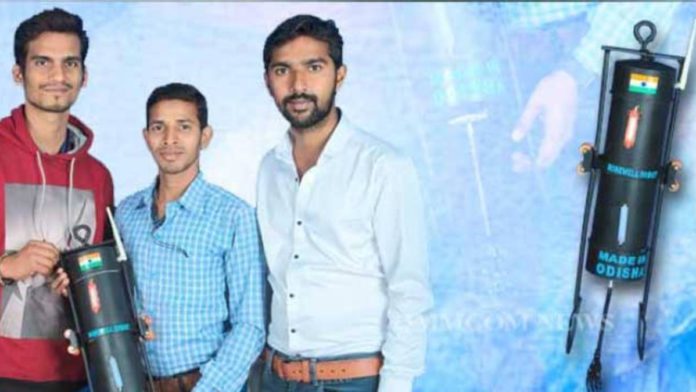
Three young engineers from Odisha have tried to solve the problem of children falling into borewells as they develop a Borewell Rescue Robot. The state of Odisha and others around it have faced several instances where children have lost their lives due to falling into open borewells.
Being concerned about child security, Sisir Mallik, Biren Kumar Pradhan, and Lingaraj Pradhan has made a unique robot that has two fitted fans. The lower one will provide oxygen to any child who is trapped inside the pit, while the upper one will blow the toxic gases away.
Sisir Mallik said while mentioning a recent mishap with Tanmay Sahu, children fall into borewells as they are left open. This incident inspired the three friends to invent the robot.
The borewell rescue robot is fitted inside an iron frame that can be stationed at the borewell’s mouth while the robot descends inside the pit using a cable. Using a fitted camera and waterproof lighting system, people and rescue workers around the borewell can analyze the whole situation.
Biren Kumar Pradhan said, “Our effort is to prevent such [borewell] deaths and help in the rescue with the help of robots.” He also added that the borewell rescue robots they are developing could rescue kids within 15-20 minutes.
In a recently released report, the Reserve Bank of India (RBI) expressed concerns over the burgeoning crypto ecosystem. The bank also suggested parts of it could be banned.
In its latest financial stability report, which was released on December 29, the central bank said it will make use of its rotating presidency of the G20 group of the largest economies of the world to urge the development of a global regulatory framework for crypto assets.
The report was generally upbeat concerning the current conditions in the country, despite significant global headwinds. It said the Indian economy and domestic financial system remain resilient.
However, the report’s tone changed drastically in its discussion of crypto as it highlighted a list of crises that struck the crypto world in 2022. It noted crypto’s inadequacy as a hedge against inflation, its volatility, high correlation with equities, as well as governance issues.
The report depicted three options for crypto regulation. The first was “the same-risk-same-regulatory-outcome principle.” The second option suggested the possibility of prohibiting crypto assets as their real-life use cases are next to negligible.
The third option, called “let it implode” without any regulatory action, was considered too risky for mainstream finance to pursue.
According to local media outlet Sina News, the platform was established to enable the trade of NFTs as a secondary market by the state-owned Chinese Technology Exchange, the state-owned Art Exhibitions China, and Huban Digital Copyrights Ltd, a private business organization. The Platform will also provide institutions and individuals services for copyright protection and rights monitoring with regard to digital assets.
Yu Jianing, an expert in digital assets and Chinese metaverse space, claims that the establishment of the China Digital Assets Exchange marks an acceleration of the country’s cultural industry’s digital transition. Jianing believes the “China Digital Asset Trading Platform” draws on the characteristics of a national-level exchange of the China Technology Exchange, performs trading duties on behalf of the exchange, and develops a thorough trading system, a standardized trading system, and a scientific trading system for the digital asset trading industry.
In recent years, the market for NFTs in China has expanded dramatically, with numerous high-profile transactions occurring on different platforms. However, the absence of a centralized market has hindered buyers and sellers from swiftly finding and exchanging NFTs. There have also been questions regarding the legitimacy and ownership of some NFTs.
In order to overcome these problems, since 2021, cryptocurrency exchanges have been prohibited in China, though crypto ownership is regarded as virtual property that is protected by the law. In the same year, the Chinese government declared it was creating a national NFT platform. The marketplace aims to offer a centralized platform for buying and selling NFTs as well as a means of effectively regulating the NFT market and safeguarding the rights of producers and users.
The Hangzhou Internet Court, which specializes in internet-related legal matters, ruled on November 29 that digital assets like NFTs are virtual properties that are legally protected and that they possess the qualities of property rights, such as value, scarcity, controllability, and tradeability. Prior to this, the Chinese central bank unveiled its intentions for the CBDC and made trial versions of mobile applications for digital yuan wallets available.
The Securities and Exchange Commission of Pakistan (SECP) on Wednesday prohibited digital lending platforms from sending borrowers’ data outside of Pakistan and limited their ability to use coercive means to recover debts.
The SECP has instructed the digital lenders through Circular No. 15 that the borrowers’ data cannot be stored on any cloud infrastructure that is under the control of a country other than Pakistan. The SECP commission has also published new guidelines for digital lending that Non-Banking Finance Companies (NBFCs) using digital channels or mobile applications must follow. The regulator made these announcements in response to growing concerns about mis-selling, data privacy violations, and intrusive recovery tactics used by licensed digital lending companies.
Before a loan is granted to the borrower, the standards specify the bare minimum obligatory disclosures and key fact statements (KFS), which must include the loan amount approved, annual percentage rates, loan term, installment/lump sum payment amounts with dates, and any fees and charges.
The non-banking financial companies would be expected to communicate these important details to customers via audio, video, emails, and text messages in both English and Urdu. This is important to ensure transparency and ease of understanding, says the regulator. It further stated that any fees not covered by KFS would not be passed along to the borrower.
The new SECP digital lending guidelines will require a licensed digital lender to publish on its lending platform(s) or app(s) its full corporate name and licensing status, ensuring that any advertisement and publication is fair and do not contain any misleading information.
The SECP has also detailed a thorough grievance redressal framework in addition to the current NBFC grievance redressal structure.
Additionally, even with the borrower’s consent, the digital lender will not be permitted access to the borrower’s phone book, contacts list, or photo gallery to protect the data’s confidentiality and privacy, the SECP informed. Other than those who have been specifically authorized by a borrower as guarantors and have also given their authorization to the digital lender at the time of loan acceptance, the rules have also prohibited the lenders from contacting the individuals in the borrowers’ contact lists.
Creta, a web3 video game developing company, reveals four novel blockchain-based games for its web3 ecosystem. The game is called “Kingdom Under Fire: The Rise.” It comprises a metaverse, a one-stop gaming destination, and a Super Club blockchain community service.
Creta is a renowned game developer, popular in the Korean market and supported by several industry leaders like the Yield Games Guild (Japan) and Yoshiki Okamoto (the company behind Monster Strike).
Creta announced the games at Creta Summit 2022, held in Tokyo, Japan, an event that several blockchain enthusiasts and web3 gamers attended. Creta showcased the gameplay footage of the new blockchain games to unravel the look and feel of the avatar-based setup.
Ray Nakazato, Chief Creative Officer of Creta, said that after a while, some characters and collectibles present in the game will be turned into non-fungible tokens (NFTs) and can be traded. He added, “The game will be playable in seasons, and data will reset at the end of each season with an opportunity to transfer player NFTs to a new season.”
Kingdom Under Fire and other games developed by Creta will be released and played via the company’s tailor made gaming platform similar to web2 games, but with an additional metaverse layer. This layer would allow social interaction and economic features for NFT utilization.
The CoinSwitch Web3 Discovery Fund has evaluated 150 Indian web3 startups across different use cases like infrastructure-related products and blockchain analytics within three months of opening up for applications. It is expected to announce its first cohort of 10 startups soon and plans to invest in more than 100 startups by the end of 2024.
In the early stage of the fund, CoinSwitch will be writing cheques of $100,000-$200,000 and working as a medium to introduce startups and funds jointly in larger rounds with its 20 Venture Capital partners. The partners participating in the funding round will be Ribbit Captial, Coinbase Ventures, Tiger Global, Woodstock Fund, Sequoia Captial, Elevation Capital, and incubation partner Builders Tribe.
Ashish Singhal, Co-founder and CEO of CoinSwitch mentioned that CoinSwitch has already evaluated 150 startups. CoinSwitch is unable to keep pace with the kind of talent and innovation they are seeing coming in. He also stated that it is hard for retail users and businesses to search the Web3 ecosystem, so people have started building the Web3 equivalent of Web2 companies such as Google, for crypto, and more.
Besides CoinSwitch, its companions like CoinDesk have rushed into venture capital with CoinDCX Ventures targeting early-stage Web3 startups. This might sound like a blessing for the Web3 ecosystem, but it also highlights the challenges in the pure-play crypto segment.
Parth Chaturvedi, the head of CoinSwitch’s Web3 Discovery fund, stated that the fund’s applications included many use cases around blockchain analytics, self-custodial solutions for Web3 wallets, Web3 infrastructure-related products, and more.
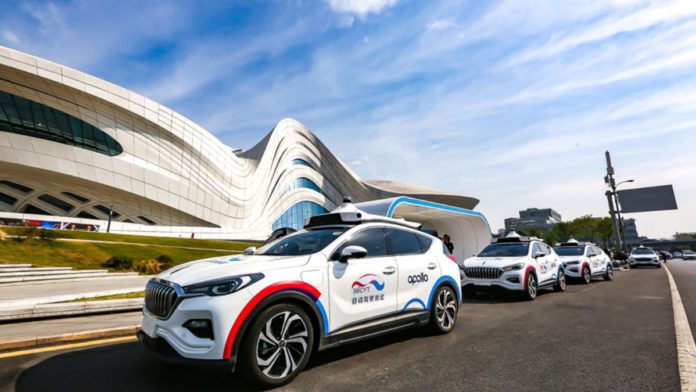
Tech giant Baidu which operates China’s largest search engine, announced it has expanded the commercial operation area and hours of its driverless taxi service in Wuhan, Central China. The deployment of robotaxis at night in Wuhan by the company’s autonomous ride-hailing platform Baidu Apollo Go heralds a new phase in the commercial use of autonomous driving in China.
The public will be able to use the robotaxis at Junshan New City in the Wuhan Economic and Technological Development Zone between 7 am and 11 pm starting this week, according to a statement from Baidu on Monday. Its autonomous vehicles could previously only be used in the city from 9 am to 5 pm. The revised program is anticipated to serve one million customers in selected neighborhoods of Wuhan, a metropolis of more than ten million people.
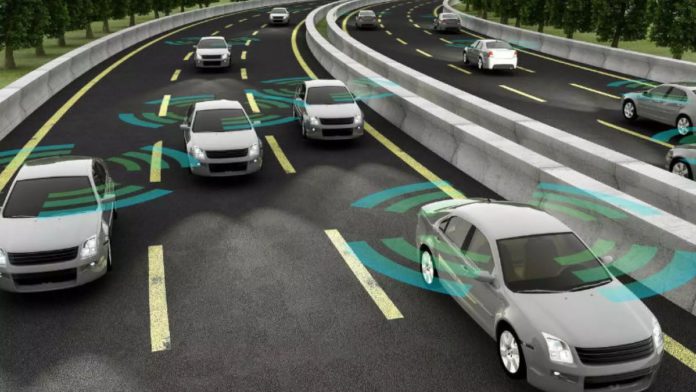
One of the major technological challenges with autonomous driving has always been the nighttime environment since it is difficult for cars to discern objects and pedestrians in low light. After beginning to use a combination of external cameras, radars, and lidars to improve visibility in poor visibility conditions, the company made the latest announcement.
Apollo Go now operates over 50 completely autonomous taxis in Wuhan, covering an area of more than 130 square kilometers. Last month, Baidu published a concept for its sixth-generation electric robotaxi, the Apollo RT6 EV, a hybrid between an SUV and a minivan with a removable steering wheel.
In the past two decades, there has been a lot of interest in autonomous driving because to its numerous advantages, like relieving drivers from exhausting driving and reducing traffic congestion, among others. As a result, researchers have paid close attention to autonomous vehicles due to their potential to increase the efficiency and safety of transportation networks through control algorithms while cutting down on fuel usage.
Despite encouraging advancement, ramp merging has been a major challenge that threatens to cause frequent traffic jams on the road, higher fuel consumption and emissions, safety concerns, and rear-end and side collisions. This is due to the decision-making process of merging cars, which causes them to first slow down or even stop on the ramp before merging into the main lane at an appropriate moment through control without interfering with the moving vehicles on the main lane. Since the cut-in movements of ramp vehicles can frequently disrupt the mainline traffic flow and result in numerous issues, ramp merging is crucial for freeway traffic operation.
At present, with their real-time communication and precise motion control abilities, autonomous vehicles can improve ramp merging activities through enhanced coordination techniques. Using specialized short-range radio communications and cellular networks, the communication technologies enable detailed and rapid information transmission among road users, traffic infrastructures, and control centers. As a result, vehicular moves can be arranged through real-time interactions among traffic participants. Furthermore, because they are less prone to delays and mistakes in the processes of identification, decision-making, and performance, autonomous driving systems in cars can execute the intended actions in a steady and timely way.
To enhance tactical decision-making in autonomous vehicles, a number of impediments still need to be addressed, and as computational resources advance, there will undoubtedly be a number of exciting new chances to solve challenging issues. In an effort to boost efficiency, researchers from Carnegie Mellon University have created a reinforcement learning (RL)-based framework that could aid in the performance of autonomous vehicles in ramp merging settings. Their framework, outlined in a pre-published paper on arXiv, can contribute to strengthening the safety of autonomous vehicles at these crucial decision-making periods while lowering the likelihood of accidents.
Reinforcement learning is one of the most important machine learning methods to achieve Artificial General Intelligence (AGI). RL systems are frequently trained in gaming environments, which serve as testbeds for teaching agents new tasks using visual signals and the popular “carrot and stick” approach.
In a reinforcement learning approach, artificial intelligence (AI) agents are put into simulated settings and given two options that are determined by predetermined policy. The agent makes a decision and is “punished” or “rewarded” for it; in other words, positive actions are encouraged, and negative ones are discouraged. Whether its decision has a favorable or detrimental consequence, the AI modifies its policy accordingly and repeats the process with fresh choices made that are time influenced by the modified policy. The AI agents keep going through this process until they find the best solution.
Given the potential outcomes of the infinite complexity of complicated real-world circumstances and the significant risks involved, RL may require fundamental technological advancements to enable complete ‘autonomous’ driving. In recent times, reinforcement learning has been extensively investigated for lane-changing decision-making in AVs, with positive results. However, it was eventually discovered that most of these studies had compromised either the safety or the efficiency of the algorithm.
According to Soumith Udatha, one of the researchers who created the model, Prof. John Dolan’s department at CMU has been working on numerous autonomous driving applications for quite some time. Udatha says that due to the challenges posed by fast-moving cars, drivers with different driving styles, and inherent uncertainties, the application on which his team concentrated in this work is freeway merging.
The central goal of Udatha and his team’s study is to increase the safety of autonomous vehicles. In their paper, they sought to develop a framework particularly designed to capture ramp merging situations and plan a vehicle’s actions based on its analysis of any uncertainties and potential dangers.
Though, as mentioned above: reinforcement learning models interact with the environment and gather information to maximize their rewards, Udatha explained that this data exploration meets with several complications when used in practical contexts. This is partially due to the fact that not all of the states the agent encounters are safe. In order to assure safety at a given distance, the team limited its RL policy using control barrier functions (CBFs). As a result, they disregard unsafe states and improve a system’s capacity to learn how to travel according to environmental constraints.
CBFs are a group of relatively recent computational techniques created to improve the reliable control of autonomous systems, by ensuring a suitably-defined barrier function remains bounded for all time. They can be leveraged directly for a variety of optimization issues, particularly ramp-merging. Although they look good on paper, the optimizations they carry out do not take into consideration the information a system gathers as it is exploring an area. Reinforcement learning methods, as per Udatha, can eliminate this discrepancy.
The research team discovered that their algorithm could be applied to RL settings that are both online (while interacting with the environment) and offline (learning from a fixed dataset or logged data). However, offline reinforcement learning has currently become a core approach for using RL methods in practical settings. This is because it allows for the empirical evaluation of RL algorithms based on how well they can use a predefined dataset of interactions and produce real-world effects.
The team used a dataset extracted from the NGSIM Database, which includes high-quality traffic data at four locations: two freeway segments (I-80 and US-101) and two arterial segments (Lankershim Boulevard and Peachtree Street), between 2005 and 2006. The datasets collected and created for each location comprise the vehicle trajectory data (primary data), various location-specific primary and support data (e.g., ortho-rectified pictures of the research area, Computer-Aided Design (CAD) drawings of the study area, signal timings, weather data, detector data), raw video files, and processed video files.
Because the team now has massive volumes of data for offline RL, training on offline datasets may eventually result in superior models. The researchers also found — using their metrics — that adding probabilistic CBFs as limitations improves safety by partially accounting for driver uncertainty.
Using the online CARLA simulator created by a group of researchers at Intel Labs and the Computer Vision Center in Barcelona, Udatha and his colleagues put their framework through a number of tests. Their approach produced outstanding results in these simulations, emphasizing its great implications for boosting the safety of autonomous cars during ramp merging.
The research team now intends to continue the study by training their model to merge an autonomous car with many other vehicles in a situation with unknown drivers. Additionally, they discovered that there is presently no benchmark that can be used to evaluate different ramp-merging strategies, therefore Udatha’s team is working on creating one for NGSIM.