Australia has recorded 216 ATMs stepping into the year 2023. The country has overcome the spot by beating El Salvador, the first to legalize Bitcoin (BTC), in total crypto ATM installations.
Australia deployed 99 crypto ATMs in the last three months of the year 2022. As of yesterday, Australia recorded 219 active crypto ATMs, overshadowing El Salvador by 7 ATMs.
Australia represents 0.6% of global crypto ATM installations. At this rate, the country is well-poised to take over the total number of crypto ATMs in Asia, which stand at 312. The total number of crypto ATMs across the world is 38,602, out of which 6,071 ATMs were installed in 2022 alone.
As part of El Salvador’s initiative to establish Bitcoin as a legal tender last year, President Nayib Bukele had decided to install over 200 crypto ATMs across the country.
While this move made El Salvador the third largest crypto ATM hub at the time after the US and Canada in September 2021, Spain and Australia overtook the Central American country’s ATM count in 2022.
Maruti Suzuki India has recently launched ArenaVerse, a Metaverse platform for the ARENA showroom network. With ArenaVerse, customers can immerse themselves in an interactive virtual experience with the selected vehicles of Maruti Suzuki.
The launch of ArenaVerse strengthens the company’s aim to provide a more interactive and immersive retail experience for its customers, as they can digitally interact with sales representatives and arrange cars in ArenaVerse.
Shashank Srivastava, Senior Executive Officer, Marketing and Sales, Maruti Suzuki India Limited, mentioned that the company’s strong digital journey is further focused on fulfilling the requirements of new-age customers. He also noted the immense potential in the global ecosystem of metaverse that provides companies with a platform to grow without time zones and geographical boundaries. This brings vast opportunities for Maruti Suzuki to connect with the remotest customers by integrating technology innovation with its extensive network across India.
To ensure an impeccable experience, Maruti Suzuki has furnished more than 700 Arena main outlets spread across India with Virtual Reality (VR) for its customers to experience the ArenaVerse. The ArenaVerse web version can be accessed through the Maruti Suzuki Arena website on web browsers.
Italy’s Prime Minister, Giorgia Meloni, announced last week that she would request a meeting with the representatives of Intel to discuss a possible multibillion-euro investment by the US chipmaker in Italy.
Earlier this year, Intel announced its plan to invest 80 billion euros in the European Union over the next decade along the semiconductor value chain, from research and development to manufacturing to state-of-the-art manufacturing technologies. According to the plan, Intel initially wanted to invest 17 billion euros into a leading-edge semiconductor fab mega site in Germany, create a new R&D and design hub in France, and invest in R&D, foundry, and manufacturing services in Spain, Poland, Italy, and Ireland.
As per the announcement, Intel also planned to increase its lab space by 50% to develop deep neural networks, data centers, cloud computing, audio, and graphics solutions. By the end of 2023, Intel will complete its lab expansion.
During a year-end press conference, Giorgia Meloni mentioned that she would schedule a meeting to ask Intel about their investment in Italy. She thinks the investment will be highly strategic and create a next-generation European chip ecosystem to address the need for a resilient supply chain.
Meta has reportedly acquired the Netherlands-based 3D smart glass maker Luxexcel as it strives toward its metaverse dream in 2023. The news was first reported in the Belgian paper De Tijd.
Luxexcel can integrate the elements required to create an augmented reality (AR) experience inside a prescription lens, like projectors and holographic film.
Meta has not disclosed its spending on acquiring the 3D glass maker. We are excited for the Luxexcel team to join Meta, which is deepening the existing partnership between the two companies, Meta said.
Luxexcel’s 3D-printed prescription lenses can be utilized inside AR glasses. In 2021, the company collaborated with WaveOptics, facilitating the displays for Snap’s Spectacles.
Meta has also planned to shut down its video-calling smart display ‘Portal’ and its two unreleased smartwatches projects, as the company eliminated 11,000 jobs.
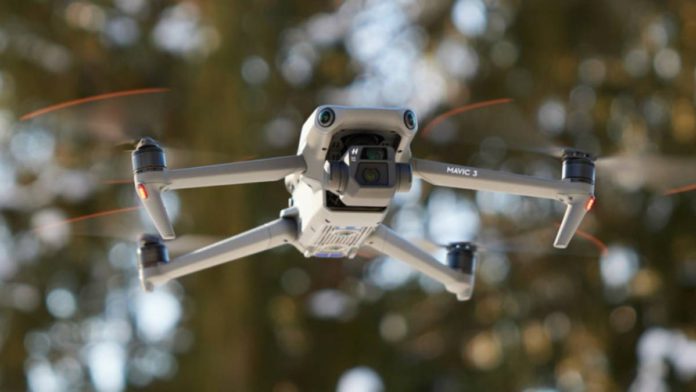
Drone technologies have emerged over the past few decades due to their widespread uses and benefits. The industry will continue to grow as drones are extensively used, even daily. For aerial photography, surveillance, agricultural monitoring, or for transporting vaccines and medicines, drones have shown exponential growth worldwide and in India. As per a report by EY, the drone industry will approximately touch US$23 billion by 2030. The report, titled “Making India the drone hub of the world,” talks about the country investing and advancing in drone technology and nurturing drone manufacturing companies in India. Akshya Singhal, the consulting partner – government and public sector at EY India, said, “Given the parameters of the Aatmanirbhar Bharat Abhiyan, a strong case exists for India to emerge as a global powerhouse in drones, as a tremendous demand for drones and drone-as-a-service gets created.”
The government of India is also shifting its attention toward the domain of drones and has been implementing its drone policy. Since the latest drone policy release, the government has allowed drones to be used in healthcare, agriculture, defense, and other sectors.
We have already discussed the top Indian drone companies in another article. This article will focus on the companies that explicitly manufacture drones.
Top Drone Manufacturing Companies
Listed below are some incumbent and emerging drone manufacturing companies in India.
Hindustan Aeronautics Limited
Hindustan Aeronautics Limited (HAL) is the world’s oldest and most effective defense and aerospace manufacturing company. With over 11 R&D centers and 21 manufacturing facilities across India, HAL has become one of the most potent companies in the domain. It is involved in designing, fabricating, and manufacturing fighter aircraft, jet engines, helicopters, turbines, and drones.
The company has been actively developing AI-driven, multi-role, and long-endurance drones for missions to be accomplished in high-altitude areas. HAL is also exploring the areas of manufacturing the Israeli Heron TP drones for some strategic projects. Consequently, HAL is one of the most renowned and potent drone manufacturing companies in India.
Redwing Labs
Redwing Labs is among those drone manufacturing companies famous for its on-demand, enterprise-specific drone logistics. Redwing manufactures autonomous drones to revolutionize last-mile healthcare and aviation supply chains. After achieving over 15 awards in the USA and Asia-Pacific region, Redwing’s drones have been validated by several industry leaders like Lockheed Martin, NASA, and Boeing.
UrbanMatrix Technologies
UrbanMatrix Technologies, with origins in IIT Madras, is one of the best drone manufacturing companies in India, providing end-to-end drone solutions for safety and reliability. With over 7 years of extensive research and development experience, UrbanMatrix provides both software and hardware for simplified drone operations for GIS mapping, defense, mining operations, energy tracking, construction monitoring, and management. Moreover, these drones can seamlessly integrate aerial data within the workflow and enable real-time analysis. Some of its famous products include the UMT Hawk4G, UMT SparrowPPK, and the UMT Cloud Console.
Auto Micro UAS
Auto Micro UAS is an aerotech company that pioneers drone manufacturing and innovation. It is one of the defense-driven drone manufacturing companies in India built on the principles of combating evolving aerospace dangers at the frontlines and battlefields within the country. With over 20 years of experience in the domain, the company has developed multiple products like BEETLE, PANDA, BEE, and SHARK equipped with end-to-end solution-providing capabilities.
Detect Technologies
Detect Technologies is a deep-tech start-up that utilizes drones and IoT to assist industrial monitoring. The company is involved in providing drones with cutting-edge AI-driven technologies that help in digital asset inspection, pipeline patrol, privacy anonymization, confined space monitoring, and workplace safety management. Detect also helps integrate the disparate operational data collected by the drones and then breaks it down into industrial silos on one unified platform. This way, users can get actionable insights and maximize efficiency with Detect’s state-of-the-art IoT hardware.
Read More:
Zen Technologies Limited
Zen Technologies, founded in 1993, manufactures combat training systems and drones for training security and defense forces, making it one of the best drone manufacturing companies in India. The company, headquartered in Hyderabad, produces simulators, live range equipment, and anti-drone systems for the police, military, and paramilitary. Additionally, Zen Technologies provides Heavy Lift Supplies Drones that can transport bulky logistics.
Zen Technologies’ products and services offer a barrier against the shadowy use of drones. Its products can jam, neutralize, capture, and kill drones in flight and secure vital infrastructure like airports, borders, etc.
Dronix Technologies Pvt. Ltd.
Dronix Technologies Pvt. Ltd. is one of India’s newest drone manufacturing companies. It was founded in 2017 to offer drones and other similar devices for monitoring and managing unmanned areas. As of now, Dronix is the only Indian company that manufactures commercial drones under the trademark Aero360. These drones are highly applicable for industrial surveillance, pipeline monitoring, precision agriculture, and conducting rescue operations. Some of its potent drones, like the ASTRA UAV, DJI Drone Camera, and HYBRID Drone, are doing very well in the market.
HUVIAiR Technologies Pvt. Ltd.
HUVIAiR Technologies is a Bengaluru-based company that provides remote monitoring and management services for construction projects. Founded in 2016, the company is focused explicitly on drone manufacturing and operations, making it a new player among other drone manufacturing companies in India.
CONSTRA, HUVIAiR’s SaaS platform, derives meaningful insights from images and videos captured by its drones. Using the company’s drones in combination with CONSTRA can save up to 65% of the monitoring time while reducing the supervisory workforce.
IoTechWorld Avigation
IoTechWorld is a drone manufacturing company specializing in agricultural drones and equipment manufacturing. It is a drone OEM (original equipment manufacturer) that came up as a part of the “Make in India” campaign to cater to surveillance, surveying, and agriculture. IoTechWorld manufactures “agribots” with the latest AI/ML technologies at over 10 self-owned service stations across the country. These agribots are India’s first government-approved drones for spraying liquids over farmland.
SASMOS HET Technologies
SASMOS is a global innovation and manufacturing company. It is a leading OEM of wiring systems, electronic subsystems, optical fiber connectivity, and drones for the marine, space, and defense markets. SASMOS has been in the drone sector for the past 8 years and has now become an expert. As its clientele expands globally, the company expects to be of the best drone manufacturing companies in India and to reach a thousand crores in revenue by 2026.
UAVIO Labs Private Limited
Established in 2021, UAVIO Labs Private Limited manufactures drones with true autonomy vision-based IT and IoT ecosystem that enables the drone to be aware, navigate and communicate with other sensors. UAV drones can execute tasks in natural world environments freely without the help of pilots in GPS-denied environments. UAVIO drones can do simple tasks such as taking images and videos, monitoring workflow, identifying fuel/gas/chemical leakage, and powering various defense and law enforcement applications like crowd counting, disaster management, remote monitoring, aerial surveillance, and vehicle detection.
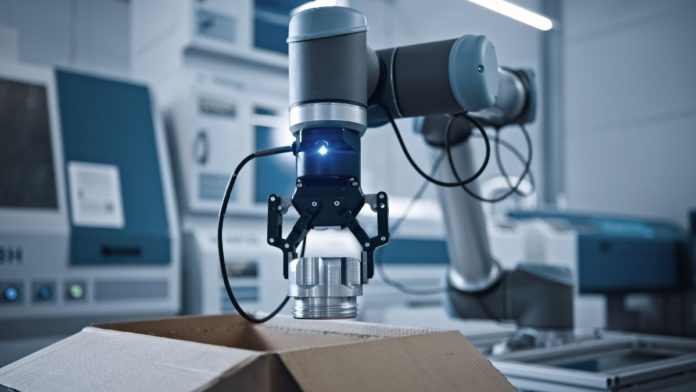
It may seem simple to reach for a close object, but doing so involves a complex brain network that took humans millions of years to develop through evolution. Now, robots are developing the same ability to handle delicate or irregular objects with integrated sensors that rely on cutting-edge machine learning algorithms. However, this is a difficult process since the robot must first determine a number of probabilities and factors, including the friction, location, and placement of the object, trajectories, and its two fingers, before even making the motion.
The ‘dexterity’, which comes naturally to human beings, is a complex task for robots. In reality, robots depend on factors that are extrinsic to its arm, like external contact or dynamic motion of the arm, i.e., extrinsic dexterity.
Previous research on extrinsic dexterity focused on making careful assumptions about contacts that impose limitations on the design of the robot, its movements, and how the physical parameters can vary. Researchers at Carnegie Mellon University’s Robotics Institute recently created a reinforcement learning (RL)-based system to overcome these restrictions. The team describes the task of “Occluded Grasping” in their paper, which tries to grasp the object in initially occluded configurations — the robot must maneuver the object into a configuration from which these grasps can be achieved. To put it another way, they used RL to get beyond these constraints and effectively grasp objects of a wide range of sizes, weights, shapes, and surfaces.
The neural network was trained by the researchers using reinforcement learning. The system was instructed to try random actions to grasp an object, and favorable action sequences were rewarded. Therefore, the system eventually adopted the behavioral patterns that were the most successful or yielded the highest rewards (basically achieving the goal of reinforcement learning.)
Researchers tested their system in a simple robot with a pincer-like grip after first training it in a physics simulator. They had the robot attempt to grasp and lift objects placed in an open bin that were initially positioned so that it couldn’t pick them up.
Wenxuan Zhou, the study’s principal author, stated that at first, the team believed the robot might attempt to perform an action similar to how humans generally pick objects, such as scooping underneath the object. But, the robot, supported by a reinforcement learning system, chose an alternative but unexpected course of action. It pushed an object up against the wall with its top finger, levered it up with its bottom finger, and then grabbed it.
Zhou and her colleagues conducted experiments on a variety of objects, including cardboard boxes, plastic bottles, a toy purse, and a Cool Whip container, to see how well their grasping robot system worked. These objects vary in terms of weight, form, and degree of slipperiness. They discovered that their simple grippers had a 78 percent success rate in successfully capturing these objects.
Zhou believes that simple grippers are quite underrated with respect to their effectiveness in grasping objects. The team hopes that this research study will open up new possibilities in manipulation with a simple gripper. In the future, these simple gripper-based RL robots might find applications in warehousing or housekeeping to help people with organization.
The researchers presented their findings on December 18 at the Conference on Robot Learning in Auckland, New Zealand.
Quantum mechanics came around the 1900s to explain objects on an atomic scale and advanced into technologies like magnetic resonance, lasers, etc. The scope of merging quantum mechanics and information science came almost a century later, around 1982. Since then, computing based on quantum circumstances has been gaining popularity in solving complex problems that cannot be solved using standard computers. This is where quantum computers step in. Top quantum computers can leverage exceptional enhancements in specific types of problem-solving.
Quantum computers are equipped with a faster processor and a better memory capacity. While both classical and quantum computers aim to find solutions, they do so in fundamentally different ways by manipulating data. Where a standard computer works on a straightforward input-output process, quantum computers utilize quantum states, entanglement, and superposition to complex problems much faster. Additionally, conventional systems utilize binary encoding to store electrically represented data as “on” or “off” states. At the same time, “qubits” or quantum bits in computing exhibit unprecedented levels of parallelism and computing efficiency to operate simultaneously in several states.
This article lists some of the top companies that are into quantum computing.
Top Quantum Computing Companies
The following quantum computing companies have been actively working to harness quantum power and develop real-world applications.
IBM
IBM Quantum is a world-leading quantum computing company that was the first to offer cloud-based quantum computing in 2016. The company believes that this emerging technology will one day resolve the most significant issues that even the most powerful traditional supercomputers cannot. IBM has over 20 powerful quantum computers, including Q5 Yorktown, Q20 Austin, Q53, and the recently launched 433-qubit Osprey. The company offers four plans: Premium, Pay-As-You-Go, Open, and Quantum Accelerator, for offering its comprehensive programs at scale with Qiskit Runtime.
IBM actively partners with other organizations to explore newer quantum computing applications and offers several certifications and diploma programs. The company also partnered with LG to explore quantum networking and enhance IBM’s quantum software development kit named Qiskit.
Microsoft Azure Quantum
Microsoft is another quantum computing company renowned for its low-cost and robust infrastructure to leverage quantum computing resources. The company provides it via Azure Quantum, a single platform with a collection of its quantum services and resources from other companies like Toshiba, QCI, Honeywell, etc. Azure Quantum provides users access to Toshiba’s ISING machine, Quantinuum H1 powered by Honeywell, IONQ trapped-ion computers, and much more.
Users can get started with a free credit of US$500 and run it on the quantum hardware of their choice. On top of it, the company now offers credit up to US$10,000 for exploring new algorithms and integrating workflows with Azure Quantum.
QCI
QCI, or Quantum Computing Inc., is a quantum computing company providing solutions to others by guiding them to the most viable quantum path/strategy. As per QCI, enterprises that embrace quantum power successfully will have a significant edge over others as they can transform their business/markets much more conveniently. QCI steps in to help vendors select the most appropriate architectures based on their requirements and at the minimum expense. Its photonic quantum computers can run anywhere and by anyone. These computers are equipped with Qatalyst, QCI’s quantum computing software. With this software, enterprises do not need any quantum expertise to harness the power.
Intel
Intel is a renowned quantum computing company that is proactive in helping other companies achieve quantum practicality and transition the technology from its lab to real-world commercial systems. Commercial quantum systems need to scale to over a million qubits and overcome obstacles like qubit fragility and software programmability. The company is leveraging high-volume transistor manufacturing to develop more compact computing devices called ‘hot’ silicon spin-qubits. Moreover, Intel provides the Horse Ridge II, Intel’s second-generation cryogenic quantum control chip, for more robust integration.
Intel provides an “All Access” video series to educate people and give them a peak into its architectures in the quantum computing landscape.
Strangeworks
Led by a quantum enthusiast, William Hurley, Strangeworks is a quantum computing company that delivers non-conventional computing solutions and an unbiased guide to all possible quantum strategies. Its solutions eliminate the complexities of accessing and managing multiple computing technologies by clubbing them into a single platform.
With Strangeworks’ platform, clients do not require new languages or frameworks to harness quantum power. Standard frameworks can quickly get the solutions up and running within minutes. Enterprises can schedule a demo to see how the platform works or get early access to their program to test the latest technologies first.
Bleximo is a quantum computing company exploring opportunities in pharmaceutical research. Quantum computing can exponentially harness data-preprocessing power, much more than classical computing. To enhance quantum computing-enabled medical development, the company is working on a “quantum accelerator” designed for single, specific applications. The company believes that concentrating on specific applications results in systems with fewer components, lowering capital and operating costs while boosting reliability. Bleximo designs systems for logistics and supply chains, operations, financial services, pharmaceutical simulation, and more.
Xanadu
Xanadu is an emerging quantum computing company exploring photonic quantum computing. It leverages an all-in-one quantum computing cloud comprising hardware, software, and applications. Enterprises can access publicly available quantum computers like the IBM Q Experience, using the Xanadu cloud and PennyLane’s library of tutorials, tools, and demonstrations. The company allows free access to hardware, software, and educational resources for smaller workloads like Borealis and X-Series quantum hardware. For enterprises who wish to run more extensive jobs, Xanadu offers a ‘Flexible Tier’ (pay as you go) plan via Amazon Braket.
Amazon
Amazon has been developing frameworks for a quantum computer to harness the technology that can deal with massive amounts of data within seconds, something that even the most powerful supercomputers take hours to do. Amazon’s quantum efforts are based on the AWS Center for Quantum Networking in collaboration with Harvard University. The tech giant entered the quantum sphere in 2019 with Amazon Braket, its first quantum computing service that runs quantum computing algorithms on AWS.
In addition to Braket, Amazon’s Quantum Solutions Lab undertakes several joint research programs with renowned universities and specialists to devise high-performance computing solutions. The lab works closely with the California Institute of Technology (Caltech). In 2021, AWS also established a Quantum Computing Applications Lab in collaboration with the Ministry of Electronics and IT (MeitY).
D-Wave Systems
D-Wave Systems is a quantum computing company focusing on “quantum annealing,” a technique in which the global minimum is optimized by analyzing quantum fluctuations. The company believes all physical systems tend towards their lowest energy states, as do quantum systems. D-Wave has over 20 years of experience pioneering the technology and uncovering numerous potential applications of quantum systems in drug discovery and material sciences.
Toshiba is dedicated to delivering world-class cyber-physical-system technology to enterprises and aiding in protecting confidential information. It offers Quantum Key Distribution (QKD) to secure network-based communications. QKD is a technique of distributing digital keys that secure sensitive data from banking, defense, healthcare, and other systems. It is based on encoding each key onto a photon sent over an optical cable. As the encoding changes on every attempt to read the photons, the secrecy of each is maintained.
Toshiba offers two variants of QKD, the Multiplexed System, which operates on data-bearing fiber, and the Long-Distance System, which offers a greater key rate and range.
Earlier this year, Union Finance Minister Nirmala Sitharaman stated that India is hoping to create cryptocurrency standard operating procedures during its G20 presidency the next year, stressing that all nations want the technology to exist but not be misused.
Now, the Reserve Bank of India (RBI) stated in its recently released Financial Stability Report that one of the goals of India’s G20 presidency was to create a framework for international regulation of unbacked crypto assets. At the event, India plans to create a framework for international regulation, including the potential for outright bans on unbacked crypto assets, stablecoins, and DeFi.
RBI offered three proposals for regulating digital currencies in the report. According to the report, one option was to ban crypto assets. It mentioned the next to negligible real-world use cases and various regulatory supervision methods used in different countries as justification for this action. According to the report, another option involved using the same-risk, same-regulatory-outcome principle to subject cryptocurrency exchanges to the same regulation as traditional financial intermediaries and exchanges. As the underlying instability and riskiness will ultimately prohibit the sector from expanding, a third option is to let it disintegrate and render it systemically irrelevant. This option, however, has risks since the industry may become more integrated into mainstream banking and redirect funding away from it, which would have a larger impact on the real economy.
RBI is among one of the most vehement sceptics of the crypto industry. Last week, RBI Governor Shaktikanta Das issued a warning, stating that unless private cryptocurrencies are forbidden, the next financial crisis will be caused by their use.
The Group 20 presidency which consists of 19 countries from different continents and the EU, accounts for 85% of global GDP. Additionally, non-member nations like Singapore and Spain as well as international bodies like the World Bank and the IMF are invited.
Even so, there are reportedly 115 million users in India, despite the government’s generally unfavourable stance on cryptocurrencies. If this proposal is approved, the prohibition might cause the developing industry to suffer a serious setback.
Microsoft announced ML.NET 2.0, an updated version of its open-source machine learning framework ML.NET. A number of upgraded natural language processing (NLP) APIs, including tokenizers, text classification, and sentence similarity, are included in this release, along with enhanced automatic machine learning (AutoML) features.
The 2.0 version was announced by project manager Luis Quintanilla at the .NET Conf 2022. He briefed the attendees about the updated framework and added that it currently supports only NVIDIA’s CUDA GPU accelerators, but the developers will work to continue furthering the framework to increase compatibility with others in the future.
Currently, ML.NET 2.0 has been released with the following new features:
The NLP APIs are powered by the latest .NET wrapper for PyTorch–TorchSharp.
The new framework includes the EnglishRoberta model for tokenization.
TorchSharp-driven implementation of NAS-BERT, wherein users can now fine-tune the NAS-BERT model using their own data and custom use cases. This model is a crucial element of both sentence similarity and text classification APIs.
The framework also received updates to AutoML for data preprocessing and finding the most appropriate hyperparameters. These include Featurizer API, Experiment API, Sweepable API, Search Space API, and Tuner API.
Quintanilla also created a roadmap for the ML.NET framework and future scope of deep learning technologies for named-entity recognition, object detection, and question-answering. He also disclosed the addition of a new text categorization scenario and advanced training options in the latest version of the Model Builder tool for Visual Studio.
The ML.NET 2.0 framework also leaves room for more TorchSharp integrations and enhancements for ONYX-based integrations. Also, Microsoft plans to update the LightGBM implementation for IDataView interfaces.
Chile’s market regulatory institution, the Fiscalia Nacional Economica (FNE), has published its approval of the contentious Microsoft acquisition of Activision Blizzard.
Chile has now joined Serbia, Brazil, and Saudi Arabia as the few jurisdictions that have approved the nearly $69 billion purchase. The regulator explained that there was still a lot of competition with other huge third-party companies such as Ubisoft, Electronic Arts, Epic Games, and others.
Lulu Cheng Meservey, EVP of corporate affairs at Activision Blizzard, said that as other responsible regulators review the facts, they expect more approvals like this one.
Microsoft still needs clearance from many countries. Several regulators are currently in the final phases of analyzing the deal, including the European Commission and the CMA in the UK.
This decision has received the disapproval of labor groups like AFL-CIO and the Communication Workers of America (CWA), which have asked for the deal to go on as more and more Activision Blizzard studios come together.
The CWA is also overseeing the unionization of over 300 Bethesda Softworks workers, with Microsoft confirmed to remain neutral during the proceedings.