TensorFlow has unveiled the newest 2.9 version, just three months after the release of version 2.8. The key highlights of this version are efficiency improvements using oneDNN and the introduction of DTensor, a new model distribution API that allows for seamless data and model parallelism.
OneDNN is an open-source cross-platform performance library of deep learning building blocks aimed toward helping developers of deep learning applications and frameworks like TensorFlow. In Tensorflow 2.5, which was launched in May 2021, the oneDNN library first became accessible as a preview opt-in feature. The oneDNN optimization was switched on by default in the latest TensorFlow 2.9 upgrade after a year of testing and excellent feedback from the community, with four times performance enhancement.
It presently defaults on all Linux x86 packages, as well as on CPUs having neural-network-focused functionality, including AVX512 VNNI, AVX512 BF16, AMX, and others, found on Intel Cascade Lake and newer CPUs.
The promise of oneDNN for organizations and data scientists, according to Intel, is a considerable acceleration of up to three times performance for AI operations using TensorFlow. Intel believes that by using oneDNN, data scientists will be able to enhance model execution time. This performance enhancement is referred to as “software AI acceleration” by Intel and professes to have a meaningful impact in several areas. These areas include applications spanning natural language processing, image and object recognition, autonomous vehicles, fraud detection, medical diagnosis and treatment and others.
On the latest 2nd and 3rd-Generation Intel Xeon Scalable processors, oneDNN additionally supports the int8 and bfloat16 data types to increase compute-intensive training and inference performance. These improvements can decrease the time it takes to run a model by up to 4 times for int8 and 2 times for bfloat16. It also enables them to gain more performance out of AI accelerators like Intel Deep Learning Boost, adds the company. The oneDNN optimizations are also available in other TensorFlow-based applications, such as TensorFlow Extended, TensorFlow Hub, and TensorFlow Serving.
With over 100 million downloads, TensorFlow is one of the most popular AI application development platforms in the world. TensorFlow with Intel optimizations is available as a standalone component and as part of the Intel® oneAPI AI Analytics Toolkit, and it’s already being used in a variety of industries, including the Google Health project, animation filmmaking at Laika Studios, language translation at Lilt, natural language processing at IBM Watson, and more. Several other prominent open-source deep learning frameworks, including PyTorch and Apache MXNet, as well as machine learning frameworks like Scikit-learn and XGBoost, already benefit from Intel software upgrades via oneDNN and other oneAPI libraries.
Global technology giant Google bans deepfake training projects on its online computing resource platform Colab. BleepingComputer identified this new development from the updated terms of use of the platform.
The terms mentioned restricts any deepfake-related projects on the platform. Colab is an online computing platform that enables researchers to run Python code directly in the browser while utilizing free computing resources such as GPUs.
Colab is great for training machine learning projects such as deepfake models or performing data analysis because of the multi-core nature of GPUs.
This ban might considerably reduce the pool of developers capable of training higher-resolution models, where the input and output images are more comprehensive and more suited to high-resolution outcomes.
Several users received warning alerts who tried to run deepfakes on Colab. The warning message mentioned, “You may be executing code that is disallowed, and this may restrict your ability to use Colab in the future. Please note the prohibited actions specified in our FAQ.”
However, it is to be noted that not all deepfake codes were displaying warning alerts to users.
The ban was implemented earlier this month, according to archive.org historical data, with Google Research secretly adding deepfakes to the list of blacklisted projects. For instance, a Reddit user reported that he was successfully able to run one of the most popular deepfake Colab projects.
A Google spokesperson said to TechCrunch, “Deepfakes were added to our list of activities disallowed from Colab runtimes last month in response to our regular reviews of abusive patterns.”
The spokesperson further added that deterring misuse is a never-ending game, and they cannot provide particular tactics since counterparties can use the information to bypass detection systems.
Sheryl Sandberg, Chief Operating Officer of Meta, has quit the company after serving for nearly 14 years.
After a transition phase this summer, Sandberg will be succeeded by Javier Olivan, the company’s current Chief Growth Officer. This development was announced by Zuckerberg through a Facebook post.
“When I took this job in 2008, I hoped I would be in this role for five years. Fourteen years later, it is time for me to write the next chapter of my life,” wrote Sandberg.
She further added that she is aware that her future will entail a greater emphasis on her foundation and philanthropic activities, which is more important to her than ever, given the essential nature of the current time for women.
She transformed Facebook for good, leveraging her managerial expertise and knowledge of the then-nascent digital advertising business.
When the information was revealed, the stock prices of the company went down by 4% as she held an important position at Meta and had worked closely with the CEO Mark Zuckerberg for more than a decade. However, the good news is that the stock prices soon returned to normal.
Sandberg’s replacement, Javier Olivan, has been with Meta for over 14 years and has overseen teams responsible for Facebook, Instagram, WhatsApp, and Messenger.
Olivan said, “I think Meta has reached the point where it makes sense for our product and business groups to be more closely integrated, rather than having all the business and operations functions organized separately from our products.”
However, after leaving the company, Sandberg will continue to serve on Meta’s Board of Directors.
Technology giant IBM is all set to roll out its natural language processing (NLP) software to several Mcdonald’s AI drive-thru chatbots.
This new addition will considerably help in improving the technological capabilities of the drive-thus and, therefore, provide a better experience to the customers.
Apart from McDonald’s AI drive-thru, in 2021, IBM added additional NLP tools to its Watson Discovery enterprise AI service.
Rob Thomas, senior veep of Global Markets at IBM, said, “We can do all the drive-thru ordering without requiring human intervention, every once in a while, something will kick to the human.”
Last year in October, IBM announced its plans to acquire fast-food chain McDonald’s McD Tech Lab to develop new technologies to automate drive-thru lanes. After the acquisition, this new announcement is one of the most significant developments at McD Tech Lab.
According to the plan announced earlier, McD Tech Lab planned to develop Automated Order Taking (AOT) technology that would reduce the human involvement in the order processing division and also speed up order delivery time.
McDonald’s started testing automated order processing at several of its drive-thru outlets in Chicago in June 2021. According to the restaurant, it is witnessing roughly 85 percent order accuracy when employing voice-ordering technology. After the acquisition of McD Labs, it aimed to develop artificial intelligence technologies to revolutionize the fast-food industry.
“In my mind, IBM is the ideal partner for McDonald’s given their expertise in building AI-powered customer care solutions and voice recognition,” said CEO of McDonald’s, Chris Kempczinski, regarding the acquisition.
Chick-fil-A, a popular restaurant chain in the United States, is testing its autonomous delivery system in two of its stores located in Austin, Texas.
The autonomous delivery system has been developed by United States-based robots delivery startup Refraction AI.
By meeting the constantly rising need for product delivery across several categories, Refraction AI’s approach to last-mile delivery makes the cost, safety, and sustainability benefits of self-driving technology attainable.
Chick-fil-A, the fast-food brand known for its chicken sandwiches, said on Tuesday that it has partnered with Refraction AI to deploy a fleet of self-driving cars.
Luke Steigmeyer, Operator of Chick-fil-A 6th & Congress, said, “Autonomous delivery using Refraction’s robots creates an exciting new opportunity to extend the Chick-fil-A experience to a growing number of delivery guests.”
Steigmeyer further added that the platform would enable them to provide rapid, high-quality, and cost-effective meal delivery within a mile radius of their restaurant, all while contributing to the clean and safe environment of the community they serve.
According to the robotics startup, its Robot-as-a-Service platform combines self-driving technology, teleoperations, and a delivery robot that runs alongside the road or in a bike lane.
The platform’s features include avoiding the speed, distance, and legal limits of walking on the sidewalk that too without compromising safety. An additional benefit of the Robot-as-a-Service system is that it can complete last-mile deliveries with 90% lower carbon emissions and 80% less energy consumption.
After successful testing at two stores, Chick-Fil-A plans to expand the deployment of autonomous delivery systems in other localities.
CEO of Refraction AI, Luke Schneider, said, “We are thrilled about working with Chick-fil-A, an organization that is admired and respected as much for its commitment to the communities it serves as it is for the innovation and quality of its business.”
He also mentioned that they are like-minded individuals who have joined forces with Chick-fil-A restaurants to exhibit a clever, rational approach to delivery.
The AI pundits believe that the key to having a successful artificial intelligence system is building one that is at par with the ability of humans to grasp and learn any language and perform a task. There have been multifarious AI technologies based systems that possess the capability of thinking, planning, and learning about a task, parsing and representing insights gained from a dataset, and communicating using NLG-NLP algorithms. However, most of them cater to only a single form of tasks, i.e., solving quadratic equations, captioning an image, or playing chess, etc.
DeepMind has taken use of recent developments in large-scale language modeling to create a single generalist agent that can handle more than just text outputs. Earlier this month, DeepMind unveiled a novel “generalist” AI model called Gato. This latest AGI agent operates as a multi-modal, multi-task, multi-embodiment network, which means that the same neural network (i.e. a single architecture with a single set of weights) can do all tasks while involving intrinsically distinct types of inputs and outputs.
Gato🐈a scalable generalist agent that uses a single transformer with exactly the same weights to play Atari, follow text instructions, caption images, chat with people, control a real robot arm, and more: https://t.co/9Q7WsRBmIC
DeepMind also published a paper titled ‘A Generalist Agent,’ which detailed the model’s capabilities and training procedure. DeepMind argues that the general agent can be tweaked with a bit more data to perform even better on a wider range of jobs. They point out that having a general-purpose agent reduces the need for hand-crafting policy models for each area, increases the volume and diversity of training data, and allows for ongoing improvements at the data, compute, and model scale. A general-purpose agent can also be seen as the first step toward artificial general intelligence, which is the ultimate objective of artificial general intelligence (AGI).
A modality, in layman’s terms, refers to the manner in which something occurs or is perceived. Most people relate the word modality with sensory modalities, like vision and touch, representing our major communication pathways. When a research topic or dataset contains different modalities, it is referred to as multimodal. To make real progress in comprehending the world around us, AI must be able to interpret and reason about multimodal data.
According to the Alphabet-owned AI lab, Gato can play Atari video games, caption images, chat, and stack blocks with a real robot arm – overall performing 604 distinct tasks.
Though Deepmind’s preprint describing Gato is not explicitly detailed, it does reveal that its genesis is deeply anchored in transformers as used in natural language processing and text generation. It is trained not only with text, but also with images, torques acting on robotic arms, button presses from computer games, and so on. Essentially, Gato combines all types of inputs and determines whether to produce understandable text (for example, to chat, summarize, or translate text), torque powers (for robotic arm actuators) or button presses (to play games) based on context.
Gato exhibits the adaptability of transformer-based machine learning architectures by exhibiting how they may be used for a range of applications. In contrast to earlier neural network applications that were specialized for playing games, interpreting texts, and captioning photos, Gato is versatile enough to accomplish all of these tasks on its own, with only a single set of weights and a very simple architecture. Previous specialized networks required the integration of numerous modules in order to function, where the integration was largely reliant on the problem to be solved.
Researchers acquired data from a variety of tasks and modalities in order to train Gato. Training for vision and language was done using MassiveText, a multi-modal text dataset that comprises web pages, books, and news stories, as well as code and vision-language datasets including ALIGN (Jia et al., 2021) and COCO captions.
A transformer neural network batched and processed the data once it was serialized into a flat sequence of tokens. While any general sequence model can be used to predict the next token, the researchers chose a transformer for its simplicity and scalability. They employed a decoder-only transformer with 1.2 billion parameters, 24 layers, and a 2048-embedding size. What makes Gato interesting is that it is by orders of magnitude smaller than in single-task systems like GPT-3. It’s smaller than OpenAI’s GPT-2 language model, with “only” 1.2 billion weights, which is nearly 2 orders of magnitude lower than GPT-3’s 175 billion weights. Parameters are system components learned from training data that define how well a system can handle a problem, often including text generation.
When a prompt is deployed, it is tokenized, resulting in an initial sequence. The initial observation is produced by the environment, it is also tokenized and added to the sequence. Gato then takes one token at a time and samples the action vector autoregressively. The action is decoded and delivered to the environment, which steps and produces a new observation after all tokens in the action vector have been sampled. The process is then repeated. According to the DeepMind researchers, the model always observes all past observations and actions inside its context window of 1024 tokens. DeepMind emphasized in its paper that the loss is masked such that Gato only anticipates action and text targets.
The study showed that transformer sequence models perform better as multi-tasking policies in real-world settings, including visual and robotic tasks. Gato illustrates the ability to use prompting to learn new tasks rather than training a model from start.
Gato was assessed on a range of tasks, including simulated control, robotic stacking, and ALE Atari games. Gato exceeded the 50% expert score criteria on 450 of the 604 tasks in the experiments. DeepMind also found that Gato’s performance improves as the number of parameters increases: The scientists simultaneously trained two smaller models with 79 million and 364 million parameters, in addition to the main model. As per the benchmark results, the average performance tends to increase linearly with the parameters. This phenomenon has previously been seen in large-scale language models, and it was thoroughly investigated in the scientific paper “Scaling Laws for Neural Language Models” published in the early 2020s.
Demis Hassabis, the co-founder of DeepMind, congratulated the team in a tweet, saying, “Our most general agent yet!! Fantastic work from the team!”
Someone’s opinion article. My opinion: It’s all about scale now! The Game is Over! It’s about making these models bigger, safer, compute efficient, faster at sampling, smarter memory, more modalities, INNOVATIVE DATA, on/offline, … 1/N https://t.co/UJxSLZGc71
However, not everyone is on board with Gato being touted as an AGI agent. According to David Pfau, a staff research scientist at DeepMind, the team amalgamated all of the policies of a group of individually trained agents into a single network, which is not as surprising nor exciting as per the hype around Gato.
Surely, the Gato model is unquestionably a significant step forward in AGI research. However, it highlights the question of how far research has progressed in AGI research.
For instance, AGI is a term used to describe a cohort of AI-powered computers that can function totally independently while executing a set of activities that need human-level intellect. While it is possible, DeepMind’s Gato is far from capable of general intelligence in any form. This is due to the fact that general intelligence can acquire new skills without prior training, which was not the case with Gato.
Based on observances, the ‘AGI’ agent outperforms a dedicated machine learning program when it comes to directing a robotic Sawyer arm that stacks blocks. But the captions it generates for photographs are frequently subpar, especially misgendering people. Its capacity to carry on a typical chat conversation with a human interlocutor is similarly dismal, occasionally yielding contradictory and illogical responses.
In their 40-page report, DeepMind reveals that when asked what the capital of France is, the system occasionally responds with ‘Marseille’ and on other occasions with ‘Paris.’ Such errors, according to the researchers, can presumably be rectified with additional scaling.
Gato also has memory impairments, making it challenging to learn a new activity via conditioning on a prompt, such as demonstrations of desirable behavior.
Because of accelerator memory constraints and exceptionally long sequence lengths of tokenized demonstrations, the longest possible context length does not allow the agent to attend over an informative-enough context.
In addition, its performance on Atari 2600 video games is inferior to that of most specialized machine learning algorithms meant to compete in the benchmark Arcade Learning Environment.
Furthermore, a single AI system capable of doing several jobs isn’t new. In fact, Google recently began employing a system known as the multitask unified model, or MUM, in Google Search to accomplish tasks ranging from discovering interlingual variances in a word’s spelling to linking a search query to an image. However, the variety of jobs addressed and the training approach are possibly unique to Gato.
To surmise, while Gato brings a fresh spin to the AGI domain by performing multi-modal multi-task activities, it still falls short to be labeled as an AGI model.
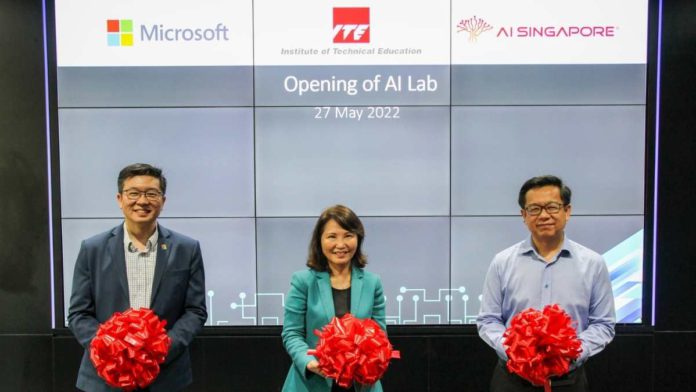
The Institute of Technical Education (ITE) Singapore and global technology giant Microsoft partner to equip more than 4000 students with responsible artificial intelligence (AI) skills.
As a part of this collaboration, Microsoft opens its new Artificial Intelligence (AI) Lab at ITE College East, which will serve as an innovation hub for ITE students to learn about AI principles, skills, and applications in various sectors.
This is a step towards fulfilling the ever-increasing demand for a skilled workforce in emerging new-age technology fields.
ITE is offering an AI-focused curriculum to students commencing their ITE experience in the 2022 Academic Year as part of its new 3-year Higher Nitec full-time program. “ITE is committed to equipping our students with AI social and technical skills for real-world applications and enabling them to be AI-ready for work,” said Low Khah Gek, Chief Executive Officer of ITE.
Gek further added that they have been able to design a comprehensive AI-focused curriculum with a unique ‘movie-fication’ pedagogy that will excite and inspire their students’ creativity, thanks to their partnership with Microsoft.
According to Microsoft, students from all three ITE Colleges, including Higher Nitec in IT Applications Development, Higher Nitec in IT Systems and Networks, Higher Nitec in Cyber & Network Security, and Higher Nitec in Business Information Systems, can enroll in the elective course. The application process for these courses has already started.
Director of Public Sector Group, Microsoft Singapore, Lum Seow Khun, said, “Singapore continues to deploy AI at a national scale as it moves to develop its position as a Smart Nation through Industry Transformation plans. Organizations continue to see a gap in AI skill sets and talent as they adopt machine learning, deep learning, and natural language processing.”
Khun also mentioned that they seek to leverage digital literacy as a driver for proper growth through collaborations like these while also bridging the gap between skill and employment for a resilient, digitally inclusive Singapore.
Artificial intelligence and digital technology company Pactera Edge partners with the International Institute of Information Technology Hyderabad (IIIT-H) to come up with its new program aimed at startups.
The AI Innovation Challenge is a program aimed at early-stage startups with solutions that can solve challenges in the retail and manufacturing industries.
According to officials, the program primarily focuses on leveraging computer vision for Human Activity Detection, Visual Inspection in manufacturing.
Startups with solutions that solve certain issue statements, such as strategy, technology, desired outcome, and effect, are sought by the organizations.
Selected startups will participate in a four-month structured immersion program to assist them in pivoting their product for particular domain use cases, along with an equity-free award of INR 12 lakh. IIITH will give research and business mentorship to chosen startups, leveraging its strong tech research skills and extensive expertise in incubating startups.
“Pactera EDGE believes in reinventing customer experience using revolutionary AI technologies and giving our customers the winning EDGE in the digital era,” said Dinesh Chandrasekar, CIO, Pactera EDGE.
Pactera EDGE also stated that it intends to provide mentorship to these concepts in areas such as technology, business strategy, design, and product development.
Prof Ramesh Loganathan, Head of Outreach, Professor of Co-innovation at IIIT Hyderabad, said, “CIE-IIITH is very happy to be partnering with Pactera EDGE for through market access program. As an early-stage incubator, helping startups with market access is the most significant challenge.”
He further added that the assistance of such business programs is a critical facilitator in achieving this aim.
Interested startups can apply for this program from the official website of IIIT-H.
Global audit, consulting, risk management, and financial advisory services provider Deloitte has partnered with the Indian Institute of Technology (IIT) Roorkee to offer its students fellowships in artificial intelligence (AI) and advanced analytics.
This new strategic partnership between the two institutions will considerably help IIT Roorkee students gain a better industry experience through work-study programs.
The artificial intelligence and machine learning (ML) immersion fellowship programs are specifically developed to build the future generation workforce.
Prof. Ajit K. Chaturvedi, Director, IIT Roorkee, said, “The coming together of IIT Roorkee and Deloitte will create new opportunities for both of us. In fact, this partnership has the potential to strengthen the AI roadmap of India.”
According to officials, this new partnership is in line with the Indian government’s “Digital India” goal, which aims to create a digitally empowered society. Experts believe that AI proficiency will be critical in addressing existing, emerging, and future employment prospects, and this collaboration will contribute towards building an industry-ready workforce in the country.
Both the organizations will primarily focus on –
Design and deliver AI and machine learning certification courses for the Deloitte AI Academy, which educates Deloitte practitioners.
Offer IIT Roorkee researchers and students the opportunity to collaborate on AI projects with Deloitte through a work-study program.
Promote AI fluency among ambitious students and the general public through online learning courses.
Managing Principal, Businesses, Global and Strategic Services at Deloitte, Jason Girzadas, said, “We at Deloitte are committed to developing new talent with the right skill sets to deliver on the benefits of AI for business and all of society.”
He also mentioned that this partnership with IIT Roorkee will educate future business leaders, imparting AI competency meant to increase the pool of business-ready AI talent as they strive to assist their customers’ journeys to become AI-fueled enterprises.
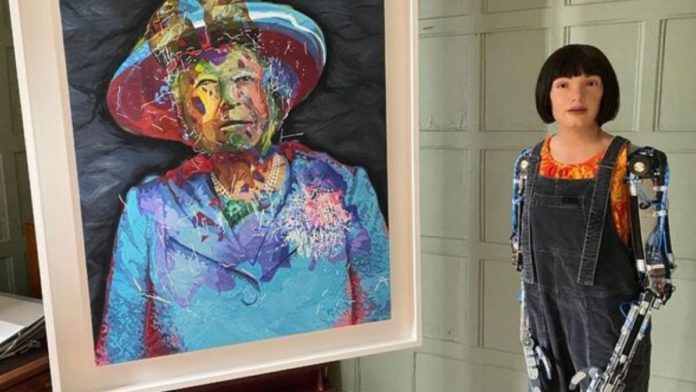
Ai-Da, a novel robot developed by English gallerist Aidan Meller and Cornish robotic business Engineered Arts, has painted a picture of Queen Elizabeth to celebrate her Platinum Jubilee.
Algorithmic Queen, the artificial intelligence-powered robot’s picture, was created to depict the various facets of technological advancement that have occurred over Queen Elizabeth’s 70-year reign.
In the words of the developer of Ai-Da, the portrait provides a marker for “how far things have come” in the monarch’s life. The painting was layered and scaled to produce the final multidimensional portrait of Queen Elizabeth.
Ai-Da is the world’s first artificial intelligence-powered robot that can paint just like an artist. The robot, named after Ada Lovelace, the first female computer programmer, uses face recognition technology to scan photographs and feed them into an algorithm that controls her robotic arm’s movement.
The developers of this robot claim it to be “the first ultra-realistic humanoid artist.” Ai-Da was first introduced back in 2019 at Oxford University, after which it has traveled across the world to showcase its capabilities. Ai-Da is updated regularly, allowing it to extend and refine its abilities as technology is continuously evolving.
Apart from painting capabilities, Ai-Da can also effectively converse with others.
Ai-Da said, “I’d like to thank Her Majesty the Queen for her dedication and for the service she gives to so many people. She is an outstanding, courageous woman who is utterly committed to public service.” The robot further added that it thinks she’s a wonderful person, and it wishes Her Majesty the Queen a very happy Platinum Jubilee.






-1.png)