Technology Giant Apple acquired an artificial intelligence startup named AI Music, reported Bloomberg. According to reports, the acquisition deal was completed in the past week.
However, no information was provided by the companies regarding the valuation of this acquisition deal. This new development will offer Apple access to AI Music’s cutting-edge technology that uses artificial intelligence to generate and compose music.
The company’s website suggests that its technology can produce soundtracks utilizing royalty-free music and artificial intelligence..AI Music’s highly capable technology creates dynamic soundtracks that change in response to the user’s actions.
For example, the soundtracks can be altered and adjusted depending upon the activity or mood the user is in, like gaming, workout, and many more. As stated on AI Music’s LinkedIn page, its motive is to “give consumers the power to choose the music they want, seamlessly edited to fit their needs or create dynamic solutions that adapt to fit their audiences.”
The acquisition will help Apply further strengthen its audio capabilities that can be used in multiple Apple devices in the future. Apple’s most recent purchase was also for Primephonic, a music startup. Apple now plans to integrate Primephonic’s classical music streaming service into an app related to Apple Music.
Apple has been relatively inactive for a few years in terms of acquisitions. According to a filing from October 2021, Apple only spent $33 million on contract payments for the fiscal year.
United Kingdom-based artificial intelligence startup AI Music was founded by Siavash Mahdavi in 2016. AI Music firmly believes that music should be accessible and contextually relevant for its creators and listeners. AI Music had previously worked with advertising agencies to create more engaging commercials that changed music depending on the viewer.
Researchers from the National Oceanic and Atmospheric Administration (NOAA) National Centers for Coastal Ocean Science (NCCOS), Oregon State University, and their partners are now developing a unique machine learning-powered drone system that can be used to tackle the increasing concern of marine litter.
The newly developed drones would have smart sensors attached to them, helping them effectively dissect and map garbage along coastlines. Additionally, researchers are also coming up with innovative methods to collect the detected garbage.
Last year, the researchers used beaches near Corpus Christi, Texas, to test system devices and enhance detection methods.
“Our goal is to design and demonstrate a relatively low-cost, easily deployed, and accurate marine debris detection system that could be used by existing marine debris response programs,” said the researchers.
The developed drones will be equipped with polarimetric cameras to collect images. Researchers tested those polaroid cameras both on the ground and air using a helicopter with the assistance of the United States Coast Guard.
According to the team, the helicopter testing allowed them to replicate the height at which the drone system would be flown and simulate the functioning of the polaroid camera. The gathered pictures are then fed to a machine learning algorithm that identifies, classifies, and maps marine debris.
Over the past few decades, marine litter has become a significant issue of concern that threatens the aquatic life ecosystem, interferes with navigation safety, and poses a threat to human health. Every minute, 33,000 single-use plastic bottles are tossed into world oceans, adding to the millions of others already destroying marine life and the ecosystem.
This new ML-powered system will considerably help authorities to accurately and quickly clean the garbage disposed near coats. When the drone-based machine learning system is fully operational, the data collected will be utilized to generate maps that highlight where marine waste is accumulated along the coast.
Data science is said to be the hottest profession of the 21st century. With the buzz about its integral role in today’s business and research landscape, organizations are rushing to leverage it to achieve their enterprise goals. Companies are swiftly tapping on this emerging technology to harness the power of their data and offer more value to consumers, resulting in an increase in demand for data scientists.
Data science has been rapidly gaining traction in the industry and shows no signs of slowing down due to the development of advanced machine learning algorithms and a massive shift from descriptive to predictive analytics. This is where businesses look for new and experienced talents in the data industry who can come up with new ways to develop and experiment ahead of time.
In an exclusive interview with Dattaraj Rao, Chief Data Scientist of Persistent Systems, we tried to decipher the Data Science Culture at the company.
Founded in October 1990, Persistent Systems specializes in software product idea and design, agile product engineering, performance engineering, support assurance, quality assurance, and other technical services. Using an assortment of technologies like big data analytics, cloud, embedded systems, and security, the company has built solutions that center around promoting Responsible AI practices.
Building Trust with Responsible AI
As Responsible AI has become a necessary add-on while developing AI solutions today, companies like Persistent Systems are helping the tech industry get close to making this mainstream. Persistent Systems has a mature data science practice that helps it cater to its customers in Healthcare and BFSI domain through Responsible AI systems and solutions. Its Responsible AI strategy focuses on making AI/ML systems reproducible, transparent, accountable, private, and secure. For this, the company puts emphasis on standardization of the ML pipeline using MLOps patterns like data catalog, model registry, feature store, low-code ML, AutoML, data & concept drift monitoring, and Explainable AI (XAI).
Persistent Systems has benchmarked state-of-the-art Explainable AI libraries to understand model predictions and evaluate inherently interpretable glass-box models. Dattaraj explains ‘Model development may use standard frameworks like PyTorch, TensorFlow, Spark ML or we could leverage no-code/low-code ML tools like H2O.ai and PyCaret or we could use a Cloud stack like Sagemaker or Azure ML Studio.” He adds that while the actual tech stack may vary with the customer, the core patterns remain common and help in customer adoption.
Pre-requisites of A Successful Data Scientist
Dattaraj strongly supports the notion that a data scientist should be able to tell a good story with the data by clearly articulating how a problem is solved and verifying it with appropriate metrics. As someone with an engineering degree, he thinks a solid background in math and statistics is very important to succeed as a data scientist.
He acknowledges that the ability to use a library is impressive, but one needs to know the inner workings of the ML algorithms to be able to apply them correctly and tune models to solve a problem. In addition, a good data scientist should clearly understand the problem domain and the different types of data sources. Dattaraj says, “A significant amount of time is spent in understanding and cleansing the data and more effort you spend upfront will help you build better models.”
Data Science Hiring Practices at Persistent Systems
At Persistent Systems, Dattaraj reveals, there are multiple interview levels with programming exams to interviews on specific math and problem-solving skills. In addition to possessing the right mix of positive attitude and problem-solving skills, the hiring team also looks for candidates having a basic knowledge of a relevant domain. This is a must because, many times, data scientists have to decipher complex data sources and find useful features using the given resources. Therefore, having a knack for learning a new problem domain and being hands-on with data analysis tools can give the candidates an edge over the rest.
Along with the aforementioned, Dattaraj adds that Persistent Systems also values data science certifications. However, the final decisions about hiring a candidate will be primarily based on the skills, values, and problem-solving attitude they bring to the interview. Dattaraj also affirms that the industry experience of a candidate is always preferred since a major part of work for the data scientist is to understand the problem and data sources. Experience with solving a business problem is valuable, and industry experience will definitely be an advantage.
During the pandemic, Persistent Systems had no hassles in finding some amazing talent, and their hiring record is at an all-time high. According to Dattaraj, the company’s enterprise IT teams have adopted the same standards of excellence that it brought to its customers and faced no problem while transitioning to WFH culture. Persistent Systems adopts the best in class standards for network management and cybersecurity, making it possible for its engineers and data scientists to perform at maximum efficiency. Today, the company has talented minds from all over the world as an integral part of the Persistent family. Together, they help it offer unmatched results and performance that meet customer expectations.
Preparing for Dynamic Industry Demands
Speaking on future career scope, Dattaraj informs that AI/Ml is an extremely fast-evolving space. For better career prospects, candidates need to keep themselves updated on the latest research and upcoming trends. Consequently, Dattaraj encourages readers to catch up on research papers, blogs, conference videos published in their area of interest. The best thing about data science is there is so much material available for free on the internet. For example, there has been an influx of some unique ML models for text analytics in the last couple of years. Most of these are available for free and there are ready-to-run notebooks available at Google Colab, Kaggle, or Github that show example usage. New tools (like MLOps, AutoML, Feature stores)and patterns are continuously making the job of data scientists easier. In retrospect, candidates need to be at least aware of these concepts.
Words of Wisdom
Dattaraj asserts that today there are a lot of opportunities and avenues for someone aspiring to be a data scientist. He insists, “Keep learning and think of how you can make your and others’ jobs easier with the application of AI.”
Dattaraj claims to have witnessed many young data scientists who are very good programmers but don’t take the additional effort to understand ML algorithms and rely too much on the libraries and API calls. “I feel the time spent in understanding the basics behind models is definitely worth the effort and will make you better data scientists,” he concludes.
Digital services provider Tech Mahindra partners with conversational artificial intelligence company Yellow.ai to provide an enhanced experience to its customers.
The new partnership will allow Tech Mahindra to transform enterprise customer experiences with conversational AI. According to the plan, both the companies will work alongside to develop next-generation conversational artificial intelligence solutions.
The developed solution will come with multiple features and capabilities such as enterprise resource planning, supply chain management, human resource management system, customer relationship management, and several more, making the AI solution highly competent and versatile.
Head of Business Process Services at Tech Mahindra, Birendra Sen, said, “As organizations across the globe are shifting from transactional to conversational business models, we believe that conversational CX and EX solutions will revolutionize the way they do business. Our partnership with Yellow.ai is aimed at driving digital transformations in the CX and EX space.”
The AI-powered solution will help Tech Mahindra in multiple fields like optimizing resources, improving response time, and many more. The companies’ solutions will serve various industry verticals like telecommunications, media and entertainment, energy and utilities, automotive, healthcare, retail, and manufacturing.
Bengaluru-based customer experience automation startup Yellow.ai was founded by Anik Das, Jaya Kishore, Reddy Gollareddy, Raghu Ravinutala, and Rashid Khan in 2016. The company specializes in providing natural language processing-based customer experience automation platforms. Yellow.ai has almost 700 companies as customers and users in over 70 countries worldwide.
Co-founder and CEO of Yellow.ai, Raghu Ravinutala, said “With our joint offerings, we aim to redefine how enterprises connect with their customers, employees, and vendors. Combining a conversational layer built on our rich NLP engine with Tech Mahindra’s deep expertise in optimizing day-to-day business activities, our objective is to transform the future of work across a broad set of industries.”
He also mentioned that they are pioneering new ground with Tech Mahindra to provide enterprise customers with a competitive advantage through improved business process efficiencies.
Multinational retail corporation Walmart announces that it plans to offer artificial intelligence-powered predictive clinical recommendations to its employees.
Walmart has collaborated with machine learning-enabled healthcare service providing company Health at Scale Technologies to develop and offer the recommendation service to workers.
Walmart employees and their families who are enrolled in the company’s health plan and work in places where Health at Scale is available will benefit from the new software, which will provide personalized clinician recommendations.
However, the companies did not provide any information regarding where the service will be available. The newly developed technology would considerably help provide better perks to employees and their families.
Vice President of Walmart US benefits division, Lisa Woods, said, “Customizing services and treatments to individual needs is the next frontier in healthcare and is a major part of Walmart’s commitment to helping associates and their family members find great doctors who consistently deliver the best value and quality care in their community.”
She further added that they are pleased to partner with Health at Scale and are looking forward to seeing how this new benefit will affect associates’ healthcare experiences and outcomes. According to the companies, the idea is to make it easier for plan members to locate doctors who are most suited to their health requirements and history of care.
United States-based technology company Health at Scale was founded by a group of leading machine learning and clinical faculty, David Guttag, John Guttag, Mohammed Saeed, and Zeeshan Syed, in 2015. To date, the company has raised $16 million in its series A funding round from investors like Optum.
Health at Scale specializes in developing solutions for optimizing care delivery for individuals by empowering at-risk payers, employers, and providers using modern technologies like artificial intelligence and machine learning.
CEO of Health at Scale, Zeeshan Syed, said, “Finding the right provider is one of the most important health decisions a patient makes. It is also one of the hardest. What we really need to optimize is the patient-provider match.”
Technology giant Meta announces that it might shut down the operation of its social media platform Facebook in Europe. This information was revealed in the company’s annual report for the Securities and Exchange Commission.
The European data regulations norms do not allow Meta to store user data in servers located in the United States, causing this new trouble for the company.
Meta claims that the capacity to process user data across borders is critical to its company, both in terms of operations and ad targeting. In recent years, the European Union has taken multiple measures to prioritize the data privacy of users for providing a secure web experience to citizens.
Meta’s statement mentioned, “If we are unable to transfer data between and among countries and regions in which we operate, or if we are restricted from sharing data among our products and services, it could affect our ability to provide our services, the manner in which we provide our services or our ability to target ads.”
It further mentioned that a number of our most essential products and services, such as Facebook and Instagram, will very likely be unavailable in Europe. Meta highlighted a 2020 judgment by the Court of Justice of the European Union (CJEU), which provided a framework for data transfers from Europe to the United States.
Last year, the European Court of Justice declared this treaty null and void because of data protection violations. After this decision of the European Court of Justice, both sides have stated that they are working on a new or amended deal.
Apart from Privacy Shield, Meta also uses so-called model agreements, or Standard Contractual Clauses, as the principal legal basis for processing data from European users on American servers.
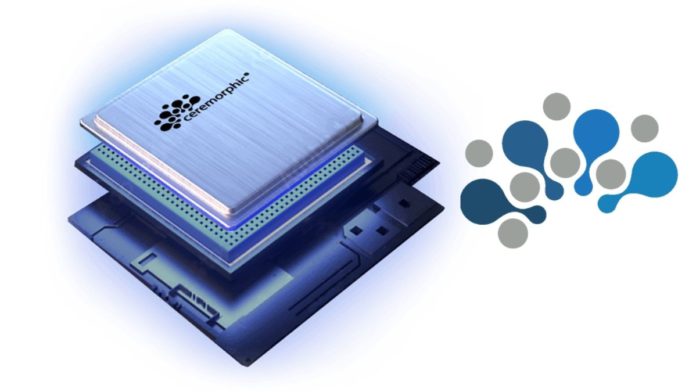
Energy-efficient artificial intelligence-powered supercomputing components developing company Ceremorphic announces that it plans to launch a new 5nm-based microchip.
According to Ceremorphic, the new chipset will be highly scalable and less power-consuming, which would deliver better performance, efficiency, security, and reliability. The technology firm says that the new processor will be able to handle next-generation applications such as AI model training, HPC, automotive processing, drug discovery, and metaverse processing.
Ceremorphic has an advantage over other chip firms since it has access to TSMC’s 5-nanometer process node. The company plans to use 2024 for its Hierarchical Learning Processor.
CEO and Founder of Ceremorphic , Venkat Mattela, said,” Having developed many innovations in multi-thread processing, algorithm-driven VLSI, reliable performance circuits, low-energy interface circuits, quantum-resistant security microarchitecture, and new device architectures beyond CMOS, Ceremorphic is well on its way to accomplishing our goals.”
He further added that the issues this market faces with reliable performance computing require an entirely new architecture built specifically to ensure dependability, security, energy efficiency, and scalability.
This new development will now allow Ceremorphic to compete with several global giants like NVIDIA, which is a developer of processors used for artificial intelligence and high-performance computing. The processor will come with multiple top-notch features like –
Custom Machine Learning Processor and custom FPU clocked at 2Ghz.
ThreadArch based RISC –V processor for proxy processing.
Open AI framework software support with optimized compiler and application libraries.
United States-based technology firm Ceremorphic was founded by Venkat Mattela in 2020. The enterprise specializes in developing an architecture that is used for multiple purposes, including AI model training, HPC, drug discovery, metaverse processing, and many more. To date, the company has raised nearly $5 million in its recently held series A funding round.
Professor of Electrical Engineering and Computer Science at Stanford University, Subhasish Mitra, said, “Reliable performance computing is absolutely something this industry needs, and the approach that Ceremorphic is pursuing is a significant step in the right direction.”
Reliance’s telecommunication service providing brand Jio invests $15 million in deep learning and artificial intelligence startup Two Platforms. The investment has made Reliance Jio a 25% equity stakeholder on a fully diluted basis.
United States-based artificial intelligence company Two Platforms was founded by Pranav Mistry recently in 2021. White & Case served as the legal advisor for Jio for the transaction. Two platforms specialize in developing interactive and immersive artificial intelligence experiences beyond text and voice.
The company’s founding team has extensive experience in research, design, and operations with some of the world’s most prestigious technological organizations. The company’s platform enables artificial intelligence-powered voice and video chats in real-time, as well as artificial humans, immersive environments, and vivid games.
The investment would allow Two Platforms to be able to work alongside Jio to accelerate the adoption of new technologies and develop disruptive technologies such as artificial intelligence solutions, metaverse, and mixed realities.
Director of Jio, Akash Ambani, said, “We are impressed with the strong experience and capabilities of the founding team at TWO in the areas of AI/ ML, AR, metaverse and Web 3.0. We look forward to working together with TWO to help expedite the development of new products in the areas of interactive AI, immersive gaming, and metaverse.”
According to a statement made by the company, TWO intends to use its interactive AI technology in consumer applications first, followed by entertainment and gaming, as well as enterprise solutions such as retail, services, education, and health and wellness.
“Jio is foundational to India’s digital transformation. We at TWO are excited to partner with Jio to push the boundaries of AI and introduce applications of Artificial Reality to consumers and businesses at scale,” said the CEO of Two Platforms, Pranav Mistry.
Internet solutions and web browser developing company Mozilla closes its Virtual Reality (VR) browser named Firefox Reality. The browser was specifically developed to be used in a VR environment.
However, the company has kept the code of the browser open source. Igalia, a software firm, is working on a browser based on the source code of Firefox Reality. Igalia plans to release its new VR browser named Wolvic by the end of next week.
Firefox Reality was launched in 2018 and was live for four years. Earlier the VR browser was available on Viveport, Oculus, Pico, and HoloLens platforms through their app stores. It was capable of performing various unique tasks.
The browser eliminated the need of operating a mouse as it could access URLs, do searches, and browse 2D and 3D internet using a virtual reality hand controller.
Mozilla mentioned, “Today, we’re delighted to announce that the Firefox Reality browser technology will continue under Igalia, where they will uphold the same principles we started when we created Firefox Reality — an open-source browser that respects your privacy.”
According to Igalia, Wolvic will be available for AOSP-based stand-alone XR devices, and HarmonyOS tethered systems like Oculus, Huawei VR Glass, Vive, Pico, and Lynx. The software company has already raised partial funding to run the newly announced virtual reality browser.
“As of Today, Igalia has secured partial funding over the next two years and will continue to invest ourselves. However, to be really successful and build a healthier ecosystem, we know that we’ll need to find additional partners,” mentioned Igalia in a statement.
Interested investors can reach out to the company for further details. Users can still find the Firefox Reality browser in several VR app stores, but the company said that they would remove it soon.
Global semiconductor manufacturing giant Intel, the Ministry of Electronics and Information Technology (MeitY), National e-Governance Division (NeGD), the Government of India, and the United Nations Development Programme (UNDP) recently held a session on deep learning.
It was their seventh session which focused on Demystifying Deep Learning. More than 95 government officials and ten ministers attended the online session meant for government staff and policymakers.
Intel specialists participated in the recently held webinar targeted for policymakers as part of the company’s Digital Readiness portfolio. The webinar provided relevant industry experience and used case studies for helping policymakers.
Abhishek Singh, President and CEO of NeDGD, Ministry of Electronics and Information Technology, said, “These sessions are not only leading to capacity building but also more and more adoption of technology-based solutions in collaboration with industry experts and ecosystem partners, walking the participants through relevant use-cases and discussing scalable solutions.”
He also talked about several artificial intelligence technologies like Netra.ai, an AI-based treatment for diabetic retinopathy, as well as E-Paarvai, a tool used by the Tamil Nadu government to diagnose cataracts. During the event, participants also got the opportunity to take part in an interactive and hands-on artificial Intelligence exercise via a gaming interface. A
ccording to officials, the session will host several other sessions regarding emerging technologies like blockchain and others. The prime aim of the sessions will be to provide industry-specific experience to attendees with international and Indian use cases.
“In the coming times, Deep Learning Networks will help us understand computer memory better. DL will be democratized further to become a standard part of a developer’s toolkit,” said Omesh Tickoo, Principal Engineer and Research Manager at Intel. He also talked about the rising demand for artificial intelligence and machine learning technologies for modernizing robots and other systems.