Clearview AI, the controversial facial recognition firm, has been hit with another fine in Europe. Clearview AI scrapes selfies and other personal information off the Internet without consent to feed it into an AI-powered identity-matching service that the comany sells to law enforcement and other organizations.
This fine comes after Clearview AI failed to respond to an order from the CNIL last year, France’s privacy watchdog, to stop its unlawful processing of citizens’ information and delete their data.
Clearview AI responded to that order by ghosting the regulator, thereby adding a third GDPR breach for its non-cooperation with the regulator to its earlier tally. Italy’s privacy watchdog fined Clearview AI €20 million in March for breaches.
Here’s the CNIL’s summary of Clearview’s breaches:
Articles 17, 15, and 12 of the GDPR: Individuals’ rights not respected.
Breach of Article 6 of the GDPR: Unlawful processing of the personal data.
Article 31 of the GDPR: Lack of cooperation with the CNIL.
According to CNIL, Clearview AI had been given two months to comply with the formal notice’s injunctions and justify them to CNIL. However, it did not render any response to this formal notice.
As a result, the chair of the CNIL made the decscision to refer the matter to the restricted committee that is in-charge of issuing sanctions. Based on the information brought to its attention, the restricted committee imposed a maximum 20 million euros financial penalty, according to the article 83 of the General Data Protection Regulation (GDPR).
Technology giant Microsoft has reportedly fired almost 1,000 employees across multiple divisions. It has now joined the likes of Flipboard and Snap, who also have resorted to job cuts to contain the slowdown.
In a statement to a US-based website, Axios, Microsoft said that it evaluates business priorities and makes structural adjustments accordingly, like all companies. Microsoft added that it would continue to invest in its business and hire for the key growth areas.
In July, the tech giant said that a small number of roles had been eliminated and would increase its headcount down the line. Several big tech companies have opted for hiring freeze or job cuts to check the slowdown.
Last month, Meta’s chief executive officer Mark Zuckerberg during a weekly Q&A session with employees, announced the company would cut budgets across most of the teams. He said the company would freeze hiring and restructure some teams to trim expenses, Bloomberg reported.
In August this year, iPhone maker Apple sacked about 100 contract-based recruiters due to its push to rein in its hiring and spending, Bloomberg reported. In the same month, multimedia platform Snapchat decided to cut jobs to refocus the business on growing ad revenue.
In a letter to the employees, Snap CEO Evan Spiegel said it had become clear that the company must reduce the cost structure to avoid incurring significant ongoing losses.
“As a result, we have made the hard decision to reduce the size of our team by about 20%. These changes differ from team to team, depending upon investment needed and the level of prioritization to execute against our strategic priorities”, Spiegel’s letter read.
According to federal data, Tesla has topped registrations of battery-electric vehicles in the first nine months of this year in Germany at nearly 38,500, beating Volkswagen by around 6,000 registrations.
Tesla’s battery-electric registrations jumped nearly 50% from last year’s January-September. In comparison, Volkswagen’s dropped 40% to almost 32,300, in line with a broader drop for most of the Volkswagen Group brands.
According to the data from the federal motor transport authority, only Audi and Seat saw a rise in the number of battery-electric cars registered in Germany for Volkswagen Group brands. Globally, Volkswagen Group witnessed total deliveries of its battery-electric vehicles increase by 25% in January-September from a year earlier.
But supply chain bottlenecks have hit the carmaker especially hard in Europe, where inflation and rising energy costs also weigh on demand. Across all vehicle types, including combustion engine, hybrid, and battery-electric, deliveries of Volkswagen Group vehicles fell 12.9% globally this year, the carmaker reported last week, with Europe as the hardest-hit region.
A Volkswagen spokesperson said, “The tense situation of component supply has continuously led to adjustments in production. We expect a stabilization of supply over the coming year.” Tesla has seen record deliveries worldwide but also faced logistical challenges and delivered less in the third quarter than analysts had expected.
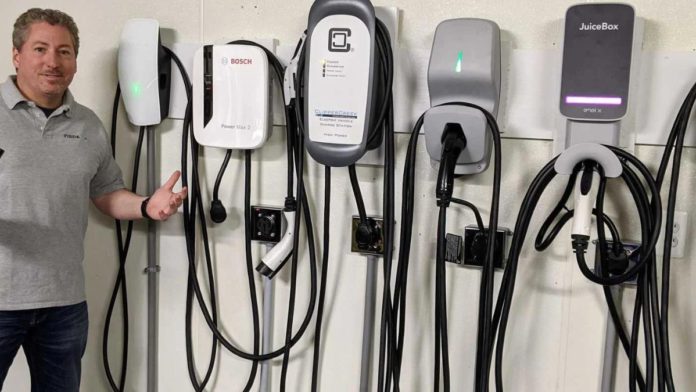
Electric vehicle manufacturer Tesla has launched a home charging station, or Wall Connector as it calls it, that works with other electric car brands, too, not just Tesla vehicles.
According to the auto-tech website Electrek, Tesla has launched a brand new version of its J1772 Wall Connector. It is priced as $550 on its official website.
The comany said that the J1772 Wall Connector is an convenient and easy charging solution for Tesla and non-Tesla electric vehicles alike. It is ideal for houses, apartments, hospitality properties, and workplaces.
The report said that Tesla’s description looks like the automaker might be seeking after the commercial charging market. With multiple power settings, range of up to 44 miles added per hour, a versatile indoor/outdoor design, and a 24-foot cable, the J1772 Wall Connector provides unparalleled convenience.
It can also power-share to maximize the existing electrical capacity, automatically distributing power and enabling the charging of multiple vehicles simultaneously. Tesla’s own elcetric vehicles can also use the station. However, they will need to use an adapter provided with the vehicle.
Till now, Tesla has installed almost 4,000 supercharger stations globally, growing 34% year-on-year. According to data compiled by Finbold, Tesla has 3,971 supercharger stations globally, recording a growth of 33.88% from the 2,966 recorded during the same period in 2021.
After changing the landscape in the fields of pharmaceuticals, earth sciences, finance, and art, AI is making waves in politics. A new AI-driven political party in Europe is striving for parliamentary participation and raising awareness about the role artificial intelligence plays in people’s lives. The brand-new Danish political party, Det Syntetiske Parti (The Synthetic Party), aspires to run in the nation’s general election in November.
The non-profit art and technology group MindFuture Foundation and the artist collective Computer Lars established the Synthetic Party in May. The AI chatbot Leader Lars, developed on the policies of Danish fringe parties since 1970 and intended to reflect the ideals of the 20% of Danes who do not vote in elections, serves as its public face and leader. The party claims that those Danes did not exercise their right to vote because none of the traditional parties appealed to them.
A flag of The Synthetic Party being waved in front of Christiansborg, the Danish parliament building in Copenhagen. The party hopes to stand in the country’s next general election in June 2023. (Computer Lars)
Oscar Stone, the party’s founder, MindFuture artist, and researcher, said that the party is the voice for all smaller parties that lack the funds to compete in politics.
The Synthetic Party revealed that its human members would be implementing its AI-derived agenda, not Leader Lars, who won’t appear on any ballots. However, people can interact with Leader Lars on Discord. Leader Lars can be addressed by starting your sentences with “!” Although it can comprehend English, the AI will reply to you in Danish.
One of the proposals put up by The Synthetic Party is the creation of a universal basic income of 100,000 Danish kroner (US$13,700) every month, which is more than double the average wage in Denmark. Making the government’s internet and IT industry equally owned and in status to other public institutions is another proposed policy reform. When asked if the chatbot backed the basic income proposal, Leader Lars replied, “I am in favor of a basic income for all citizens.” When asked the motive behind his support of a basic income, he explained, “I believe a basic income will help reduce poverty and inequality and act as a safety net for all.” Finally, in response to the question of whether AI should be used to decide the basic income level, Leader Lars said he believes AI should be used to determine the basic income level, since it is vital to analyze and guarantee that everyone receives their fair part.
The Synthetic Party’s goal is to increase public awareness of the impact of AI on our lives as well as the ways in which governments can hold AI responsible for biases and other societal consequences. The party wants to add a new Sustainable Development Goal (SDG) to the United Nations’ list of objectives that must be met by all countries by 2030 and address issues including poverty, inequality, and climate change. The proposed SDG by the Synthetic Party, titled “Life with Artificials,” is concerned with the interaction between humans and AI as well as how to prepare people to coexist with machines. The 17 SDGs are now “insufficient to solve the difficulty of living with ‘Artificials,'” according to MindFuture, because they do not call for the creation of next-generation humanized AI technology.
The party’s creator and artist-researcher at MindFuture, Asker Bryld Staunæs, argues that democratic institutions have never adequately addressed AI issues. When it is discussed, it usually involves rules, but Staunæs doesn’t think that governments are able to control how the technology is developed. As a result, the party will try to change the narrative in order to demonstrate that artificial intelligence can be treated within a democratic framework and be held accountable for what it does and how it proceeds.
The Synthetic Party isn’t the first time artificial intelligence has been employed in politics. An AI candidate ran for mayor in Japan in 2018. In the 2018 presidential elections, a Russian chatbot named Alisa campaigned against Vladimir Putin. Then, in 2020, Sam ran for office as a virtual politician in New Zealand.
So what sets The Synthetic Party apart?
The Synthetic Party is distinguished from what Staunæs refers to as the “completely virtual” politicians, such as SAM from New Zealand and Alisa from Russia. According to him, such candidates are anthropomorphizing the AI in order to function as objective candidates, [so that] they become authoritarian. Whereas, The Synthetic Party is on the verge of full-fledged democratization of a ‘more-than-human’ manner of existence. Staunæs asserts that the party emphasizes exploring how humans could use AI to their advantage more than establishing a popular AI spokesperson.
It is unclear if the party will have enough support to run in the 2023 election; as of now, it only has twelve of the 20,182 signatures required to do so. However, if it is successful in getting a seat in the legislature, the party intends to utilize political power to link AI to work being done by the assembly’s members.
The Synthetic Party is one of more than 230 “micro-parties” that have been formed over the years in Denmark, most of which focus on criticizing society rather than creating policies to address societal problems. The party is in talks with individuals from all around the world, including Colombia, France, and Moldova, about starting further regional branches of The Synthetic Party so that they can eventually join Synthetic International.
Meta has recently launched a new advertisement campaign that targets Apple’s iMessage platform. Mark Zuckerberg, the CEO and founder of Meta, revealed the campaign in which Apple is being criticized for providing end-to-end encryption only for iMessage and not for regular SMS communication.
Zuckerberg posted a picture of the new ad playing at Penn Station in New York on Instagram. The advertisement reads: “Protect your personal messages across devices with end-to-end encryption.
One blue and one green letter bubble, patterned like Apple’s Messages app, are displayed in the advertisement. The phrase private bubble appears in a third bubble, indicating that WhatsApp is a private platform.
According to Zuckerberg’s caption, WhatsApp is more secure and private than iMessage, as it has end-to-end encryption that works across both Android and iPhone, including group chats.
The caption added that with WhatsApp, one can also set all new chats to disappear with the tap of a button. “And last year, we introduced end-to-end encrypted backups too. All of which iMessage still doesn’t have,” it read.
Meanwhile, the Meta-owned messaging platform WhatsApp recently released the feature to add up to 1,024 participants to groups for specific beta testers. According to sources, the feature is available on WhatsApp beta for iOS and Android but is limited to a certain undefined number of beta testers.
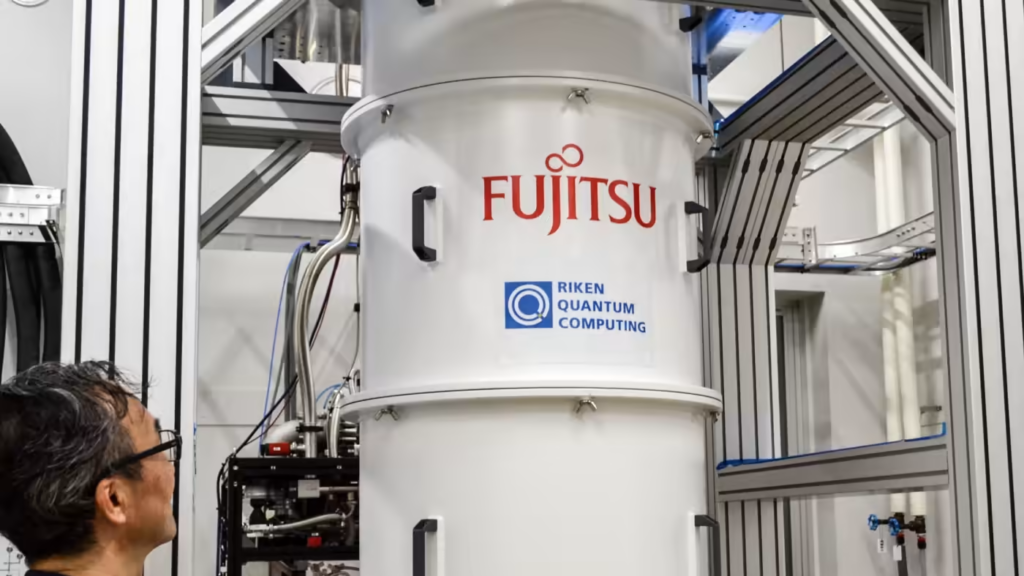
Earlier this month, there was big news in the cryptocurrency world: Fujitsu and Riken Research Institute are slated to introduce possible Bitcoin-beating quantum computers jointly in 2023.
The news comes first superconducting quantum computer to fully combine hardware, software, and applications was unveiled in late August by prominent artificial intelligence (AI) company Baidu.
The new computer from Fujitsu will use ‘famed’ superconductor materials, which, when chilled to a temperature close to “absolute zero,” exhibit zero electrical resistance. It is anticipated that the computer, which is notably more powerful than Frontier, the fastest supercomputer in the world created by Hewlett-Packard, would first be used for financial forecasts and the development of new pharmaceuticals. This quantum computer which Fujitsu is anticipated to unveil next year, will have 64 qubits. In order to provide some insight, Google launched a quantum computer in 2019 with 53 qubits, while IBM’s Eagle quantum computer has 127 qubits processor.
The premise that Fujitsu plans to release a quantum computer with more than 1,000 qubits “after March 2027” should serve as a clear indication of how swiftly the quantum computing industry is expected to advance in the next years. Although companies like Google have made tremendous progress in building their own supercomputers, it won’t be commercially viable until 2029, which might offer Fujitsu an advantage.
Fujitsu will become the first domestic company to produce quantum computers in Japan, with the help of Riken research institute. (Photo courtesy of Fujitsu)
Fujitsu has been partnering with Riken on quantum computers since last year when they built the Riken RQC-Fujitsu Collaboration Center in Wako, Saitama prefecture. There, a group of 20 researchers intertwines Fujitsu’s computing and application expertise with Riken’s superconducting circuit-based quantum computer technology.
By market capitalization, Bitcoin has overtaken all other cryptocurrencies, and its growth has sped up the use of blockchain technology in a variety of sectors. It has also given rise to a multitude of applications, such as decentralized finance (DeFi), which are altering how people do business. However, the supremacy of blockchain-based protocols like Bitcoin may soon be threatened by the emergence of a new class of quantum computers. This implies that, along with digital communications like email, messaging services, and online banking, cryptocurrencies that use advanced encryption algorithms could potentially be decrypted by quantum computers. Therefore, government organizations like NIST emphasize the need for a switch to post-quantum encryption.
Vivek Mahajan, the CTO of Fujitsu, asserts that quantum computers may be able to solve mathematical optimization problems with Shor’s algorithm or the so-called traveling salesman problem. It could be able to address other problems that are regarded as too challenging for supercomputers. Shor’s algorithm employs quantum technology to infer the prime factors of technology. While the traveling salesman problem looks for the quickest path to visit every city connected by a local highway system, visits each place, and then heads back to the starting location.
Digital signatures in Bitcoin are signed using something called the Elliptical Curve Digital Signature Algorithm (ECDSA). ECDSA employs a unique mix of digital signatures, Public and Private Key pairs, and the NSA-developed SHA-256 hashing algorithm. In a proof-of-work blockchain system like Bitcoin, miners compete to unearth a numerical answer to the SHA-256 algorithm that surpasses the difficulty or network goal and create the next bitcoin block. On the header of a block of Bitcoin transactions and a random number, miners undertake what is known as hashing operations. Often, the miner must complete quadrillions of hashing operations per second before they can accurately predict the answer. The Bitcoin network’s security, which has thus far been very impenetrable, is aided by the mathematical complexity of discovering the answer. Without it, the network’s security could be compromised.
Before each bitcoin transaction is recorded on the blockchain, the immutable record of who owns what, it must first be “verified” by the network of miners. In order to produce a public key for Bitcoin, these algorithms (ECDSA) are applied to a private key that is chosen at random. And the Bitcoin protocol generates a public Bitcoin address using the hash value of this.
Encryption scrambles communication using a mathematical formula, allowing only those granted permission to access it to read it. The difficulty of “undoing” the mathematical puzzle without the key determines how secure your communication is.
RSA, for example, is based on the difficult problem of number factoring. It is simple to multiply two prime numbers together, but it is challenging to factor a huge number into two prime numbers. For a conventional computer to factor a single 4096-bit key, it would take longer than the universe has existed.
Quantum computers, on the other hand, address problems in a different way than conventional computers. Shor’s algorithm is substantially more effective than a conventional computer in determining a number’s prime factors and at “undoing” this factoring difficulty. This implies that, in theory, one could obtain your private key from the public key if they had a sufficiently powerful and functional quantum computer. To put it in another way, the verification of the procedure of Bitcoin might be reversed by a quantum computer, which would extract the private key from the public key.
A hostile actor would initially need to locate the public key. The wallet address is based on the public key, but it is hashed using methods that are not yet susceptible to attacks from quantum computers. Unfortunately, it is revealed during a transaction. Once the public key is made public, the private key is at risk. If someone else discovers the private key, they can claim ownership and spend every bitcoin.
According to the researchers, it would take about ten minutes for a quantum computer with 1.9 billion qubits to decipher a Bitcoin’s encryption. It would take a computer with 317 million qubits to complete the task in one hour. But if you had an entire day to try to break the protection, a quantum computer with just 13 million qubits could do it. For comparison, a supercomputer would take 2.5 billion years to crack the encryption. While systems with 13 million qubits are obviously still a long way off from becoming widely available, a 317 million qubits or more system has a far better chance of actually decoding Bitcoin’s algorithm.
Some researchers think that large-scale quantum computers will never be achieved, while others believe the timing is much closer than people realize, and some experts have said it may occur in around five years. The National Institute of Standards and Technology (NIST) considers 15 years to be more appropriate. In a research article published in late January 2022, experts from Sussex University predicted that quantum computing would be able to break the SHA-256 and weaken the security of the Bitcoin network during the next ten years.
If possible, we should prepare to switch to a new cryptosystem well in anticipation of the development of a powerful quantum computer and encourage users to do so before the possibility of ownership verification arises. Although if the algorithm used to generate the public key from the private key is altered, we can avert some of these issues as quantum computer power grows. The National Institute of Standards and Technology has been in charge of an initiative to assess and standardize post-quantum cryptography procedures.
Numerous initiatives are trying to improve existing designs or add new ones in order to make protocols even more secure in the face of these fears and concerns. Directed acyclic graph (DAG) technology, utilized in the IOTA (MIOTA) blockchain, and quantum key distribution (QKD), created by JPMorgan and Toshiba, are two examples of the existing quantum-resistant algorithms. Alongside the distributed ledger project Ursa from the Hyperledger Foundation, Ethereum developers have also been investigating quantum resistance. Although many alternative cryptocurrencies have been focusing on quantum resistance from the beginning, it will take time for mainstream cryptocurrencies to adapt.
Lattice-based encryption, meanwhile, provides a different possible defense against quantum threats. This kind of encryption introduces additional mathematical noise that may even confuse a cutting-edge system.
It is important to note that updating current private keys could introduce fresh security holes. This is due to the fact that after successfully deploying post-quantum encryption, the system will create new keys. Users will need to sign in using their old key for approval in order to trigger a switch to the new one. Inactive users, however, might never update their private key, which might lead to significant issues.
Thankfully, the domain of cryptography is not yet under the whip of adversary agents. Given quantum computing’s slow growth and the ability of the Bitcoin network to adapt to thwart attacks, such as via encryption updates, the danger and uncertainty associated with it are relatively remote. As many hacking cases still occur every month, keep in mind that governments may have different interests in their use of quantum computers. Even Fujitsu will become the first domestic company to sell quantum computers to corporations in Japan, as mentioned earlier, the key interest lies in using it for the greater good.
Oracle and Nvidia on Tuesday announced they are expanding their partnership and adding tens of thousands of Nvidia’s chips to boost artificial intelligence-related computational work in Oracle’s cloud.
The expanded partnership has come at a time when more and more companies use AI and the AI models become more complex, needing a ramp-up in data center infrastructure investments.
While the companies refused to say how much the additional hardware would cost or how many chips were sold, they said the expansion includes Nvidia’s A100 and its most advanced H100 GPUs or graphics processing units.
Those two chips were also on an export control list to China over a month ago. Nvidia said at the time it had included $400 million of potential sales to China, which could be impacted in its third-quarter earnings outlook.
As of August, Nvidia’s market share of so-called accelerator chips inside the world’s six biggest clouds’ infrastructure grew to 85%, according to a note by brokerage Jefferies on Monday. Chips that help accelerate computing speed include GPUs and are heavily used in AI work, where Nvidia has the lion’s share.
While many AI chip startups are challenging Nvidia, Clay Magouyrk, who is in charge of Oracle Cloud Infrastructure, said he does not see much of an opening for the newcomers.
Manuvir Das, in charge of enterprise computing at Nvidia, said the Oracle partnership includes increased cooperation to make the AI software run more efficiently on Oracle Cloud and provide more support to Oracle’s customers.
The Israeli military has deployed an artificial intelligence-powered shooting system over a gate that Palestinians use to enter the Old City of Hebron at a busy crossing in the West Bank. The system is positioned over a checkpoint on al-Shuhada Street (or Martyrs’ Street), which has frequently been the epicenter of protests and conflicts between Palestinians and Israeli soldiers.
It cannot get anymore dystopian that this.
The Israeli army is now using an AI-powered automatic weapon, called Smart Shooter, at a military checkpoint in the old city of Hebron.
The weapon system is intended to shoot non-lethal projectiles such as fire stun grenades, tear gas, and sponge-tipped bullets to dissipate crowds, according to the Israeli military. The intention of the hostility directed against Palestinians living in the Old City of Hebron by illegal settlers and occupation troops is to drive them from their houses so that the territory may be used to build illegal Jewish-only settlements.
According to a military spokeswoman, the army is evaluating the prospect of utilizing remotely operated equipment for the deployment of authorized means of crowd dispersion as part of the army’s strengthened preparations for addressing persons breaking order in the region.
The official clarified the AI shooter system does not involve remote control of live ammunition. However, there have been several instances in recent years where Palestinians have suffered severe injuries with sponge-tipped bullets, which are thought to be non-lethal.
The company that created the shooting technology, Smart Shooter, specializes in systems that track and lock in on targets using artificial intelligence-based image processing. Despite Smart Shooter’s well-known slogan, “one shot, one hit,” many Palestinians continue to be skeptical of the manufacturer’s claim that its weapons offer improved firing accuracy.
Earlier, using Smart Shooter’s “SMASH Dragon” armed drone technology, drones have also been deployed to shoot live ammo and spray tear gas at protesters from a distance.
Role of AI in Guardian of the Walls
Israel has a history of using Palestinians as test subjects for early AI technologies before enhancing and distributing them overseas. Israel launched its first artificial intelligence battle on Gaza during the “Guardian of the Walls” operation last year. The Israel Defense Forces (IDF) prominently used cutting-edge technology and machine learning in this historic initiative. The IDF targeted Hamas targets deep within Gaza with targeted bombings during the 11-day conflict between the two rival groups, killing at least a hundred of their top leaders.
According to a senior officer in the IDF Intelligence Corps, they leveraged technical advancements as a force multiplier for the whole IDF and introduced new operational procedures. During the years preceding the conflict, the IDF created an advanced AI technical platform that consolidated all data on terrorist groups in the Gaza Strip into one system that facilitated the analysis and extraction of intelligence. This contrasted with the military’s sole reliance on what was already available on the civilian market and its adaptation for military purposes.
Soldiers in the Intelligence Corps’ elite Unit 8200 invented the algorithms that became the “Alchemist” and “Gospel” combat drone programs. To compile target recommendations for soldiers and military leaders and to locate hit targets, these programs relied on data from signal intelligence (SIGINT), visual intelligence (VISINT), human intelligence (HUMINT), geographical intelligence (GEOINT), and other sources.
Over 210,000 Palestinians live in Hebron, which is divided between regions under the sovereignty of Israel and the Palestinian Authority. A small number of Israeli settlers also reside there, largely in enclaves close to the ancient city.
Former Israeli soldiers confessed in November 2020 that they had taken hundreds of pictures of Palestinians to create a database for a massive face recognition surveillance program called “Blue Wolf” in the southern West Bank city.
According to a Washington Post investigation based on six former Israeli soldiers’ testimony, Blue Wolf is a smartphone application that takes pictures of Palestinians in the occupied West Bank and compares them to a database maintained by the Israeli military and intelligence.
Prizes were allegedly given out to units that collected the most images of Palestinians to add to the database, which one former soldier referred to as the army’s “Facebook for Palestinians,” in order to motivate soldiers to participate.
A similar program called “White Wolf” is employed in the West Bank to scan the identity cards of Palestinians before they enter settlements to work and to store their data.
Project Nimbus and #NoTechForApartheid
This announcement comes after it was discovered that Google, under its problematic “Project Nimbus” agreement, was offering superior AI and machine-learning capabilities to the Israeli government.
Project Nimbus, a US$1.2 billion cloud computing project funded by the government of Israel, was developed in joint collaboration with Amazon. A statement from Israel’s Finance Ministry last year stated that the two companies triumphed against a proposed alliance between Microsoft and Oracle. According to the ministry’s announcement, the initiative aims to offer a comprehensive cloud solution to the government, the defense establishment, and others. Many opposed the project, claiming that the Israeli military and security agencies already rely on a sophisticated computerized surveillance system, and that the efficiency of Google’s data analysis capabilities could exacerbate the growing data-driven military rule.
Hundreds of employees at the companies have voiced concerns about Project Nimbus after it was reported in mid-2021 that they would be aiding in and advancing Israel’s apartheid project. According to documents provided to Intercept, Google will offer the Israeli government cutting-edge artificial intelligence and machine learning capabilities as part of the initiative. The documents mention the new Cloud Vision API, which would offer Israel access technologies for facial detection, automated image categorization, object tracking, and even sentiment analysis, though they don’t explain how Nimbus will be used.
Ariel Noren, a well-known critic of Project Nimbus and a Google marketing manager, announced his resignation from the internet company on August 30 after alleging that Google made a fortune from the ongoing oppression of Palestinians. In order to oppose the initiative and eventually compel them to cease it, Noren also launched the #NoTechForApartheid movement, which was recently held in San Francisco.
While this is going on, Project Nimbus proponents—among them Google—claim that the program focuses solely on improving cloud computing services for government departments, including finance, healthcare, transportation, and education, with the goal of creating over 3,000 employment opportunities for both Israeli Jews and Arabs.
The controversy surrounding Google’s collaboration with security and military departments is not the company’s first internal uprising. In 2018, tens of thousands of Google staff members petitioned the company to terminate Project Maven, a drone surveillance contract with the Pentagon.
It is possible that Google might be trying to bring positive development in Israel by offering them access to its cloud-supported platforms. But, considering the role tech behemoths play in blindsiding their employees while carrying out their nefarious motives, it is likely that history keeps repeating. Sure, these companies and the government might give in to the demands of protestors and withdraw their surveillance plans on the common public, however, the bigger question is when will these parties take accountability for their actions? If not, who would ensure that they are penalized for the same?
The Israeli-occupied West Bank has seen an increase in tensions since 2007. The deployment of disruptive technology like AI and cloud will now grant Israel’s military permission to commit even worse crimes.
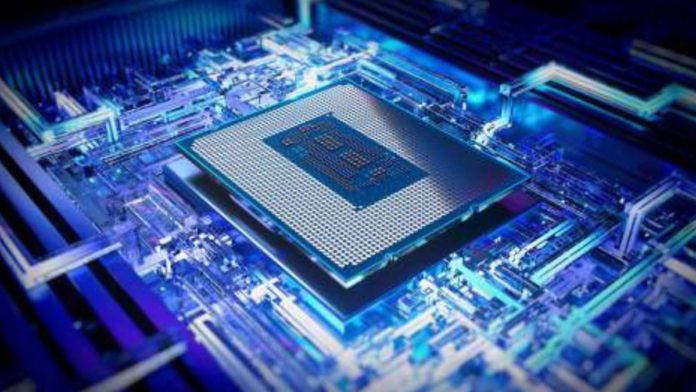
Intel today launched its latest 13th Gen Intel Core processor family in India, including six new unlocked desktop processors, led by the 13th Gen Intel Core i9-13900K – the world’s fastest desktop processor with 24 cores and 32 threads and a blazing fast clock speed of up to 5.8 GHz for the best recording, gaming, and streaming experience.
The 13th Gen Intel Core processor family is led by the Intel Core K series of unlocked processors, while the 13th Gen Intel Core desktop family consists of 22 processors and more than 125 partner system designs – providing a wide range of choices while delivering an uncompromising experience in both platform compatibility and application performance.
The highlight of the showcase is the 13th Gen Intel Core i9-13900K which promises to deliver the world’s best gaming, streaming, and recording experience. The new Intel Core i9-13900K is available with up to 24 cores (8 P-cores, 16 E-cores) and 32 threads. With up to 15% better single-thread performance and 5.8 GHz, it can deliver high frame rates and the world’s best gaming experience across top titles.
At the same time, enthusiasts can take advantage of 13th Gen Intel Core processors’ performance enhancements with existing Intel 600 or new Intel 700 series chipset motherboards. Combined with the continued DDR4 memory support and the latest DDR5 memory, users can reap the benefits of 13th Gen Intel Core by customizing their setup based on their own budget preferences and features.
Building on a matured Intel 7 process and Intel’s performance hybrid architecture, 13th Gen Intel Core desktop processors provide better system performance, even through the most demanding multitasking workloads. This includes up to 41% better multi-threaded performance.
and up to 15% better single-threaded performance.
The 13th Gen Intel Core desktop processors empower users with leading-edge performance and experiences across content creation, gaming, and work, with several new and improved features.