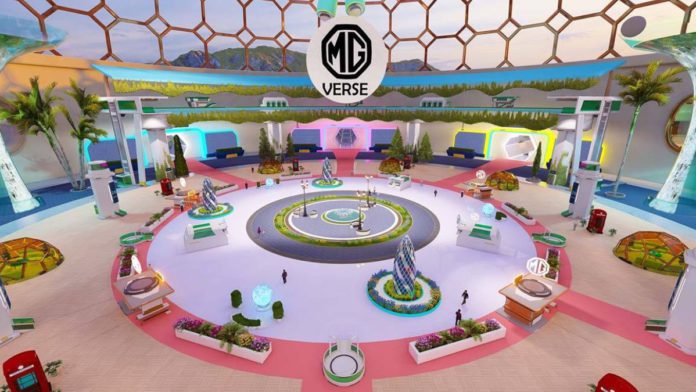
MG Motors has announced the launch of MGverse, which is a Metaverse-based virtual reality, 3D experience that is being made possible in partnership with Metadome.ai.
The MGverse will enable users to experience the MG Pavilion, which will be at the Auto Expo2023, from anywhere in the world.
The MGverse comes with an integrated explorer and creator’s center, which is a virtual experience zone with an extended experience zone. The Avatar Shop and MG Arena will enable visitors to accessorize, personalize, build and even purchase vehicles in the Metaverse.
Apart from getting a real-time experience of the Auto Expo 2023 through virtual presence, users can also view their avatars by entering the MG’s expo pavilion and experiencing innovative engagement features while conversing with other avatars.
Announced earlier as a platform that will combine multiple virtual spaces, the MGverse is intended to eventually provide five different experience zones, the Explore & Creator’s Center, NFT Gallery, MG Car Club, Gaming Arena, and MG Knowledge Center.
Personal.ai, a leading AI startup, has raised $7.8 million in seed funding to work on its proprietary personal language model.
The AI startup is backed by investors such as Beni VC, Village Global, BBG Ventures, Keshif Ventures, Supernode Global, Differential Ventures, and Good Friends.
The company also has various angel investors and advisors on board, such as Kelvin Beachum of the Arizona Cardinals, Rob Granieri of Jane Street Capital, Anirudh Koul of Pinterest and Microsoft, and Bradley Taylor of Google Moonshot.
Personal.ai has developed a personal language model (PLM) called Generative Grounded Transformer (GGT-1), which, in contrast to OpenAI’s GPT-3, trains on personal data rather than public data.
Personal.ai will leverage GGT-1 to create a chat interface that uses AI to draft personal messages, retain and recall personal information, and unlock the potential of human-to-human chat capabilities.
This offering is designed to learn from every conversation and interaction, growing more efficient as users chat. The platform’s AI ensures that users never forget an important moment, fact, or experience.
Actyv.ai, a Singapore-based category creator in the enterprise SaaS has raised a sum of $12 million during a Pre-Series A funding round.
The round was led by 1Digi Ventures, Singapore, and includes an earlier tranche of $5 million from 1Digi Ventures in 2022, which will fuel global expansion, product enhancement, talent acquisition, and portfolio growth.
Actyv.ai grew considerably in FY 2022. In December 2022 alone, the total BNPL throughput was $100 million. The company provides significant value for large enterprises throughout business verticals and their allied partner ecosystem via its technology platform.
The company has partnered with over 20 leading financial institutions enabling embedded BNPL. More than 25,000 distributors and one lakh retailers have been onboarded on the platform.
Commenting on this, Raghu Subramanian said their AI-powered SaaS platform, with its embedded offerings, is driving substantial operational efficiencies and growth for the entire supply chain ecosystem. “This additional funds infusion validates our being category creators in this particular space and the conviction to augment the capabilities of our platform.”
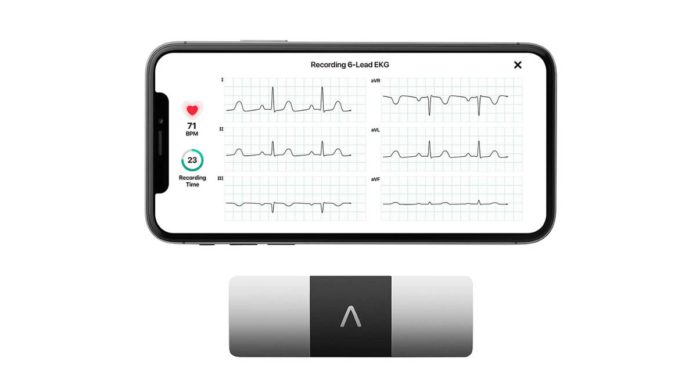
Health Minister Dr. Sapam Ranjan has revealed a new FDA-approved ECG device, called KardiaMobile 6L, AI and Bluetooth enabled and approved by FDA. the device was revealed at Classic Grande hotel in Imphal.
Dr. Ranjan explained that many people suffer from cardiovascular diseases, and the number has increased in the region. He added that there had been situations where patients could not figure out what was wrong and died even before medical assistance could be provided.
To solve this problem, the state government took an initiative to enhance home screening of non-communicable diseases (NCD) and develop such devices under the CMHA scheme. Dr.Ranjan also said that there is a need to incorporate technology and artificial intelligence to help monitor patients away from medical help.
This is why, AliveCor developed the KardiaMobile 6L ECG device, an AI startup developing machine-learning algorithms for ECG sensors. It can be linked to a mobile phone and provides results within 30 seconds.
Munish Yadav, AliveCor’s sales and marketing director, facilitated the launch along with state mission director NHM Dr. Somorjit Ningombam.
Koko, an AI startup focusing on mental health, received backlash for relacing counselors with an AI chatbot for mental health support without informing the users. Koko’s application tested AI-generated responses using GPT-3 for over 4,000 recipients without them acknowledging the same.
Koko is a mental health service provider that provides conversational aid to people with a mobile application. It was founded by Rob Morris, who described how the application employed a “co-pilot” strategy with professionals monitoring AI as it generated responses.
Rob wrote, “We used a ‘co-pilot’ approach, with humans supervising the AI as needed. We did this on about 30,000 messages.” He added that AI-composed responses turned out to be highly rated, much more than those written by humans. Moreover, as the company noted, the response time was also cut down by well under a minute by over 50%.
As per Rob, the co-pilot strategy was only a test to see how the future of conversational AI help bots would be; however, it angered many users who found it unethical. One user commented, “I can’t believe you did this to people who needed mental health care. I’m shocked.”
While the experiment was successful, based on the metrics, the criticism was invalid because doing such an experiment with people who seek mental health support could go horribly wrong. It is evident that AI can give irrational and unethical responses, which would be a huge risk for those already vulnerable.
BioNTech SE will be acquiring British artificial intelligence (AI) startup called InstaDeep for about 562 million pounds (i.e. $682 million) to upscale its biotech research and manufacturing.
BioNTech will pay 362 million pounds upfront, in an unspecified number of BioNTech shares and a mix of cash, and up to 200 million pounds contingent on InstaDeep’s future performance.
BioNTech Chief Executive and co-founder Ugur Sahin said, “Our aim with the acquisition is to integrate artificial intelligence in all aspects of our work seamlessly, from target discovery, lead discovery, manufacturing to delivery of our products.”
With an estimated COVID-19 vaccine revenue of up to $18.2 billion in 2022, BioNTech is seen as well-funded to advance its research on new cancer immunotherapies and other vaccines.
BioNTech said it is already involved in dozens of joint projects with InstaDeep, including efforts to quickly determine whether a new COVID variant is a cause for concern.
More and more organizations are now opening up to endless possibilities that data holds, necessitating the presence of people who are capable of unlocking meaningful and actionable insights from the vast amount of data. These people are called data scientists, and what they do—study data and extract insights, is called data science. Data science has become a prominent field over the last few years, and in India too. Consequently, many people are riding the wave and shifting to data-driven careers. A Ph.D. in data science is considered to be a prestigious qualification to advance in a data career. Here is a list of some top Indian institutes for Ph.D. in data science.
The initial thought that almost every person seeking a Ph.D in data science comes across is to explore the IITs. The Indian Institute(s) of Technology are one of the country’s most prestigious centers of (engineering) excellence.
Some Ph.D. in Data Science Programs at IITs
We have covered a few IITs offering comprehensive science and data science doctorates. Have a look.
IIT Madras
The Indian Institute of Technology Madras (IITM) is one of the oldest institutes catering to higher education in engineering. It was established in 1959 by Prof. Humayun Kabir, Union Minister of Scientific Research and Cultural Affairs, after the first Indo-German agreement in Bonn. With over 16 academic departments and some research centers, IITM ranks among the top engineering institutes for postgraduate and doctorate students.
IIT Madras offers research programs in several areas like biotechnology, ocean engineering, structural analysis, element modeling, data sciences, and many more. The institute also offers joint Ph.D. programs with universities like the University of Singapore, the University of Bordeaux, Michigan State University, and a few others. Refer to the research programs’ page for more details.
IIT Hyderabad
The Indian Institute of Technology Hyderabad (IITH), a relatively newer IIT institution branch, was founded in 2008. As one of the nation’s most sought-after institutions for science and technology, IITH has continuously been listed among the top 10 engineering and Ph.D. institutes in India. The institute offers a number of undergraduate, postgraduate, and doctoral programs in all classical engineering disciplines and interdisciplinary areas like artificial intelligence.
IITH offers regular Ph.D. programs in the following departments: biomedical engineering, artificial intelligence, chemical engineering, climate change, physics, engineering science, civil engineering, mechanical & aerospace engineering, and many other domains. Specifically for a Ph.D. in artificial intelligence or a Ph.D. in data science, in India, IITH is an excellent place to enroll. To know more about the courses and admission requirements, refer here.
IIT Delhi
Indian Institute of Technology Delhi (IITD) is one of the 23 Centers of Excellence for engineering, research, and development in science and technology. It was established in 1961 as College of Engineering and was later renamed as IIT-Delhi in 1963. The institute is an excellent place for students to wish to study engineering, sciences, and even business administration.
The Yardi School of Artificial Intelligence (ScAI) at IIT Delhi offers comprehensive Ph.D. programs in both core and advanced artificial intelligence and data science. The data science Ph.D. course will also include machine learning techniques, mathematical foundations, and applications of artificial intelligence in the field. For more information on Ph.D. programs offered by the Yardi School of Artificial Intelligence, refer to the website.
IIT Jodhpur
IITJ, the Indian Institute of Technology Jodhpur, was established to promote technology-based education and research in India in 2008. The Institute is committed to a multidisciplinary approach to developing new technologies and furthering them as educational courses via its cutting-edge laboratories, academic degree-related activities, and coordinated research efforts.
IITJ offers M.Tech, data science Ph.D. courses, and an integrated data science Ph.D. The doctoral program focuses on inculcating deep knowledge and computational thinking skills among students. Students who enroll in Ph.D. in data science will also develop a strong understanding of machine learning, data mining, modeling & simulation, numerical analysis, and other data-related technologies. For details, check out the main website.
Have a look at some more data science Ph.D. courses and institutes offering them.
BITS Pilani
Birla Institute of Technology & Science, BITS Pilani, is the epitome of higher education. The Institute was established in the early 1900s as a small school to train youth. Over the years, it expanded into a set of colleges for higher education that later formed the university. BITS is known to provide top-of-the-line technical education to students all over the world who are admitted on a merit basis.
Ph.D. in Data Science at BITS PILANI
BITS Pilani offers several areas of doctoral education in the data science domain. These areas include:
Artificial intelligence, Machine Learning, and Data Mining
Computer Architecture, Embedded Systems & Robotics
Data Warehousing, Databases, and Advanced Databases
High-Performance Computing and Distributed Systems
Image Processing & Multimedia
Networking and Mobile Computing
Algorithms & Theoretical Computer Science
The institute primarily offers full-time doctoral courses. Other details, including the fee structure and shortlisting criteria, can be found on the website.
Ph.D. in Data Science: Christ (deemed to be) University
The CHRIST University was founded by St. Kuriakose Elias Chavara, a social reformer, and educationist. It was established as a college with an aim to bring breakthroughs in the Indian higher education landscape using modern curricula and holistic education. After several years of operating as a college, the UGC (University Grants Commission) accredited it with the autonomy of being identified as an institution in 2006. Since then, the (deemed to be) university has focused on Bachelor’s, Master, and Doctoral degrees in social sciences, engineering, architecture, sciences, commerce, and law.
CHRIST’s doctorate of data science is a unique amalgamation of computer science, mathematics, and statistics. The Ph.D. program also covers the underlying computational models and mathematical research to give students a dynamic learning experience in the data domain. For details about the course and course fee, check the course page.
Indian Statistical Institute
If you are wondering which university is best for data science Ph.D. in India, then the Indian Statistical Institute (ISI) is your answer. Mahalanobis established the prestigious institute in 1931 as a small statistics laboratory in the Presidency College. Soon enough, many people began taking an interest in statistical research, and the wave took over the institute. ISI offers several prestigious postgraduate and doctoral programs across multiple fields, like humanities, commerce, IT, engineering & architecture, management, and sciences.
For a Ph.D. in data science domain, ISI offers research fellowships in Statistics, Quantitative Economics, Computer Sciences, Mathematics, and Reliability & Operations Research. Specifically, ISI is an excellent option if you are looking for a Ph.D. in statistics in India. To know more about the program details, refer to the website.
Ph.D. in Data Science at IISc Bangalore
The Indian Institute of Science (IISc) Bangalore is a reputed research university for higher education in the fields of engineering, management, design, and science. The Department of Computational and Data Sciences (CDS), a division of IISc that specializes in data sciences and computations, grants research-based doctoral degrees.
CDS offers two research-based routes for students seeking admission to a Ph.D. in data science: Computational Science (CP) and Computer & Data Systems (CS). CDS-CP includes computational methods in areas like bio-molecular computation, structural biology, medical imaging, and other related fields. CDS-CS designs, implements, and evaluates computer hardware and software systems. For more information, refer to the website.
Woxsen University
Looking for an integrated data science Ph.D. in India, Woxsen University is a top university in India for data science Ph.D. and is one of the most reliable, privately-held universities in the southern part of the country. Founded in 2014, the university ranks well amongst emerging engineering and business colleges. The university aims at bringing new-age programs in multiple domains like management, architecture, design, liberal arts & sciences, and a few others.
In doctoral programs, Woxsen offers both full-time, and executive Ph.D. focused on research and interdisciplinary subjects. It also offers a comprehensive, fully residential Ph.D. in data science. For more information, refer to the website.
Ph.D. in Data Science at IIT Guwahati
Indian Institute of Technology (IIT) Guwahati is a prestigious higher education institution established in 1994. Being the only institute that comes in the top 100 world universities under 50 years of age, it offers comprehensive graduate, postgraduate and doctoral programs. The Mehta Family School of Data Science and Artificial Intelligence (MFSDS&AI) offers several Ph.D. courses at IIT Guwahati:
Ph.D. in AI
Ph.D. in Machine Learning, Deep Learning, or Reinforcement Learning
Ph.D. In Computer Vision, Natural Language Processing, and High-Performance Computing.
For more information about the courses and admission requirements, refer to the website.
Scale AI, a startup using artificial intelligence and software to label text, images, voice, and video data for machine learning, recently laid off over 20% of its workforce. The announcement was made by Alexandr Wang, Founder, and CEO of Scale AI, in a blog post saying that the layoff is one of the many steps the company is taking to ensure the long-term success and profitability of the business.
Scale AI is a Sanfrancisco-based startup backed by renowned venture capitalists like Tiger Global, Founders Fund, and Caotue Management. The seven-year-old company started by providing labeled data required to train machine learning models for the development of robotaxis, self-driving trucks, and automated bots used in warehouses and on-demand deliveries, and subsequently for their commercialization.
He said, “I made the decision to grow the team aggressively in order to take advantage of what I thought was our new normal.” He added that extensive hiring was successful when the world shifted online in 2020 and 2021. But once the pandemic got over, the market changed, and the company had not predicted the extent.
Apparently, many bigger companies like Amazon and Meta have provided a near-similar reason for laying off a significant number of their employees in the last few months.
Wang said he takes full responsibility as Scale AI laid off the workforce and said employees would be paid eight weeks of severance and three months of healthcare. The company will also pay one-year tenure equity and provide immigration support for outstation employees.
Microsoft is in talks to invest about $10 billion in the owner of ChatGPT, OpenAI, which may increase the valuation of the San Francisco-based firm to $29 billion, reported Semafor.
The funding includes other venture firms. The deal’s documents were sent to prospective investors recently, with the aim to close the round by the end of 2022.
It is unclear whether the deal has been finalized. Still, documents received by prospective investors in recent weeks outlining its terms indicated a targeted close by the end of 2022, the report added.
After the deal, Microsoft would get 75% of OpenAI’s profits until it recoups the investment. After that threshold is reached, it would revert to a structure reflecting ownership of OpenAI, with Microsoft having a 49% stake, other investors taking another 49%, and OpenAI’s nonprofit parent getting 2%.
The report added that there’s also a profit cap that varies for each set of investors, unusual for venture deals, which investors hope might return 20 or 30 times their money, citing people familiar with the matter.
DoNotPay’s AI-Powered Robot Lawyer to Defend a Human
An AI-powered legal assistant lawyer is set to be an advisor to a defendant in the US next month. Claimed to be the world’s first robot lawyer, developed by DoNotPay, will run on a smartphone, attend the hearing and then advise the defendant via an earpiece. DoNotPay, a legal service provider founded by Joshua Browder, uses artificial intelligence to leverage legal consultancy services. To see how DoNotPay works, check out Joshua’s recent conversation with Wells Fargo bank.
Microsoft’s VALL-E, a New Text-to-Speech AI Model
Microsoft has unveiled VALL-E, a new text-to-speech AI model that, given a three-second audio sample, can accurately mimic a person’s voice. After the model becomes familiar with a distinct voice, it can synthesize audio of that voice saying anything while maintaining the speaker’s emotional tone. Read more about VALL-E here.
100% Wireless Displace OLED TV Showcased at CES 2023
A technology upstart called Displace has surpassed LG’s signature wireless OLED (with just a power line) by making its 55-inch 4K OLED TV completely wireless. The TV runs on four hot-swappable batteries and a base hub that transmits entertainment channels. It feels like a dream come true, but at a whopping US$3000!
Microsoft in Talks with OpenAI Over US$10B Investment
According to Semafor, Microsoft is in talks to invest roughly $10 billion in OpenAI, raising the company’s estimated value to $29 billion. The funding includes other venture firms too. All prospective investors recently received the deal’s paperwork, with the goal of closing the round by the end of 2022.
Maruti Suzuki’s ExpoVerse at the Auto Expo 2023
The automaker announced its metaverse project at Auto Expo 2023, ExpoVerse, aimed to offer an immersive user experience. Maruti Suzuki also showcased its virtual pavilion with various experimental zones and over 1,100 NEXA and ARENA dealerships, accessible with VR devices throughout the country.
AR Rahman Steps into the Web3 World with His Metaverse Platform ‘Katraar’
The world-famous Music composer, producer, and singer AR Rahman is the latest Indian celebrity to foray into the web3 ecosystem with his metaverse platform ‘Katraar.’ Katraar is a digital platform that will feature upcoming musicians and artists. Rahman posted a teaser for his 56th birthday on 6th January, surprising millions of his fans while announcing the platform as a tradition and means of wisdom for the music industry.
Conversational AI Startup NLX Raises US$4.6M for Product Development
NLX, an AI startup working on conversational technologies, said it had raised US$4.6m after over a year of previous investment in a funding round led by IAG Capital Partners in collaboration with JetBlue Ventures and Flying Fish Ventures. The funding will help the budding startup to advance its next-gen conversational experiences on its end-to-end no-code platform.