SoundHound, the voice AI company that facilitates conversational AI services for automotive, connected hospitality, and home applications, today announced that it had raised a sum of $25 million in equity to shore up its position in the market. The company laid off 40% of its staff earlier this month.
SoundHound did not disclose who is behind the funding except that it comes from a diverse set of strategic and financial investors, both from the new capital providers and the current shareholder base.
SoundHound notes that the funding is coming in the form of preferred equity and is convertible into shares of Class A common stock, potentially on or after the one-year anniversary of the issuance date if certain price conditions are met.
SoundHound was once valued at more than $1 billion when it was still a privately held startup and was seen as an independent alternative to services created by Big Tech, such as Amazon’s Alexa.
SoundHound went public in November 2021 through a SPAC merger at a $2.1 billion valuation. But, the SPAC valuation went the way of several other SPACs and did not hold. Today, SoundHound has a market cap of $295 million.
Baidu is launching an AI chatbot similar to OpenAI’s ChatGPT. This could be China’s biggest entry in the AI race.
According to the insider, who requested anonymity to discuss confidential information, the largest search engine business in China intends to launch the ChatGPT-style software in March, first integrating it into its primary search services. Users of the unnamed tool will be able to receive search results that are conversational in nature, similar to the well-liked OpenAI platform.
In contrast to ChatGPT, which excels at more professional activities like programming and essay writing, chatbots in China are currently used for social interactions. The insider reported that Baidu intends to include results created by chatbots rather than just links when users make search requests.
Beijing-based Baidu has been investing heavily in AI technology, such as cloud services, semiconductors, and self-driving cars. This is part of their plan to diversify their revenue. At a developer conference last month, Baidu unveiled three artificial intelligence “creators” with the ability to work as screenwriters, illustrators, editors, or animators.
During an internal meeting in December, according to a transcript seen by Bloomberg News, Baidu Chief Executive Officer Robin Li cited ChatGPT as an instance of where the tech giant might take the lead in AI.
He expressed his enthusiasm about the technology’s ability to capture people’s attention and acknowledged the challenge of commercializing generative AI to make it a “must-have” product.
Like internet users everywhere else, ChatGPT has piqued the interest of Chinese internet users, who like others posted screenshots of their fascinating AI conversations on social media. This is despite China’s heavily censored internet and local equivalents to Google, Amazon, and Facebook, such as Baidu, that have thrived behind the walled-off model.
Inscribe has raised $25 million in a Series B funding round led by Threshold Ventures with participation from Foundry, Uncork Capital, Intercom co-founder Des Traynor, Box co-founder Dillon Smith, and Crosslink Capital.
The infusion has brought the startup’s total raised funds to $38 million, including a $10.5 million Series A round that was closed in April 2021.
Inscribe is an AI-powered document fraud detection service created for fraud, risk, and operations teams in the finance and fintech industries. Inscribe uses AI trained on hundreds of millions of data points to provide results.
Inscribe processes, classifies, and data-matches financial onboarding documents, highlighting any dissimilarities between the documents provided and documents recovered using its AI-powered fraud detection.
Document details, including names, bank statement transactions, and addresses, are automatically digitized to generate individual customer risk profiles that contain snapshots of bank statements and transactions.
Ronan Burke says that Inscribe solves the issue of hiring a large data science team or having to create an in-house fraud detection solution.
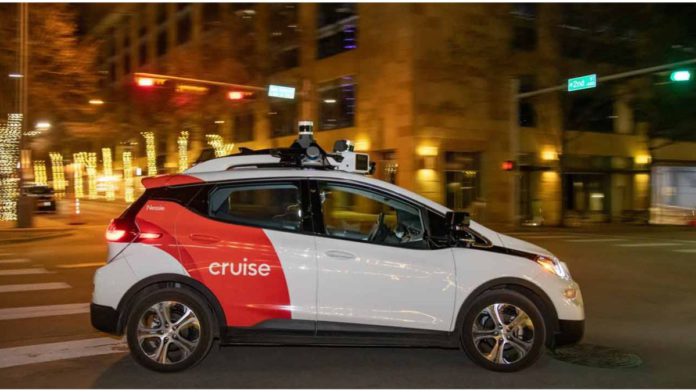
San Francisco transportation authorities have expressed safety concerns over the rapid expansion of robotaxi services by Waymo and Cruise.
As reported by NBC News, the officials have written to the California Public Utilities Commission (CPUC) stating that the expansion is “unreasonable.” This is because there have been recent instances of autonomous vehicles halting and impeding traffic, preventing emergency personnel from responding.
The authorities have requested California regulators to either stop or slow down the expansion plans of both companies, who are in fierce competition to be the first to offer round-the-clock robotaxi service in the tech hub. In June, Cruise was granted a permit to offer paid rides in its autonomous vehicles (AVs) from 10 PM to 6 AM, followed by Waymo receiving a permit to provide fully driverless rides a few months later.
However, Waymo still needs additional permission from the CPUC in order to charge for its driverless rides. Meanwhile, despite receiving the license from the California Department of Motor Vehicles in December, Cruise still needs approval from the CPUC before expanding the hours of its commercial service.
Fortunately, there haven’t been any documented fatalities in San Francisco caused by Cruise or Waymo vehicles. However, the companies need to address their occasional errors, such as an incident where a Cruise vehicle, unoccupied, made a humorous attempt to flee from the police. In a separate incident, which was reported on social media and recorded by municipal officials, five disabled Cruise vehicles fully blocked a street in the Mission District, delaying a public bus transporting 45 passengers for at least 13 minutes. Cruise’s autonomous vehicles have also interfered with firefighting operations, forcing firemen to shatter a car window in order to prevent it from ramming into their fire hoses.
Between late May and the end of December of last year, 92 incidences involving Cruise driverless cars stopping unexpectedly or erratically in travel lanes were reportedly documented by San Francisco authorities. Due to worries that the vehicles were blocking traffic and causing rear-end incidents with abrupt braking, the National Highway Traffic Safety Administration started an investigation into Cruise last December. In other instances, Cruise called 911 three times to report “unresponsive” passengers. However, when emergency workers arrived, they discovered that the passenger had simply fallen asleep.
The San Francisco Transportation Authority endorses the growth of driverless technology, but calls for increased transparency and stronger safety measures. Officials urge companies to gather additional information about the performance of the vehicles, particularly the frequency and duration of traffic jams. The authorities plan to restrict the operation of these companies to the “downtown core streets” during peak hours until they can show that they can run efficiently without interfering with street operations or transit services.
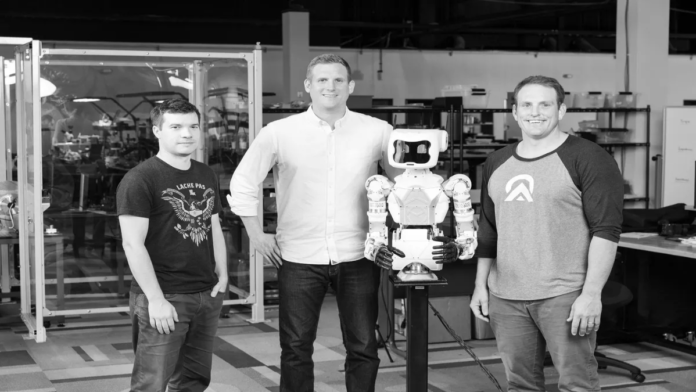
Apptronik, an award-winning robotics company based in Austin, Texas, has planned to develop a general-propose robot called Apollo. The company focuses on costs and reliability from scratch, creating its own actuators to ensure they will be cost-effective and supply-chain friendly.
Jeff Cardenas, Apptronik co-founder and CEO, mentioned that the company is positioning Apollo as a high-performance, easy-to-use, versatile system. It imagines Apollo as an ‘iPhone of robots.’ He also stated that as a company, Approtronik had built more than 30 unique electric actuators, and now it is honored to start with its commercial humanoids.
The company’s importance on commercialization gives it a much different perspective on robotics development. According to Apptronik, to build a commercial robot, you must consider various aspects like minimizing part count, maintaining robustness, and keeping the overall costs manageable. The company’s starting point was to figure out what the minimum viable humanoid robot would look like.
Shaun Azmi, the leader of the Dexterous Robotics team at NASA’s Johnson Space Center, mentioned that the development of Apollo is the partnership to empower the development of technology to sustain through the Artemis program and looking forward to mars.
Google has unveiled a new AI system called “MusicLM” that can create high-fidelity music in any genre just with a text description, according to a research paper. However, the company is fearing the risks involved and says that it has no immediate plans to release it.
Google is not the first one to try generative AI for songs. There have been several other attempts, including Riffusion (an AI that composes music by visualizing it), Dance Diffusion, OpenAI’s Jukebox, and Google’s own AudioML.
However, due to limited training data and technical constraints, none of them have been able to generate songs that are particularly complex in composition or high fidelity. MusicLM is expected to be the first that can.
MusicLM was trained on a dataset of about 280000 hours of music to learn to generate coherent songs based on descriptions of significant complexity, such as Berlin ’90s techno with a low bass and strong kick or enchanting jazz songs with a memorable saxophone and a solo singer.
Its capabilities extend beyond creating short clips of songs. Google researchers showed that the system could build on existing melodies, whether played on an instrument, hummed, sung, or whistled.
A Bengaluru-based RV University has now banned the use of OpenAI’s ChatGPT. The university has banned the chatbot inside the campus to prohibit students from using it during the exams, assignments, and lab tests.
The university will check on students unexpectedly sometimes, and if the teachers get suspicious that the work submitted to them is not original, the student will be asked to do the work again by themselves.
Along with ChatGPT, the university has also banned the use of other AI-based tools such as GitHub Co-pilot and Black Box.
“We have issued an advisory to all departments in the university and banned a few AI tools like ChatGPT as students might use them in exams or to complete their assignments. The ban is already implemented,” a university spokesperson said.
New York City schools recently banned ChatGPT across devices and networks in all of New York’s public schools. According to a department spokesperson, the decision stems from the concerns about negative impacts on student learning and the safety and accuracy of the content.
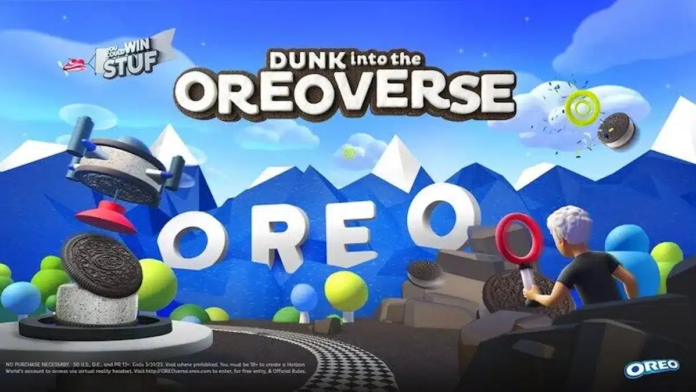
Oreo, one of the most famous cookies company, has unveiled its metaverse called OREOverse, a virtual world where fans can compete and participate in cookie-themed activities.
The company introduced OREOverse with its new limited edition cookie called, ‘The Most Oreo Oreo.’ According to the company, the launch of OREOverse comes up with various prizes, including a $50,000 contest, virtual reality handsets, and gaming consoles.
Oreo has also collaborated with Martha Stewart, who is well-known for her bestselling recipes. Martha Stewart stated she is excited to make a metaverse debut in partnership with Oreo.
Julia Rosenbloom, Senior Brand Manager at Oreo, mentioned that the company is excited to enter into the metaverse. Oreo is thrilled to create new opportunities for its fans to connect and share the playful spirit.
On Monday, at 10.30 am ET, the company invites fans to tune in on Facebook or Instagram to watch Martha’s OREOverse excursion. Fans can dunk into OREOVerse in Meta’s Horizon World using their Meta Quest 2 or Meta Quest Pro headsets with mobile phones or desktop computers by visiting OREOverse.Oreo.com.
Square Yards, India’s largest real estate marketplace, announced the launch of its real estate metaverse. The real estate metaverse is a fully immersive and interactive environment, allowing users to explore the real estate on a digital twin of cities, visualize the neighborhoods in a 3D environment, and walk in as an avatar interacting with a collaborative marketplace.
Square Yards has secured many global patents on immersive, virtual, and collaborative experiences in real estate. The company is working with international real estate developers to bring their project twins onto its metaverse currently.
Square Yards arranged the metaverse launch event in Mumbai, which consisted of more than 150 attendees, like founders and CXOs of real estate developers and private equity investment professionals. The organization also hosted a panel discussion on ‘Metaverse and Digital Revolution of Real-Estate’ by Manisha Natarajan, the anchor and consulting editor at NDTV. The launch event featured demos of the Square Yards metaverse, showcasing its features and capabilities.
Founder and CEO of Square Yards, Tanuj Shori, stated that the company is very excited about the potential of the metaverse. He believes that Square Yards’ interactive digital twins of the cities will transform how consumers interact. The company has stepped into global markets like Dubai, Neom, and Canada in a short time with its patented digital twin tech.
Microsoft, GitHub, and OpenAI are pleading with the court to dismiss a proposed class action lawsuit that accuses these companies of scraping licensed code to create GitHub’s AI-powered Copilot tool, reported Reuters.
According to a pair of filings submitted to a San Francisco court, the Microsoft-owned GitHub and OpenAI say that the claims outlined in the lawsuit do not hold up. Launched in 2021, Copilot uses OpenAI’s technology to generate and suggest codes directly within the code editor of a programmer.
The tool, which has been trained using publicly available code from GitHub, caused concerns over whether it violates copyright laws right after its release. Things escalated when programmer and lawyer Matthew Butterick and the legal team at Joseph Saveri Law Firm filed a proposed class action lawsuit last November, claiming that the tool relies on “software piracy on an unprecedented scale.”
Butterick and his team later filed a second lawsuit on similar grounds on behalf of two anonymous software developers. This is the lawsuit that Microsoft, OpenAI, and GitHub want to be dismissed.
As noted in the filing, GitHub and Microsoft say the complaint fails on two intrinsic defects, lack of an otherwise viable claim and lack of injury. OpenAI similarly said the plaintiffs “allege a grab bag of claims that fail to plead violations of cognizable legal rights.”
According to the companies, the plaintiffs are relying on “hypothetical events” to back their claim and say they do not describe how they were personally harmed by the tool. The court hearing to dismiss the lawsuit will take place in May.