Microsoft researchers created a brand-new prompt optimisation technique called Automatic Prompt Optimisation (APO). A broad and nonparametric rapid optimisation technique called APO was developed in the spirit of numerical gradient descent. It attempts to automate and enhance the rapid development procedure for LLMs.
The methodology extends previously developed automated methods, such as developing auxiliary models or differentiable representations of the prompt and implementing discrete manipulations utilizing reinforcement learning or LLM-based feedback.
APO, in contrast to earlier approaches, overcomes the discrete optimisation hurdle by incorporating gradient descent into a text-based Socratic discussion. Backpropagation is replaced with LLM editing, and distinction is replaced with LLM feedback. The system begins by obtaining natural language “gradients” that explain the defects in a particular prompt using mini-batches of training data.
These gradients serve as a guidance during editing, where the prompt is changed to follow the gradient’s inverse semantic orientation. The prompt optimization problem is then changed into a beam candidate selection problem by doing a broader beam search to broaden the search space for prompts. The effectiveness of the algorithm is improved by this method.
The Microsoft research team tested APO’s performance against three cutting-edge prompt learning baselines on a variety of NLP tasks, including the detection of jailbreaks, hate speech, bogus news, and sarcasm. On all four tasks, APO consistently beat the baselines, outperforming both the Monte Carlo (MC) and the reinforcement learning (RL) baselines by a wide margin.
Leading branchless banking and digital network PayNearby has introduced a meta commerce platform to enable easy availability of products and services in an assisted mode at the last mile, ahead of the nationwide rollout of the Open Network for Digital Commerce (ONDC).
The meta platform will soon be merged with ONDC, and PayNearby intends to use the initiative to modernize every merchant in its network. Within hours of the mall’s inauguration, the business announced that over 6000 retailers had upgraded their accounts.
Over 250 orders were placed by more than 100 shops. According to PayNearBy, the most popular categories were mobile phones and accessories, home appliances, consumables, and textiles, with many people looking for two wheelers.
It aims to empower retailers and sellers, ranging from large merchants to local sellers and small enterprises, to meet the demands of their clients both locally and across a larger national market. The platform will assist shops in broadening their scope, running a more lucrative business with no additional working capital, and utilizing technology to make all types of services available at the last mile.
For clients, it aims to deliver a seamless, cheap one-stop-shopping experience in which they can go into their nearest PayNearby store and, with the assistance of a local retailer, discover any seller, product, or service at the best price. According to PayNearBy, it will enable an optimal demand and supply match, which will likely promote the expansion of local economies.
”Retailers will no longer be constrained by their working capital, store size, or shelf space. All they would need is their PayNearby/NeoDukaan app to offer international inventory to their clients at the press of a button, supported by 50+ brands/partners,” stated Founder, MD & CEO, PayNearby, Anand Kumar Bajaj.
Walden University is actively utilizing many distinct artificial intelligence models to assist students in tutoring, completing assignments, and improving their verbal and nonverbal communication abilities.
Steve Tom, Adtalem’s Chief Customer Officer, has assisted in the deployment of three unique AI systems at Walden University: Charlotte, Linda, and Julian. The tools assist counseling students in preparing for professions by allowing them to work with “digital people” to develop communication and crisis management skills.
Charlotte is a digital assistant chatbot that can assist students in staying on top of duties and assignments in order to properly navigate a class curriculum. Students can interact with Charlotte by typing queries, which the model then processes, interprets, and responds to. According to Tom, tens of thousands of pupils are using the model around the clock, resulting in a resolution rate of more than 90%.
Linda, on the other hand, is a “digital human” who assists students in practicing sophisticated counseling conversations. Linda serves as a virtual simulation for many students pursuing careers in social work, counseling, and psychology, allowing them to test their empathetic aptitude and perfect an impactful combination of verbal and nonverbal skills.
Julian, the third AI model, has been a significantly lengthier journey, according to Tom, capitalizing on the rapid advancement of large language models (LLM) and generative AI. Julian is a virtual tutor created utilizing the AI and machine learning capabilities of Google Cloud.
On Thursday, Meta unveiled “AI Sandbox” for advertisers to test prototypes of products utilizing artificial intelligence. Marketers can build and improve their commercials with the use of these artificial intelligence (AI) tools.
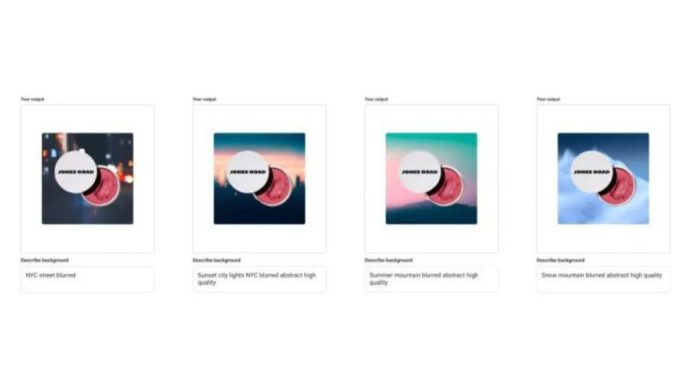
According to the company’s blog post, the tools will first generate different text for ads that cater to different demographics, create alternative backdrop pictures depending on the words given, and automatically resize ad images to account for platform changes. To test the tools, Meta is collaborating with a small number of marketers, and it plans to progressively open up access starting in July.
The AI Sandbox also includes new AI-based model to assist companies in forecasting the effectiveness of advertisements using a larger data set than previously. The technique, known as Meta Lattice, reportedly improved performance for marketers in early Instagram testing.
In order to revive development in its primary digital advertising sector, Meta has been under pressure. The business announced revenue growth last month after experiencing sales reductions for the first time ever for the prior three straight quarters.
That first-quarter result points to the potential conclusion of a challenging period in which a shaky economy reduced marketer spending and Apple’s modifications to iOS privacy made smartphone advertisements less successful.
Hugging Face has recently introduced Transformers Agent, which allows customers to control over 100,000 HF models using the Transformers and Diffusers interface. Other HF models can be generated using the new API of tools and agents to meet complicated, multimodal issues.
Transformers Agent is a natural language API built on top of transformers that includes a set of curated tools and an agent meant to read natural language and use these tools. The system is designed to be extendable, with the flexibility to simply add any relevant community tools.
Users must first create an agent, which is an LLM, before they can utilize the agent run functionality. Both OpenAI modes and open source alternatives like BigCode and OpenAssistant are supported by the system. Hugging Face provides free access to BigCode and OpenAssistant APIs.
The tools are made up of a single function with a specific name and description that is then used to prompt an agent to undertake a specific activity. The agent is taught how to use these tools with a prompt that shows how the tools can be used to complete the desired inquiry. While pipelines usually integrate numerous jobs into a single operation, tools are designed to focus on a single, straightforward action.
There are two APIs available, Single execution (run) and Chat-based Execution (chat). The agent’s run() method is available to the user as a single execution method. This method automatically identifies and executes the relevant tool or tools for the task at hand. The chat() method is used by the agent in its chat-based approach. This approach is especially beneficial when the state must be maintained over multiple instructions.
Founders of Anthropic, who are also former employees of OpenAI, are attempting to make artificial intelligence safe. In an interview, Anthropic co-founder Jared Kaplan concentrated on an approach known as “constitutional AI” to achieve this.
He claims that this approach aims to train chatbots and other AI systems to adhere to predetermined laws or constitutions.
Historically, the development of chatbots like ChatGPT has relied on human moderators to assess the system’s performance for toxicity and hate speech. The system then makes adjustments to its answers using this feedback. Reinforcement Learning through Human Feedback, or RLHF, is the term used to describe this process. However, with constitutional AI, the chatbot itself is mostly in charge of this work. However, an individual is still needed for further analysis.
Anthropic has long discussed constitutional AI and trained its own chatbot, Claude, using the technique. The corporation is now disclosing the exact written rules it uses for such operations, which are found in its constitution. A number of sources, including the Universal Declaration of Human Rights and Apple’s terms of service, are cited in this paper. The goal of many of them is to avoid being rude.
While there are many unanswered questions in this situation, Kaplan emphasizes that his company’s goal is to demonstrate the overall effectiveness of its approach which is the notion that constitutional AI is superior to RLHF when it comes to managing the systems’ input.
An online machine learning course for students to learn about bandit algorithms has been announced by IIT Bombay. On the SWAYAM NPTEL platform, the course is called Bandit Algorithm (Online Machine Learning). Participants who wish to receive a certificate must pay Rs. 1,000 and pass an in-person examination at NPTEL centers, despite the course’s free enrollment and learning opportunities.
The course is being led by IIT Bombay teacher Manjesh K Hanawal, who has a MS degree in gadgets and correspondence designing from the Indian Establishment of Science, Bangalore and PhD degree from INRIA, Sophia Antipolis, France, and the College of Avignon, France. Additionally, he has been honored with SERB’s Early Career Research Award and DST’s Inspire Faculty Award.
Bandit algorithms that strike a good balance between exploration and exploitation in a variety of random environments will be taught to course enrollees. Some of the topics that will be covered are:
Introduction to stochastic setting and various regret notions.
Algorithms for pure explorations.
Introduction to bandit algorithms.
Regret lower bounds for adversarial setting.
Stochastic bandit algorithms.
Adversarial setting with full information and bandit information.
The course will be conducted from 24 July to 13 October 2023. The last date to enroll is 31 July 2023. The course also carries 3 credit points, which students can submit in their respective colleges. The examination to obtain the course certificate will be taken on 28 October 2023.
While the course is open to anyone interested, it is most suitable for postgraduate students from streams such as computer science, electrical engineering, operations research, mathematics, and statistics. Participants must have knowledge of the basics of probability theory and optimization.
Google just wrapped up its Google I/O keynote day, during which it unveiled some very significant changes to its Pixel portfolio and demonstrated the most recent developments in AI. Here is a list of all of the most significant announcements that was announced during the Google I/O 2023.
Search Generative Experience
A significant change to Google Search is coming in the shape of something called AI snapshots.
Users will begin to see AI-powered answers at the very top of their search results for select queries after they choose to use the new Search Generative Experience (SGE) feature, which can give the search additional context. The new PaLM 2 large language model (LLM), which Google also unveiled at Google I/O 2023, is the engine behind these AI snapshots. The new model, which has advancements in reasoning, coding, and translation, is already powering 25 Google services, including the company’s Bard chatbot.
Google Bard Public Access
At Google I/O 2023, Google declared that anyone can now use its AI-powered chatbot, regardless of whether they were on the queue. A number of additional features are also being added by the company, including support for the Japanese and Korean languages and a simpler method for exporting created text to Google Docs and Gmail.
In the future, Google aims to offer more capabilities in addition to the current dark mode and visual search tools. That includes interfaces with third-party businesses like OpenTable and Instacart as well as AI image generation using Adobe’s AI image generator, Firefly.
Google has said that it will also be delivering new Android features that are powered by AI. One of these capabilities, called Magic Compose, will be available in the Messages app for Android and allow users to reply to texts using AI-generated suggestions for words.
Additionally, a feature that enables users to design their own wallpaper using AI is being added. Soon, users will be able to describe an image, and the device will create it using Google’s text-to-image diffusion technique, as opposed to having to select from a list of predefined possibilities.
Duet AI
Google also revealed Duet AI, a new moniker for the AI toolkit that it is introducing to Docs, Sheets, Slides, Meet, and Gmail during the Google I/O 2023. These Workspace capabilities, according to the announcements, allow users to do things like create graphics from text in Slides or compose emails, but they are presently only accessible to people who sign up for its waitlist.
Google Photos Magic Editor
New AI-powered editing tools are coming to Google Photos that will allow one to make some pretty big changes to a photo, such as brightening the sky, repositioning a person or item, and removing background subjects. Later this year, a limited number of Pixel customers will receive early access to this experience called Magic Editor.
Codey
Codey, a brand-new tool for code completion and generation, was also announced at Google I/O 2023. It’s essential for various man-made intelligence driven coding instruments being sent off today and is likewise Google’s solution to GitHub’s Copilot, a talk device utilized for posing inquiries about coding. As per the announcements, Codey has been trained to respond to prompts related to coding as well as general Google Cloud-related questions.
Pixel Fold, Pixel Tablet, and Pixel 7A
With the introduction of the Pixel Fold, Pixel Tablet, and the reasonably priced Pixel 7A, Google’s Pixel lineup took center stage throughout the Google I/O 2023. Google’s first foldable device, the $1,799 Pixel Fold, has a 5.8-inch exterior OLED screen that unfolds to show a bigger 7.6-inch display that is also an OLED panel with a 120Hz refresh rate. Also available is the $499 new 11-inch Pixel Tablet. The device’s magnetic charging dock, which also serves as a speaker, allows it to work as both a standard tablet and a smart display.
Moreover, Google added the Pixel 7A to its midrange A-series lineup. The device includes Google’s Tensor G2 chip, along with a 6.1-inch 1080p display that can operate at up to 90Hz, just like the Pixel Fold and Pixel Tablet.
Wear OS 4
According to the announcements, Google is preparing Wear OS 4 even though Wear OS 3 hasn’t yet finished rolling out to all users. The revised OS will have better battery life, a mechanism for customers to back up and restore their watches, and new accessibility capabilities. Smart home integrations are also added to Wear OS 4, enabling you to manage media, adjust lighting, and view animated camera notification previews all from your watch. For the time being, Wear OS 4 is only accessible through a developer preview and emulator. Full availability is expected later this year.
Google Home App
On May 11, the revamped Google Home app will stop being a public preview that is only accessible by invitation and will finally be open to all users. A new Favorites page, an improved camera interface, and compatibility for a wide range of new device types are just a few of the significant upgrades to the redesigned app.
A digital engineering company called Objectivity, which specializes in cloud and platform development services and aids clients in accelerating their transformation journeys for quick innovation, has agreed to be acquired by Accenture. The deal’s financial details were not made public.
The highly qualified team from Objectivity, with its headquarters in Coventry, UK, will join Accenture, providing size and resources from Objectivity’s operations in the UK, Poland, Germany, and Mauritius.
Accenture’s Cloud First capabilities will be strengthened by Objectivity’s strong platform engineering, cloud native computing, and application modernization expertise. This will enable clients to take advantage of more flexible platform models and services to hasten the digital transformation of their businesses.
“The world is undergoing enormous change, necessitating the constant reinvention of organizations in order to create value. The depth and breadth of Objectivity’s technical resources and expertise will strengthen our European platform engineering capabilities, giving our clients the agility they need to reimagine their businesses and industries,” said Jean-Marc Ollagnier, CEO of Accenture for Europe.
Rob Helle, the company’s creator, commented, “For more than 30 years, Objectivity has supplied original thinking to develop the most purpose-fitting digital solutions. Our values-driven culture has effectively helped us grow into an international, virtual business where clients and staff have been expanding alongside one another. We will be able to accomplish more since we will be stronger as a team with Accenture.”
Startup UVeye, which develops automated vehicle inspection systems, announced today that it has closed a $100 million fundraising round headed by Hanaco VC.
The company has now collected about $200 million in total, thanks to the Series D round, which also included current investors W.R. Berkley Corporation, GM Ventures, CarMax, F.I.T. Ventures L.P., and numerous Israeli institutional investors.
A drive-through system developed by UVeye uses artificial intelligence and sensor fusion technologies to quickly identify mechanical and exterior defects below or on the sides of any car. Additionally, it may spot changes and foreign factors that might be problematic for the vehicle.
According to the firm, as electronic and driverless vehicles get more complex, a system like this is required. The capacity to undertake low-cost and high-frequency predictive maintenance will become crucial for businesses that run fleets of these cars, it claims.
The co-founder and CEO of UVeye, Amir Hever, stated that the company’s objective is to standardize how the car industry identifies damage and mechanical problems on automobiles and to develop new quality standards. He said, “Our patent-protected technology delivers unmatched solutions for swiftly and precisely identifying vehicle problems to automakers, dealers, and fleet operators.”