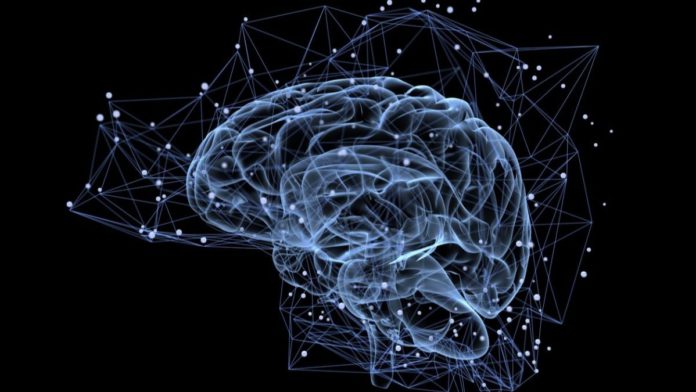
National Robotarium, hosted by Heriot-Watt University and the University of Edinburgh researchers are working on a new artificial intelligence-powered companion that can be used to tell stories to help memory recollection for dementia patients while boosting their confidence.
People with dementia frequently suffer difficulty speaking with others and a loss of confidence, leading to them becoming reclusive or depressed.
Along with memory aid, the artificial intelligence companion can also be used to counter depression in people suffering from dementia and Alzheimer’s.
Dr. Mei Yii Lim, a co-investigator of this project, presented the idea of this one-of-a-kind research named Agent-Based Memory Prosthesis to Encore Reminiscing. The Engineering and Physical Sciences Research Council has awarded £450,000 to the team from Heriot-Watt University in collaboration with the University of Strathclyde.
Dr. Lim said, “AMPER will explore the potential for AI to help access an individual’s personal memories residing in the still viable regions of the brain by creating natural, relatable stories.”
Lim further added that these would be adapted to their specific life experiences, age, social environment, and changing requirements to encourage reminiscence.
Most of the traditionally used rehabilitative care approaches focus on physical assistance and repetitive reminder strategies. Whereas AMPER’s artificial intelligence-powered user-centered approach will focus on individualized storytelling to help patients reclaim their memories.
Professor Ruth Aylett from the National Robotarium said that artificial intelligence has the potential to drastically impact the lives of those individuals suffering from cognitive illnesses.
“Our ambition is to develop an AI-driven companion that offers patients and their caregivers a flexible solution to help give an individual a sustained sense of self-worth, social acceptance, and independence,” she added.
Reuters reported that Ukraine has started using US-based company Clearview AI’s facial recognition technology as it offered to uncover Russian assailants, combat misinformation, and identify the dead.
The information was revealed by Clearview AI’s chief executive claiming that Ukraine’s defense ministry on Saturday began using the company’s facial recognition technology.
A United States diplomat mentioned that Ukraine has free access to Clearview AI’s strong face search engine, which might be used to screen people of interest at checkpoints, among other things.
In addition, Clearview bluntly said that it has not provided its technology to Russia, which is invading Ukraine and is calling it a ‘special operation.’
According to Reuters, following Russia’s invasion of Ukraine, Clearview Chief Executive Hoan Ton-That wrote a letter to Kyiv requesting aid. Clearview AI had access to over 2 billion images from the Russian social media service VKontakte, out of a total database of over 10 billion photos.
Therefore, it will be much easier for Ukraine to identify the dead using the company’s technology when compared to traditional approaches like matching fingerprints and others.
Additionally, according to Hoan Ton-That, Chief Executive of Clearview AI, the facial recognition company’s technology might be used to reunite refugees with their families, identify Russian spies, and assist the government in debunking bogus war-related social media posts.
Clearview said that its technology should never be used as the sole means of identification. The organization does not want the technology to be used to violate the Geneva Conventions.
The decision was made because of the company’s unethical practices of collecting user data from public databases without their consent, which violates the European Union’s privacy norms.
Alphabet subsidiary DeepMind has unveiled Ithaca, a new AI model that can help restore and reconstruct historical inscriptions, manuscripts, and other materials. Ithaca is a neural network that is developed in collaboration with the University of Venice, the University of Oxford, and the Athens University of Economics and Business. This neural network draws inspiration from Ithaca – the Greek island described in Homer’s Odyssey for its name.
Artificial intelligence has revolutionized the way archaeologists excavate the past in recent years. Though it cannot fight cursed mummies or crack a whip-like Indiana Jones, it has proved itself to be a valuable asset in unearthing the past. Archaeologists, for example, are examining manuscripts and tablets using computer vision techniques. In many places of the world, machine learning is used to assess satellite data and other aerial imagery to find potential archaeological sites.
According to a report published in Nature by DeepMind, Ithaca was trained using natural language processing to retrieve lost ancient literature that has been degraded through time and identify the original location of the text and determine the date when it was produced. The objectives behind this research were: finding a solution to decode ancient yet damaged Greek inscriptions and come up with an advanced modern dating technique.
These objectives were crucial because these manuscripts are frequently damaged owing to their antiquity, making restoration a gratifying effort. In addition, because they are frequently etched on inorganic materials like stone or metal, contemporary dating methods such as radiocarbon dating cannot be performed to determine when they were written.
Pythia, Ithaca’s precursor, which draws its name from the priestess of Delphi, was DeepMind’s first text restoration system launched in 2019. The initial stage for the researchers was to convert the Packard Humanities Institute (PHI) dataset, which is the world’s largest digitized collection of ancient Greek inscriptions, into PHI-ML, a machine-actionable text format. The Packard Humanities Institute dataset includes transcribed texts of 178,551 inscriptions. The researchers then taught Pythia to predict the missing letters of words in those inscriptions using both words and individual characters as inputs.
When presented with an incomplete inscription, Pythia generated as many as 20 alternative probable letters or phrases, as well as the level of confidence for each suggestion. It was up to the historians (also known as “domain experts”) to sort through all of the choices and make a final decision based on their subject matter expertise.
Ithaca’s neural network architecture is built on the transformer, which employs an attention mechanism to balance the impact of various input elements on the model’s decision-making process. By concatenating the input character and word representations with their sequential positional information, the attention mechanism is aware of the position of each component of the input text. Each Ithaca transformer block produces a sequence of processed representations with a length equal to the number of input characters, and each block’s output becomes the input of the next. The final output is sent to three separate task heads, each of which handles restoration, geographical attribution, and chronological attribution using a shallow feedforward neural network that has been properly trained for each function.
During testing, the team observed that Ithaca is 62% accurate at restoring damaged texts and 71% accurate in identifying the placement of a text. It was also demonstrated that it could determine the origin of the writer and could place the date of writing to within 30 years, on average. Further, this research is unique cause unlike existing NLP systems used for text generation and analysis like GPT-3, Ithaca does not rely on using word sequences to offer better textual context. However, it is important to note that it is a research tool that still depends on humans.
If you have any ancient Greek text on hand, you may try out a pared-down version of Ithaca here, or use one of their offered samples to see how it fills in desired gaps. Try it out in this Colab notebook if you have lengthier parts or more than 10 letters missing.
DeepMind also collaborated on an interactive version of Ithaca with Google Cloud and Google Arts & Culture. It has also open-sourced the code as well as the pre-trained model, encouraging additional study. DeepMind also stated on its blog that it was already working on additional Ithaca versions based on other ancient books. Other ancient writing systems, including Akkadian, Demotic, Hebrew, and Mayan, might be used by historians in their research. Ithaca is available on this GitHub page.
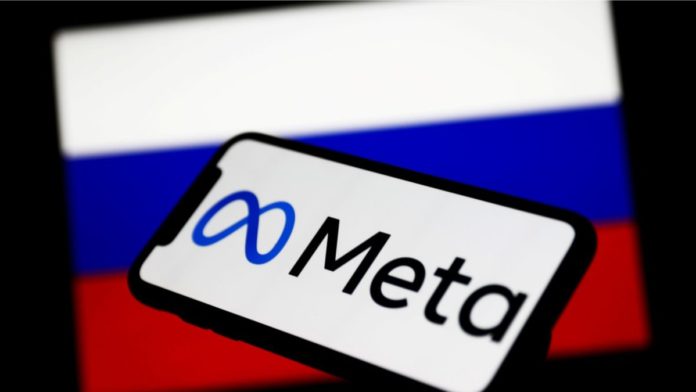
The United Nations (UN) recently condemned Facebook’s parent company, Meta, for allowing users to post hate speech against Russians.
Meta did not restrict its users from throwing malevolent remarks against Russians and calling for violent actions against the Russian armed forces amidst the Russia-Ukraine crisis.
The United Nations and the Russian government are on the same page regarding the threats and risks Meta has instigated with its policy change. According to UN Secretary-General Antonio Guterres’ spokesperson Stephane Dujarric, such calls from either side in the Russia-Ukraine conflict are not tolerated by the international body.
“I can tell you, from our standpoint, we stand clearly against all hate speech, all calls for violence. That kind of language is just unacceptable, from whichever quarter it comes from,” said Dujarric.
Facebook allowed its users to celebrate Ukraine’s openly neo-Nazi military unit while calling for violence against “Russians and Russian soldiers,” which led to this criticism of Mark Zuckerberg in the UN.
The change in the company’s policy allowed users from Latvia, Lithuania, Estonia, Poland, Slovakia, Hungary, Romania, Ukraine, and Russia to shoot unacceptable remarks on Russian President Vladimir Putin and the country’s army.
Russia took a step forward and filed a criminal investigation against Meta because of its unethical actions. After this episode, prosecutors in Russia have sought a court to label Meta as an extremist organization.
“The Instagram social network distributes information and materials that contain calls for implementing violent actions against citizens of the Russian Federation, including military personnel,” said Russia’s Media Regulator, Roskomnadzor.
He further added that they aim to block Instagram access across Russia at the request of the Prosecutor-General’s Office with effect from 14th March.
Meta’s President for Global Affairs and former British Deputy Prime Minister Nick Clegg presented their take on the incident by saying that Facebook’s prime purpose was to let Ukrainians express their anger over Russia’s military actions.
Technology giant Amazon has announced a partnership with Virginia Tech to offer opportunities to students in fields like artificial intelligence (AI) and machine learning (ML).
As a part of the partnership, Amazon and Virginia Tech plan to take initiatives towards machine learning-focused research, Ph.D. student scholarships, community engagement, and the formation of a common advisory board.
The new collaboration will allow Virginia Tech graduate and doctoral students interested in artificial intelligence-related subjects and are currently pursuing education and research experiences in those fields.
Vice President of Alexa AI, Prem Natarajan, said, “We are delighted to collaborate with Virginia Tech in launching this new initiative which brings together the top talent in our two organizations in a joint mission to achieve ground-breaking advances in robust machine learning.”
He further added that the initiative’s proximity to Amazon’s HQ2 would accelerate research activities that take advantage of the Northern Virginia area’s depth of talent to address some of AI’s most urgent concerns.
Additionally, the partnership will considerably help Virginia Tech graduate and Ph.D. students as they will be able to apply for fellowships, including Amazon internships, to assist them in obtaining a better grasp of the market. After the internship year, every student will be invited to interview for a paid Amazon internship during the summer.
Faculty members from Virginia Tech will also get a chance to propose Amazon-sponsored machine learning research ideas that aim to alter how the world utilizes and understands this sector.
President of Virginia Tech, Tim Sands, said, “This partnership affirms the value of our connection to Amazon as we scale up project-based learning and research programs in artificial intelligence and machine learning.”
He also mentioned that building Virginia Tech’s strength and knowledge in these areas will support key technical developments and the university’s commitment to fostering workforce development throughout the Commonwealth.
India researchers from Salcit Technologies have developed a novel application that uses artificial intelligence (AI) technology named Swaasa to detect lung diseases in humans with a single cough.
The highly accessible smartphone application listens to the coughs of humans to accurately detect the condition they are suffering from.
The official statement claims that this technology’s validation and pilot deployment has demonstrated encouraging results for COVID-19, with over 95 percent sensitivity under laboratory circumstances.
Center for Cellular and Molecular Platforms (C-CAMP) teamed with technical, clinical, and health systems expertise through Andhra Medical College and PATH, an international non-profit organization based in Seattle, US, to extend the capabilities of the AI platform and enable it in detecting COVID-19 along with tuberculosis as part of a consortium project financed by the FDCO.
“After the success of the UK-India Astra-Zeneca vaccine collaboration, our bilateral health tech partnership goes from strength to strength with this AI solution,” said Dr. Andrew Fleming.
He further added that the healthcare system might save a significant amount of money and time due to this technology.
According to the plans, researchers aim to further test the platform on the field and boost its commercialization efforts through its nation and international ecosystem.
Hyderabad-based Healthcare technology company Salcit Technologies is driven by patented artificial intelligence technology that assesses respiratory health through audiometric analysis of cough sounds in conjunction with critical data.
The company’s technology uses multiple complex machine learning models working together to generate instant insights about respiratory health, indicative patterns, severity, and many more. The C-CAMP-backed firm is best known for its technology that can be used to detect chronic obstructive pulmonary disease (COPD).
Global telecommunication company Airtel announces that it has selected Nuronics Labs, Enthu.AI, and Chimes Radio for its new accelerator program.
The chosen startups were declared the winners of the ‘Airtel India Startup Innovation Challenge,’ which was organized in collaboration with Invest India.
Indian startups working on novel solutions in 5G, IoT, cloud communications, digital advertising, and digital entertainment were invited to participate in the competition.
The competition witnessed massive participation from 237 companies across India, demonstrating the significant response the initiative garnered from Indian startups.
Airtel said in an official statement, “The three winners of the competition will get access to Airtel’s Digital Innovation Lab and an opportunity to be a part of the Airtel Startup Accelerator Program.”
The statement further mentioned that the unique program invests in early-stage startups that are developing new-age technology-based solutions, which complements Airtel’s digital vision across segments.
Nuronics Labs specializes in offering a platform that combines the fastest “voice-to-meaning” technology with unrivaled accuracy using its patented “Meaning Match” algorithm.
Chandigarh-based conversation intelligence startup Enthu.ai, the competition’s first runner-up, aims to enable artificial intelligence-powered call centers with its agent evaluation and performance management software.
Whereas the second runner-up of the competition organized by Airtel, Chimes Radio is a children’s podcasting network.
\CEO of Airtel Digital, Adarsh Nair, said, “We welcome the winners to Airtel’s digital ecosystem and thank everyone who participated and wish them the very best for the future.”
Artificial intelligence-powered Software-as-a-Service platform Actyv.ai announces the launch of its new Working Students program in India.
The newly launched program will allow students to gain practical experience and industry knowledge while pursuing their studies, helping them become job-ready. It is a novel initiative of Actyv.ai to enable students to build networks and shape their future careers.
Over the next three months, Actyv.ai plans to hire 100 students in areas such as sales & marketing, artificial intelligence, machine learning, data science, app development, programming, finance, and general management through this unique program.
Global CEO and Co-founder of Actyv.ai, Raghunath Subramanian, said, “We at Actyv.ai have always believed in breaking the traditional boundaries and building something unique for the upliftment of the businesses and society at large.”
He further added that in order to lay a strong foundation for India’s Techade, they feel that now is the moment to take hold of and engage with their country’s developing talent pool, which comes directly from the classroom, and groom them for a brighter future.
Students pursuing Undergraduate and Postgraduate degrees at various institutes across the country can participate in Actyv.ai’s new program and work on their assigned projects during flexible hours. Moreover, first-year students are also eligible to apply for this program.
According to the company, the Working Student program is designed to provide students with a positive learning experience while also assisting young leaders in developing general management skills.
“We are confident that students will be able to deploy their knowledge for practical purposes and gain experience even as they continue with their studies,” mentioned Subramanian.
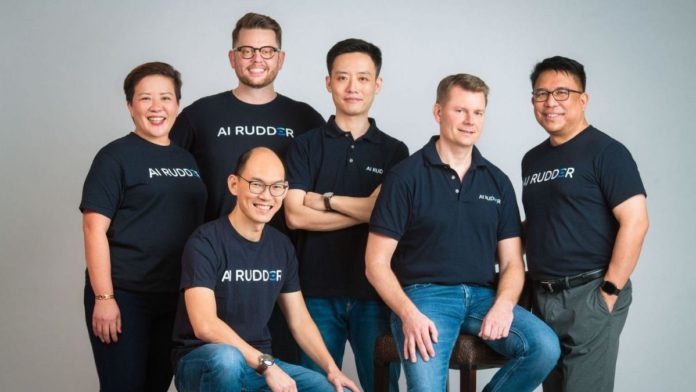
Artificial intelligence-powered voice solutions providing company AI Rudder announces that it has raised $50 million in its recently held series B funding round by Tiger Global and Coatue.
Many other investors, including Cathay Innovation, First Plus, VenturesLab, Sequoia Capital India, and Huashan Capital, participated in AI Rudder’s funding round.
The company plans to use the newly raised funds to quadruple AI Rudder’s personnel, attract more clients, and expand its global footprint.
Additionally, AI Rudder will also add new languages including Arabic, Japanese, Cantonese, French, German, Korean, and Portuguese to its platform, which already supports English, Bahasa, Chinese, Hindi, Thai, Spanish, Tagalog, Tamil, and Vietnamese.
Co-founder and Managing Director of Ai Rudder, Kun Wu, said, “Advancements in the machine and deep learning technologies are opening new possibilities for voice AI to be more human-like. This fresh infusion of capital will support continuous enhancements to our suite of products, enabling our clients to deliver more frictionless digital experiences to their customers.”
He further added that the ubiquity of technology and SaaS has allowed them to impact enterprises all across the world, even in nations like Mexico, Kenya, and Australia.
Singapore-based artificial intelligence-powered B2C voice communications solutions providing firm AI Rudder was founded by Kun Wu and Teng Ren in 2019. The company specializes in offering solutions to help call centers reduce costs by automating repetitive tasks and lowering agent workload.
According to AI Rudder, it is redefining customer engagement by combining humans and AI to create a seamless customer experience. To date, AI Rudder has raised a total funding of $60 million from several investors over four funding rounds.
The firm provides its services to multiple industries, including banking, fintech, finance, insurance, eCommerce, and many more.
Adobe announces the addition of Polygon and Solana on its creative social media platform Behance to expand its Non-fugitive Token (NFT) support.
Adobe recently made this announcement through a blog post on its website. The addition will allow Behance users to seamlessly showcase Solana and Polygon-based NFTs on Adobe’s platform.
Behance’s integration with Polygon is the next phase in Adobe’s Web3 journey. Polygon and Solana are both green blockchains as Polygon consumes a fraction of the energy that Proof of Work (PoW) blockchains do, and each Solana transaction consumes less energy than two Google searches.
Therefore users will not only be able to showcase their NFTs but also help in reducing carbon footprint.
Polygon is built on top of the popular Ethereum blockchain. Moreover, it avoids Ethereum’s high transaction costs, allowing users to minimize the transaction fees involved.
Vice President of Product at Adobe, Will Allen, said that he is impressed by Polygon’s vision of being an Ethereum scaling solution. “It can help give creators the best of both worlds: the security of Ethereum as a settlement layer while providing lower gas fees and a negligible carbon footprint,” he added.
In addition, Adobe has also launched the Content Authenticity Initiative, an open-source standard that allows artists to attach proof of origin to their artworks.
Furthermore, the company is partnering with popular NFT marketplaces, including OpenSea, SuperRare, KnownOrigin, and Rarible. Interested users can visit Adobe’s blog to understand how to showcase their NFTs on Behance.
Designer Christina Young said, “As we venture further into NFTs, it’s important that we stay true to ourselves, find communities that uplift, and create that empowering experience for ourselves and others.”
She also mentioned that Solana is more environmentally sensitive, and it is dedicated to cultivating a supportive, positive, and healthy community of artists and collectors.