The NVIDIA DGX supercomputer, powered by NVIDIA GH200 Grace Hopper Superchips and the NVIDIA NVLink Switch System, was unveiled by NVIDIA. It was designed to support the creation of enormous, next-generation models for generative AI language applications, recommender systems, and data analytics workloads.
The NVIDIA DGX GH200’s enormous shared memory area combines 256 GH200 superchips into one GPU using the NVLink connection technology and NVLink Switch System. This offers 144 terabytes of shared memory and 1 exaflop of performance, which is roughly 500 times more memory than the 2020-released NVIDIA DGX.
By integrating an Arm-based NVIDIA Grace CPU and an NVIDIA H100 Tensor Core GPU in the same device and connecting them with NVIDIA NVLink-C2C chip interconnects, GH200 superchips do away with the requirement for a conventional CPU-to-GPU PCIe connection. This offers a 600GB Hopper architecture GPU building block for DGX GH200 supercomputers, reduces interconnect power consumption by more than 5x, and boosts GPU and CPU bandwidth by 7x compared to the most recent PCIe technology.
By offering 48 times more NVLink bandwidth than the previous generation, the DGX GH200 architecture combines the simplicity of programming a single GPU with the power of a powerful AI supercomputer. The DGX GH200 is scheduled to be made available to Google Cloud, Meta, and Microsoft first, allowing them to test its potential for generative AI workloads.
In order to allow cloud service providers and other hyperscalers to further customize the DGX GH200 architecture for their infrastructure, NVIDIA also plans to make the DGX GH200 design available to them as a blueprint. Supercomputers powered by the NVIDIA DGX GH200 are anticipated to become available by the end of the year.
The volume by which networks play their role with computer working also brings the crypto world under threat from certain sponsored or malware protocols that are planned to have a massive supply chain attack. It is done by state-sponsored platforms or ones who are connected to countries that do a high-level activity, so deployed assets freeze networks or false open doors try to affect the process and influences in crypto markets with their agenda to have larger market gains.
One recent example has been with Cloudstriek where Kaspersky was able to find deployment of certain malware planned to do supply chain attack with a malicious flaw with payloads in its promises as open value surplus with direct connection to chain in smaller numbers to download and further spread it. However, only 10 computers were found to have deployed with Gopuram as malware intended to target cryptocurrencies. But, it doesn’t hide the fact that certain problems can corrupt or damage the entire working system with their presence. Want to know more about cyber security in the crypto world?
It was reported that such computers were brought under control before false access or even random on-site keyboard movements were taken into influence, but such errors can be frequent with more planned attacks. It is not easy to trace such certain issues as they are hidden under the framework, come in the same caliber of the offer, and directly target crypto markets with hidden escape roots by hackers who intend them to work. In a few cases, these attacks are planned by certain countries. For example, North Korea is in the top list, where such a larger influence is made to gain a particular push by malware regularly active.
Common Indications
Although it is not sure while tracing for the Direct link library how such tasks were deployed, it is a common indication that 3CX-like software is responsible, which is used by crypto platforms in larger numbers. The open-door planning to trace and collect information and then use it to self-advantage shows that the North Korean Laserus group is more likely to corrupt places and gain benefits. In such terms, these indications show that they’re in a stronger push, so it’s vital to see potential threats and try to negate them in sharper ways.
Why Target Crypto Places?
In general terms, crypto markets are dependent on a safer running network, and if they do get confronted by malware, then it may become easier for hackers to see through financial traces and have benefits. It gives a share advantage to go for bullies or looters in the crypto collective to gain self-gain benefits and cover for larger market pushes. This way, by attacking through deployed targets, a platform can pick better gains, have its self-satisfying agenda, and it is planned by the state, which shows a certain political motive behind it.
Strategy to Negate Threats
It is prudent, however, that companies who invest in crypto directly treat it to be part of the network. They try to do smart contract audits and also try to scan for attacks. The North Korean platform Laserus is well known for doing such 3CX attacks to put out and deploy targets so places that work on anti-virus are ready to handle and counter such threats. It is simple knowledge that such places would target the crypto market. They start from smaller supply chains and then change their attention so platforms that track them are ready to counter such open threats.
The impact of such malware can be severe, it can freeze possible growth, can directly damage certain places, or even can take large amounts of money missing due to its effect with no response to investors. It’s more prudent if Caspurski-like companies continue to be on the hunt to trace how such attacks are done and keep an eye for North Korean prominent groups with freezes so things can be in check with complete control. It comes to how people may take it, trust in crypto is equally on the rise despite such a threat, and it is a risky place but must be kept safe from malware to remain productive for all investing minds behind it.
Bitcoin and other crypto commemoratives demurred off the new month on a weaker note as investors counted recent events – bank failures, affectation, and crypto-concentrated nonsupervisory conduct. A decentralized cryptocurrency called the Shiba Inu token was established in August 2020 by “Ryoshi,” an unknown individual or organization. Its name was given based on a dog called Shiva Inu. Shiba Inu has been referred to as a pump-and-dump scheme and a “meme coin”. Conversations about Shiba Inu adoration can take place in the crazy and lovely Shiba Inu ecosystem.
From individuals who simply adore the species to those who have committed their entire lives to parentage and showing them, the community is made up of a wide variety of people. Concerns have also been raised regarding the token’s concentration, with a single “whale” wallet in control of tokens valued at billions of dollars, as well as about irrational retail investor buying spurred on by a sense of impending doom. According to a Coindesk report, the price of Bitcoin increased on Monday as other cryptocurrencies were trading up. While it’s a positive sign that Bitcoin’s price has gone up, in the morning of May, it’s still swimming below the $40,000 mark.
Learn More here to effectively invest and trade cryptocurrencies.
Defining the Point of Cryptocurrency
The fact that cryptocurrencies are typically not issued by a central body makes them theoretically susceptible to interference from or manipulation by governments. The US Commodities Futures Trading Commission( CFTC) filed an action against Binance and its creator Changpeng Zhao, professing that Binance traded unrecorded cryptocurrency futures in the US, transferring the price of bitcoin and other popular crypto commemoratives mainly lower than it was last week.
Also, the enterprises over the banking extremity have subsided, which has lowered interest in crypto means. Sources and data records Twitter transferred a poop emoji in response to Decrypt’s question on its decision to include the charm. Elon Musk sounded apprehensive of the commotion girding the revision when he twittered the image below shortly after it was made. According to Elliptic, a threat operation establishment, DeFi druggies suffered a loss of nearly$10.5 a billion to theft and fraud in 2021 and nearly$ 12 billion over the last 2 times, with maximum deals passing on Ethereum.
During a press conference, Former Popular Presidential seeker Hillary raised enterprises about how cryptocurrency can potentially destabilize nations by hanging their edict currency and chipping down at the part of the reserve currency Shiba Inu, which has attracted important attention lately, has risen to position 14 in the request cap rankings. Request judges believe it’s in an excellent growth position, despite the price’s recent significant oscillations. Shibarium, the network’s new Subcaste-2, has been functional for many days, and this has caused a flurry of exertion among the Shiba Inu community.
Druggies may learn how Shibarium operates, particularly concerning the evidence-of-stake (PoS) agreement medium and the Shibarium Bridge, which is now functional in its beta interpretation.
The Functionality of Shiba Inu
The new functionality of Shiba Inu is a Subcaste-2 chain erected on top of the Ethereum network, making use of its security and decentralization while furnishing speedier. Since BitFlyer is one of the most estimable and trusted exchanges in the Japanese assiduity, this is a massive corner for the SHIB community. The exchange’s stoner-friendly interface and strong security procedures are well-known for them.
Its choice to list SHIB is substantiation of the meme coin’s rising fame, which has attracted a sizable following in recent months. The Sentiment Score for Bitcoin for the past five days has been Neutral. The Lightning Network, Bitcoin’s subcaste 2 scaling platform, has a sequestration problem: entering payments, requesting refunds, and opening and ending payment channels all raise sequestration enterprises for druggies of the payment network.
Conclusion
The decentralized autonomous body that oversees Uniswap, one of the most well-liked platforms for decentralized cryptocurrency trading, the Uniswap Foundation, is putting on hold several governance improvements that it claims will simplify voting. India, the intergovernmental forum of some of the world’s largest husbandry – just as important as the world is pondering whether stricter regulation of assiduity is demanded.
Crypto markets are critical; they are not only volatile but also have issues of generating large amounts of surplus and then trying to get hold of dip downs with trends according to certain schemes. This position in which such markets are concerned, they have recently faced issues like crypto hacks, bankruptcies, lawsuits, or even regulatory norms that have brought a special concern in one of the world’s biggest economies with its people to consider it or not.
People who are in America are not sure whether to make a final decision or not when it comes to investing, so they are critical. There are different groups separated when it comes to finding people who may look to invest or those who are going to deny, where few of them are clearly ‘no’ for it, and others may invest but have lesser influence in the market. Want to find out more about safer crypto gains? Try here, your expert trading partner.
Identifying Stats
A general idea can be drawn from ways by which people are either not interested or have worries about the safety and reliability of cryptocurrencies. Mostly based on the survey, 4 out of 10 adults are very clearly going to say no’ to investing, and almost 34% of elder men are worried about the reliability of such markets in a broader view. Women are also skeptical about investing as around 17% of investors have worries about its safety and how it may fold in market trends.
Why No Trust in Crypto?
The problem with crypto is not only its safer use or a strong sense of market value but the thing with people of old age that they haven’t used it for long. Most people who are above 50 years have thought that they are not going to trust it, and in a survey, it is found they haven’t used it in the last 5 years, which shows how less they trust it. However, the trust of the younger community highlights that they are more indulged in it and want to get larger rewards from volatile currency.
Market Boost on Crypto
It is not that crypto is not in trend or that hardly people use it. In America, Bitcoin has a large rush, and market standing is equally strong. The level by which the crypto market runs does have a bias toward elderly people but for middle-class men, especially those around 25 years, it has a huge investment to cover. People do use tokens to pay or invest and can identify their needs, and it shows that there is a difference of opinion both on use and security.
Reliable Supply Chains
The other aspect of the US exploring mind is that they keep enquiring about showing them certain chains that are a long stand reliable process. They look for places where they can have stakes for a longer time duration with strong asset holding, but the nature of the crypto market is light and supply, so it is not easy to convince them. This does affect the thinking process, but those who invest as Americans hardly consider it of great value and have huge investments in markets to cover such a process to balance it.
A Long-Term Future
Although few American groups are not interested and others do invest, the reliability of the crypto market is a quest to prove, there are certain ways they can be affected, and it must be addressed. It may be a long-term concern or quest to satisfy ways by which people think of fears and threats by open-door platforms, and scams must be negated. The sooner it comes to places to think, the better investment goals it can proceed, so how the future stakes may come to adjust it must balance the whole scenario easily.
Possible concerns are clear in older people of America, but they are not just visible to them and may have an effect on other people involved simply. Crypto markets are not purely reliable and have safety issues, but they do have larger gains, and that’s what drives the younger Americans towards it.
The global online coaching market is expected to grow at a CAGR of 11.92% between 2021 and 2028. This industry provides wide-ranging opportunities for anyone interested to choose from, and the chance to grab a piece of this lucrative coaching pie has led to an increase in the number of niche coaching professionals.
If you’ve already managed to set up your coaching business from scratch but now feel that it’s time to expand it online, you might be feeling lost, or you might have run into some hurdles and realized that building a successful online coaching business is not that easy. Don’t fret. In this article, we’ll try to help you overcome this challenge by breaking down what we consider to be the necessary steps to skyrocket your online coaching business.
Identify Your Preferred Coaching Model
You may find coaching to be a rewarding career, but it should also be something that brings you a steady income. If this is your primary source of income, you must look at it from a business perspective and make decisions that maximize your income over time.
It’s, therefore, important to choose the right coaching model for the growth of your business. But make sure to weigh each type’s pros and cons.
Individual Coaching. One of the best things about individual coaching is the direct interaction with the client. It involves a custom-made roadmap that outlines clear processes and goals specific to the client. The coach can charge more for these one-on-one coaching sessions. This model is limited by the number of clients it can handle since you can only have one client at any given time. You can now choose between a variety of digital coaching software solutions that provide a single platform for online one-on-one coaching sessions.
Group Coaching. Group coaching is a coaching model that can help you deliver a good return on investment for the time and money invested, as you can serve a greater number of clients within the same period. For group coaching, you can select an online platform with a user-friendly interface that offers your clients a full coaching experience.
Corporate Coaching. This is one of the most common coaching methods on the market. It involves providing customized coaching services for managers and employees in an organization.
Use Social Media for Advertisement
An online coaching business can’t thrive without an effective social media presence. Your social media strategy must be well-planned and executed to be successful and effective. Every company, no matter how big or small, needs to have a solid social media marketing plan to connect with customers and increase brand awareness.
To succeed with the advertisement of your coaching business, you must first do your best to increase the number of your followers. If you’re mostly using Instagram, for instance, you can compare the best Instagram growth services and see which one is right for you based on your specific needs. A growth service will help you attract real, relevant followers who interact with your content. If your followers engage with your content, this means they’re genuinely interested in what you have to offer, and this way, it’s more likely that you will convert them into loyal clients.
You can also increase your followers by researching social media accounts that work in the same industry and target similar demographics. Look through their feed and see what hashtags and posts are popular. You can use the inspiration you get from their feed to create your own and highlight your unique offerings.
Streamline Tasks
Your coaching business will likely become more successful when processes are streamlined, as you can get a better idea of the daily tasks and expectations. You’ll be able to concentrate more on the quality of your services when mundane tasks are reduced.
Robust AI powered coaching tools allow coaching professionals to streamline their tasks and greatly improve the coaching process and outcome while staying on top of their responsibilities. One of the leading advantages of using AI-powered tools is that they offer a personal coaching experience and also nurture the relationship between you and your clients.
Also, the tools provide accessibility, so everyone can access them, no matter where they are or what their schedule is. This makes it very easy for busy coaching professionals to always deliver while saving a lot of time.
Offer Different Packages With Varied Duration and Pricing
Once you streamline your tasks, you should create smart and diverse pricing packages. The mantra for any successful business is attractive prices, and the way you present your services is crucial to the success of your online coaching business.
Coaches should be aware that they cannot put all their clients in the same price bracket. Clients have different budgets and requirements. You can reach more clients and increase your chances of getting repeat clients by offering coaching packages with varied pricing and duration.
Therefore, make sure to list the features and prices of each coaching package, along with their benefits.
Final Thoughts
The world of online coaching is constantly evolving, and if you have a coaching business and want to grow and improve it, you might want to consider the tips above so that you can establish yourself and thrive in the current climate.
Leverage the power of social media, streamline your tasks with efficient tools, and slowly watch your coaching business flourish.
The AI supercomputer ‘AIRAWAT’ of India has secured the 75th spot in the esteemed Top 500 Global Supercomputing List, demonstrating the country’s technological supremacy. The declaration was made at the 61st International Supercomputing Conference (ISC 2023) that took place in Germany.
In line with Prime Minister Narendra Modi’s goal of “AI for ALL,” this propels India to the top of the list of countries having the fastest AI supercomputers. The Government of India’s National Programme on AI includes the installation of ‘AIRAWAT’ at C-DAC Pune.
Alkesh Sharma, secretary of the Ministry of Electronics and Information Technology (MeitY), explained the development by stating that the supercomputer can improve forecasting from 12 to 6 kilometers. ‘Mihir’, which has a performance of 6.8 petaFLOPS compared to the Cray XC-40 supercomputer, is now the fastest supercomputer in India. He stated that the new supercomputer will be almost three times as powerful.
All sectors and social groups will profit from the amenities at this top-notch facility, according to the minister, who also added that each person will directly gain from this advancement. He stated that AI is the most promising technology in the digital age while discussing the AI Supercomputer “AIRAWAT.” India also boasts some of the top supercomputers in the industry.
The establishment of AIRAWAT, a cloud platform for Big Data analytics with cutting-edge AI processing capabilities, is part of the government’s ambition. In particular, the infrastructure will be able to develop new applications for the growth of the healthcare and agricultural sectors, weather forecasting, and financial inclusion, to name a few.
In an effort to bolster its data capabilities with complementary products in data integration, data quality, and analytics, Qlik has acquired Talend, an open-source software integration platform. The software provider completed the acquisition for an undisclosed amount. Mike Capone, CEO of Qlik, will lead the new company.
With improvements in real-time, AI, machine learning, and automation, Qlik believes that the acquisition would increase its capabilities in areas including data quality, transformation, and API services.
Talend’s solutions are said to make it possible to eliminate technological debt and costs while raising confidence in reliable data to support important decision-making, according to the company, which intends to provide customers with “a new approach” to data.
According to CEO Mike Capone, “Qlik, working with Talend, will bring significant benefits to customers, including expanded product offerings, improved support and services, and increased investments in R&D.”
“Customers will receive the most advanced solution available in the market, thanks to a combination of Talend’s data integration and data quality solutions and Qlik’s extensive expertise in data integration, analytics, AI, and machine learning,” he added.
Qlik said that it would keep providing its entire range of services to clients and would continue to be flexible with regard to data sources, targets, infrastructures, and methodologies.
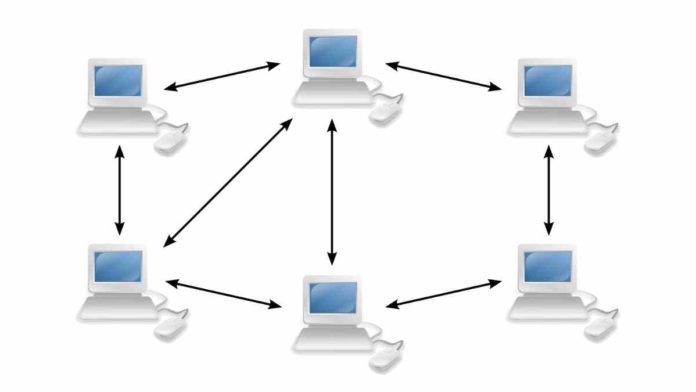
Peer-to-peer (P2P) networking has become a powerful and decentralised way for computers to talk to each other in the world of computer networks. P2P networking, unlike standard client-server architectures, lets devices talk directly to each other. This lets them share resources, exchange data, and work together without the need for a central hub. Using DHCP ports is an important part of P2P networking because they make it easier for devices to talk to each other in a smooth and efficient way. In this piece, we’ll learn about peer-to-peer networking and how DHCP ports make it possible for devices to talk to each other directly.
Understanding Peer-to-Peer Networking
Peer-to-peer networking is a type of network design in which each device, called a “peer,” talks to every other device on an equal level. In client-server models, where all information goes through a central server, each peer in a P2P network can act as both a client and a server at the same time. This decentralised method has a number of benefits, such as better scalability, fault tolerance, and the ability to use all of the network’s resources.
The Role of DHCP Ports
Dynamic Host setup Protocol (DHCP) ports are an important part of peer-to-peer networking because they allow IP addresses and other network setup settings to be given out automatically. When a device joins a peer-to-peer network, it needs an IP address so it can talk to other devices on the network. When an IP address is given out, DHCP ports are used to make sure that each device on the network has a unique name so that it can talk to other devices directly.
DHCP Port Assignment
To understand how DHCP port assignment works in peer-to-peer networking, let’s imagine that two machines, A and B, want to talk to each other directly. At first, neither gadget knows the IP address of the other. When Device A wants to talk to Device B, it sends a DHCP request message to the whole network. All of the devices in the network, including Device B, get this message.
When Device B, which is working as a DHCP server, gets the DHCP request message, it checks its pool of available IP addresses. If there is a free IP address, Device B sends a DHCP offer message to Device A, suggesting an IP address. This offer message has the IP address and the DHCP port information that goes with it.
Device B sends the DHCP offer message to Device A, which is a DHCP receiver. It agrees to use the IP address that was offered and sends a DHCP request confirmation message to Device B to let it know. Device A sets up its network interface with the IP address and DHCP port number that were given to it at the same time.
Now that Device A and Device B have been given IP names and DHCP ports, they can talk to each other directly. They can share information, work together, and share resources without having to use a single server. Using DHCP ports makes sure that each device on the network can be found and reached by its own unique address.
Benefits of Peer-to-Peer Networking
Peer-to-peer networking has a number of benefits that have helped make it famous and widely used. First, it lets devices work on their own without depending on a central server. This makes the network more reliable and less likely to fail at a single point. P2P networks can also work well as the number of devices connected to them grows because peers share the work of processing and maintaining network resources.
P2P networks also make it possible to use network resources in an effective way. For example, devices can share their processing power, storage space, or even network traffic, which makes them more efficient and saves money. P2P networking also makes it easier for people to talk to each other directly, which cuts down on latency and improves the overall performance of network apps.
Conclusion
Peer-to-peer networking changes the way client-server systems work by letting devices talk to each other directly. DHCP ports are an important part of this way of communicating because they allow IP addresses and network configuration information to be given out automatically. With DHCP ports, devices in a P2P network can share information, work together, and share resources without the need for a central hub. Peer-to-peer networking has many benefits, such as better performance, greater scalability, fault tolerance, and efficient use of resources. As technology gets better, the power of P2P networking and DHCP ports will continue to shape how devices will talk to each other in the future.
Businesses try to have a strong online presence and efficiently reach their target audience in the vast digital landscape. Search engine optimization is an essential tactic for achieving this. However, not every business has the internal knowledge or resources to apply SEO techniques effectively.
A White Label SEO Provider fills this gap by providing a crucial service to struggling companies. White Label SEO will be discussed in depth in this post, its advantages and the White Label SEO Reseller Programme.
Understanding White Label SEO
White Label SEO has become a potent tool for companies looking to increase their online presence and drive organic website traffic in today’s fast-paced digital world. White Label SEO alludes to hiring specialized providers to handle SEO tasks in the background so companies can market SEO products under their brand.
The Advantages of White Label SEO
Knowledge and Experience: By working with a trustworthy White Label SEO Provider, businesses can access a group of experts who are up to date on the newest SEO trends, strategies, and algorithms. Their competence guarantees the high-quality services they provide to their clients, which raises their search engine ranks and increases their online visibility.
Effectiveness in terms of cost: Setting up an internal SEO division can be costly and time-consuming. Businesses can save money by working with a White Label SEO Provider and avoiding the expenditures of hiring and training an SEO team. This enables companies to give clients beneficial SEO solutions while concentrating their resources on their core expertise.
Scalability and Flexibility: White Label SEO Providers provide flexible solutions that may be scaled to match each customer’s unique requirements. The White Label SEO Reseller Programme enables small or large businesses to grow their SEO services per the needs of their clients, assuring flexibility and adaptability.
Exploring the White Label SEO Reseller Program
The White Label SEO Reseller Programme expands upon the benefits of White Label SEO. It enables companies to become SEO resellers, providing SEO services to their customers while leaving the actual implementation and delivery of these services up to a reliable White Label SEO Provider.
Branding opportunities: By providing SEO solutions under their brand name, firms may position themselves as industry leaders thanks to the White Label SEO Reseller Program. This improves their standing and fosters client trust, resulting in long-lasting connections.
Operations are streamlined: By working with a White Label SEO Provider, businesses can concentrate on their primary activities without worrying about SEO implementation’s technicalities. All technical facets are covered by the reseller programme, ensuring a seamless supply of SEO services to the final customers.
Revenue Generation: The White Label SEO Reseller Program offers a business opportunity that can generate income. Businesses can make money by offering top-notch SEO services as SEO resellers since they can set their rates and profit margins without incurring the overhead expenses usually related to managing an SEO team.
The Value of White Label SEO Reporting
In addition to the advantages already mentioned, the White Label SEO Reseller Programme also provides thorough reporting, a critical feature that enhances the value of the services companies offer. For businesses and their clients to track progress, gauge results, and make data-driven choices, reporting is essential to SEO initiatives.
Transparent Performance Tracking: White Label SEO Service Providers frequently provide user-friendly and scalable reporting dashboards that let companies keep tabs on the effectiveness of their SEO operations.
These analyses offer insight into important variables like keyword rankings, website traffic, click-through, and conversion rates. With the help of this data, companies can demonstrate to customers the value of their SEO efforts, increasing happiness and trust.
Reports that are Client-Friendly: The White Label SEO Reseller Programme makes sure that companies may deliver branded, professional reports to their clients. These reports can be altered to incorporate the company’s branding components, resulting in a seamless customer experience. Easy-to-understand and visually appealing reports illustrate accomplishments and developments in the SEO strategy, allowing companies to highlight the value they offer to customers.
Making data-driven decisions: Thorough reporting enables companies to assess the success of their SEO campaigns and plan for future improvements. Businesses may see trends, find areas for improvement, and fine-tune their SEO operations to get even better results by looking at the results of keyword targeting, content performance, and user engagement metrics.
The Future of White Label SEO and Its Impact
As the digital world changes, there will be greater demand for efficient SEO services. The White Label SEO Reseller Program is in an excellent position to take advantage of this demand by giving companies a versatile and profitable chance to address the SEO requirements of their customers.
Businesses that embrace the White Label SEO Provider and the Reseller Programme can position themselves as important partners, providing essential services to drive online success in light of the growing emphasis on online visibility and organic search rankings.
Furthermore, the continual developments in search engine algorithms, artificial intelligence, and machine learning highlight the relevance of specialized SEO knowledge and skills. White Label SEO providers are on the cutting edge of these changes, constantly refining their tactics to be on top. Businesses may access this wealth of information and guarantee their clients receive the most efficient and current SEO solutions by collaborating with a reliable provider.
End Note
To sum up, the White Label SEO Provider and the White Label SEO Reseller Programme present businesses with a chance to use the power of SEO without committing significant internal resources. Businesses may increase their reputation and revenue and deliver high-quality SEO services under their brand name by collaborating with a recognized White Label SEO Provider.
The program gives businesses the tools they need to flourish online by enabling them to boost organic traffic, assist clients in succeeding, and make data-driven decisions. Adopting the White Label SEO Provider and the White Label SEO Reseller Programme is a calculated decision that opens up a world of opportunities for companies, allowing them to prosper and expand in the rapidly changing digital landscape.
Opera, a provider of web browser, has introduced “Aria,” a new AI side panel in its browser that is powered by OpenAI’s ChatGPT. Users will have free access to generative AI services with Aria.
“Aria is both a web and a browser expert that allows you to collaborate with AI while looking for information on the web, generating text or code, or getting your product queries answered,” Opera wrote in a blog on Wednesday.
Testing of the new feature is currently available. The business added that Aria is built on its “Composer” infrastructure, connects to OpenAI’s GPT technology, and is augmented by new features like the integration of real-time web results.
Aria, according to Opera, is a free service with up-to-date information that is connected to the internet and not constrained to content published before 2021, making it a more sophisticated option than GPT-based standard solutions. Aria will be available in over 180 countries, including the EU.
The AI-based service is expected to be more increasingly integrated into Opera in upcoming browser releases, the company stated, with the ultimate goal of being completely integrated to support cross-browser tasks.