Zendesk announced the acquisition of Cleverly.ai, a Lisbon, Portugal-based platform that creates a knowledge layer on top of apps to find solutions to customer concerns. Zendesk says it would incorporate Cleverly’s technology into its existing offerings, allowing teams to automate additional procedures while meeting consumer demand.
Zendesk writes on its blog that ensuring agents have the proper tools and processes to offer outstanding client experiences is a vital component of customer service. However, the support staff is failing to keep up with a surge of more than 20% year over year in conversation volume, across an increasing number of channels. As a result, businesses are increasingly turning to artificial intelligence (AI) to provide faster and more dependable service while also enhancing the efficiency of their workforce.
Cleverly.ai’s product platform, according to Techcrunch, has a number of AI-powered features, including a triage function that automatically tags incoming service requests to help categorize workflow. With its agent assist capacity, the company also offers what it calls AI-powered human augmentation, which tries to aid customer support agents in providing the correct answers to inquiries via automated replies. It also employs machine learning to classify, prioritize, and route customer support tickets based on their intentions and queries.
Zendesk already has a number of AI-enabled tools that can assist enterprises in automating customer interactions, increasing agent productivity, and operational efficiency using features like Answer Bot, macro suggestions, and Content Cues. Answer Bot is a chatbot that provides answers extracted from Zendesk’s knowledge base. Macros use machine learning to recommend a response based on ticket context, and they use prebuilt connections with Zoom, Microsoft Teams, and Monday.com to keep teams connected. Further, Zendesk’s AI-powered Content Cues function assists in the automatic review of support issues and identifying locations where the content in a company’s help center can be updated to be more beneficial to users.
Together, Zendesk and Cleverly.ai share a vision of democratizing AI and creating better AI applications to help in the provision of enhanced customer service. Cleverly.ai says in its newsroom blog that AI democratization will result in customers benefiting from the technology without struggling with its endless complexity and pitfalls.
Zendesk will use Cleverly to give a suite of features that will automate important insights, eliminate manual tasks, and optimize processes, resulting in happier, more productive support teams that can keep up with customer demand. It will also provide quick responses to agents, proactive workflow advice to managers, and operational insights to administrators.
The Ministry of Electronics and Information Technology (MeitY), Government of India, has launched the country’s first ‘Quantum Computer Simulator (QSim) Toolkit’ on August 27, 2021. Quantum Computing is a rapidly emerging computational paradigm that can perform a variety of tasks with greater speed and efficiency than present-day digital computers by harnessing the power of Quantum Mechanics. In areas such as cryptography, computational chemistry, and machine learning, Quantum computing promises exponential growth in computing power. QSim is a first-of-its-kind toolkit to be indigenously developed and is intended to be a vital tool in learning and understanding the practical aspects of programming using Quantum Computers and thus herald a new era of Quantum Computing research in India.
Besides, the QSim toolkit is in alignment with Honourable Prime Minister Narendra Modi’s vision for transforming India into a self-reliant nation by 2022, which is part of the central government’s flagship program called Aatma Nirbhar Bharat. It is a proud moment for the entire QSim Toolkit team, who have worked relentlessly on the initiative to enable a toolkit for advancing Quantum Computing research in India.
It is the country’s first collaborative initiative in this field, brought together by IISc Bangalore, IIT Roorkee, and C-DAC to address the common challenge of advancing the Quantum Computing research frontiers in India. It will enable researchers and students to research Quantum Computing in a cost-effective manner.
Recognizing the institution’s achievement at a national scale, Prof. Ajit K Chaturvedi, Director, IIT Roorkee, said, “IIT Roorkee will continue to play an active role in quantum computing education and research. The quantum simulator being launched today is poised to be a key enabler in this direction.”
The project was conceptualized through a multi-institutional approach by IISc Bengaluru, IIT Roorkee, and C-DAC as participating agencies. It was supported & funded by MeitY. QSim allows researchers and students to write and debug Quantum Code that is essential for developing Quantum Algorithms. QSim equips researchers to explore Quantum Algorithms under idealized conditions and assists them in making necessary arrangements for experiments to run on actual Quantum Hardware. QSim can serve as an essential educational/research tool providing an excellent way to attract students/researchers to the field of Quantum Technology. The toolkit creates a platform that helps students and users acquire the skills of ‘programming’ and ‘designing’ real Quantum Hardware.
As part of the “Design and Development of Quantum Computing Toolkit (Simulator, Workbench) and Capacity Building” project, the team from IIT Roorkee helped the teams from the Indian Institute of Science, CDAC-Bangalore, CDAC-Hyderabad, in providing the required expertise in quantum computing and developing programs to be tested and implemented on the toolkit. One of the unique features of QSim is its Intuitive User Interface, which offers a robust Quantum Computer Simulator integrated with a Graphical User Interface-based Workbench to create Quantum programs and visualize the instant circuit generation simulated outputs.
The Indian Institute of Technology Madras has announced a partnership with IBM to offer better select courses on the National Programme on Technology Enhanced Learning (NPTEL) platform. As a part of the IIT Madras’ Online BSc Degree program, IBM professionals will co-teach a Quantum Computing course on the NPTEL Platform, as well as Data Science & AI with technical inputs to help students gain a current industry perspective.
In addition, they will also organize technical sessions for NPTEL partner colleges through their local chapters and for IIT-M’s online BSc program. These seminars will be free and available on the online platforms of NPTEL and IIT Madras.
The partnership will deepen IBM and NPTEL’s commitment to a number of programs aimed at providing top-tier courses and new-collar employability skills to students in India’s rural and non-urban areas.
IBM’s engagement with India’s best educational institutions is in line with the government’s overall budget commitment of Rs. 8000 crore declared last year for the progress of quantum technology. To aid this mission, the government established NMQTA under the Ministry of Science and Technology. As a result, IBM announced a collaboration with top educational institutes in May this year to provide faculty, researchers, and students with access to IBM’s quantum systems, accelerate joint research in quantum computing and develop curricula to help students prepare through its Quantum Educator Program.
“Online technical sessions from the IBM experts will provide industry insights to our students in the Online BSc Degree Program,” explains Prof. Prathap Haridoss, Dean, Academic Courses, IIT Madras. Prof Prathap believes the online mode of learning is making it very convenient for industry-academia partnerships. Therefore, IIT Madras is happy to partner with IBM and looks forward to collaborating in more such areas.
According to Mona Bharadwaj, Global University Programs Leader, IBM India, Technology has emerged as a key business enabler and Indian enterprises have been accelerating the adoption of new-age technologies like Hybrid Cloud, AI, Analytics, Quantum Computing & IoT. At the same time, the skills gap of India’s student community continues to widen. Hence, IBM has been working with various government and academic institutions to improve the technical education avenues and the engagement with IIT Madras and NPTEL is a significant milestone in this journey. “The collaboration will help equip students with 21st-century skill sets that can build new career paths,” says Mona.
Prof. Andrew Thangaraj, Coordinator, NPTEL, IIT Madras, reiterates that IITs and IISc are able to reach out to a large number of learners through the NPTEL platform. NPTEL currently works with more than 4,000 colleges in engineering, arts, commerce, science, and management disciplines across the country. Many students are taking NPTEL certification exams as it helps them in improving their employability. Prof. Andrew further mentions, “NPTEL has been working towards bringing in an industry perspective to its technically rich courses and is partnering with companies to co-offer the courses. Experts and senior leaders from companies are contributing through their LIVE sessions on various technologies and are giving career guidance to the NPTEL learners. We are very happy to partner with IBM in this outreach initiative.”
Yesterday, Xiaomi announced the acquisition of Deepmotion, a Chinese autonomous driving startup based in Beijing and valued at US$ 77.4 million. Xiaomi’s President, Wang Xiang, said in a statement that the company plans to focus on the development of Level 4 autonomous driving technology, which allows vehicles to drive themselves without the need for human involvement.
As per the official statement, Xiaomi purchased 28.84 percent of Deepmotion’s preferred shares for US$14.9 million in cash, then paid US$62.47 million in cash and shares to acquire 71.16 percent of Deepmotion’s ordinary shares. Wang told reporters that through this acquisition, Xiaomi intends to decrease the time to market for its autonomous driving product. The company also aims to use this acquisition to boost autonomous driving research and development.
Xiaomi is the latest Chinese company to jump the bandwagon of the autonomous driving vehicle market. This year in March, Xiaomi revealed plans to build its own line of electric vehicles, with a $10 billion investment over the next ten years. Furthermore, the Chinese corporation stated that it intends to hire 500 specialists and engineers to work on creating autonomous driving technologies for future automobiles.
The acquisition was announced after the electronics giant reported better-than-expected second-quarter earnings, in which it overtook Apple Inc. to become the world’s second-largest phone vendor by shipments, thanks to a rebound in key market regions like India and legal restrictions against established Huawei. In the quarter ended June, revenue increased by 64 percent to 87.79 billion yuan ($13.6 billion), exceeding the 85.01 billion yuan average estimate.
According to Canalys, Xiaomi’s share of the worldwide smartphone market increased by 83 percent year over year in the quarter ending in June. For the first time in its history, it delivered 52.8 million phones, earning the status of the world’s second best-selling brand, after Samsung but ahead of Apple. Xiaomi’s IoT and lifestyle business in international countries also grew 93.8 percent year over year in Q2 2021, as goods like electric scooters and wearables gained popularity.
Deepmotion, founded in 2017 in Beijing by former Microsoft Research Asia employees Chi Zhang, Kuiyuan Yang, Rui Cai; delivers full-stack self-driving software solutions with high-precision mapping and positioning technologies, as well as environmental perception capabilities. Its major product is DeepMotion Client, an intelligent advanced driver assistance systems (ADAS) device that performs localization at 10cm accuracy without relying on RTK and delivers ADAS functionalities such as lane departure warning, pedestrian recognition, and collision warning. It also has DeepMotion Cloud, which receives and combines billions of observations from crowdsourced DM-100s into 3D semantic maps.
Bloomberg News reports that after Xiaomi acquired Deepmotion, it is also planning to invest in Black Sesame Technologies, a company that creates artificial intelligence chips and systems for automobiles. Earlier, Xiaomi had invested in autonomous driving companies such as ZongMu Technology, Hesai Technology, and AiParking, to name a few.
Python Supercomputing Analytics Platform Bodo.ai has secured US$14 million in Series A funding led by Dell Technologies Capital. Uncorrelated Ventures, Fusion Fund and Candou Ventures also participated in the funding round.
Bodo was founded in 2019 with the idea of making Python a first-class, high-performance, and production-ready platform for complex data analytics and machine learning applications.
Python is a high-level programming language that has recently become one of the most popular for its object-oriented and structured programming, which is used to develop web applications on any server. Python is also sweeping over data science and the artificial intelligence sector, in addition to web development.
Data science involves the collection and refining of data, as well as data exploration, modeling, and visualization. For each level, Python offers a wide range of libraries that can assist data scientists in visualizing complicated issues and developing algorithmic solutions ahead.
However, according to Behzad Nasre, co-founder and CEO of Bodo.ai, Python is challenging to use when handling large-scale data. Hence together with Ehsan Totoni, CTO, they set out to make Python higher performing and production-ready. Prior to starting Bodo, Nasre had a stint in Intel. Nasre and Totoni believe that parallelization is the only way to extend Moore’s law – the number of transistors in a dense integrated circuit (IC) doubles about every two years. Though this allowed chipmakers to increase the amount of processing power on a chip by fitting more transistors. A higher density of transistors per chip equates to more CPU complexity and power. Moore’s law, however, is anticipated to collapse due to the physical constraints of miniaturization and the rising expenses of manufacturing new generations of processors.
Hence to counter this, scientists are employing cheaper and less complex chips in parallel architectures either by having servers with multiple processors or clustering multi-cores.
To achieve linear parallel scalability, Bodo.ai uses first preferential compiler technology, which automates parallelization so that data and ML developers do not have to utilize additional libraries, APIs, or convert Python into other programming languages or graphics processing unit code. And doing it in a fraction of the time, complexity, and cost of previous methods, all while using native Python’s simplicity and flexibility. This enables developers to attain a new level of performance and cost-efficiency for large-scale ETL, data preparation, feature engineering, and AI/ML model training.
According to Nasre, Bodo.ai overcomes the performance-versus-simplicity divide by delivering compute performance and runtime efficiency without requiring application rewrite. Many Python developers and data scientists will be now able to do near-real-time analyses, unlocking new income opportunities for customers.
Nasre is confident that Dell Technologies Capital is uniquely positioned to assist Bodo.ai in terms of reserves and their function in the enterprise at large, which is to have the most effective salesforce.
Meanwhile, according to Daniel Docter, Managing Director, Dell Technologies Capital, businesses are employing more machine learning and data analytics to drive company insight and growth. However, with the explosive growth in data and analytics come a slew of hidden costs, including significant infrastructure investment, code rewriting, complexity, and time. Docter says, “We see Bodo.ai taking on these issues head-on, with an elegant technique that works for scale-out parallel processing in native Python. It will transform the way people think about analytics.”
For Bodo.ai, the plan is to use the funding for tripling the size of its staff and invest in R&D to grow and scale the firm. It will also be using the money for putting together a marketing and sales staff.
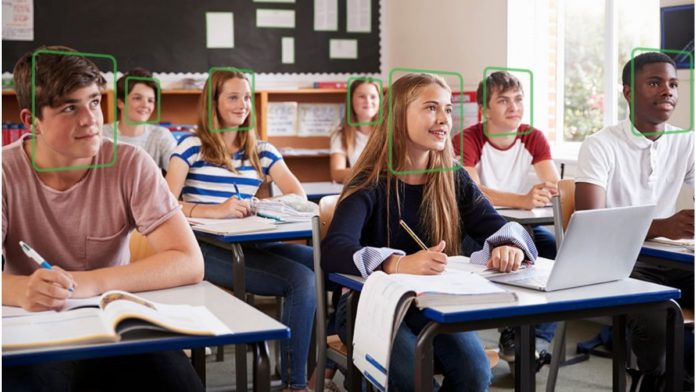
RailTel Corporation of India Ltd has recently finished implementing Artificial Intelligence (AI) based Identification System for Capturing Attendance and Management of SDMIS (Student Database Management Information System) for government schools in Assam.
Within four months, RailTel has configured, customized, and deployed this AI-based Identification System for collecting attendance in 48,000 schools throughout Assam’s 33 districts, including elementary, secondary, and upper secondary institutions.
RailTel’s overall project cost is INR 19.20 crore, with INR 12 crore being a one-time expenditure that was released when the project was completed. Out of the remaining budget, INR 3.96 crore is the project’s annual maintenance cost, with a two-year Annual Maintenance Contract (AMC) under the present scope of work. This is one of Axom Sarba Shiksha Abhijan Mission’s initiatives to implement user-friendly digital reforms and information and communication technology (ICT) technologies. RailTel is also offering end-user training for the project’s seamless execution, in addition to providing the AI-based solution to schools in Assam.
Having a good attendance record is a must for students. In some schools failing to have a minimum attendance in an academic year can result in disqualifying a student from appearing for examinations. However, taking attendance is a cumbersome and time-consuming activity both for teachers and students. Further, manual attendance is inherently prone to proxies and manual errors.
This is not the first state to have deployed an AI-based attendance system in schools. Last year, the Tamil Nadu e-Governance Agency (TNeGA) had completed a pilot test of an AI-based facial recognition system, with intentions to install it in 3000 schools across the state. This system employs an Image Analytics Device (IAD), a low-powered Edge Computing device that collects video feeds from an embedded camera/webcam/IP camera linked over the network, in addition to artificial intelligence and computer vision. It recognizes faces in the recorded photos, classifies users, and logs attendance in the database.
Overall, the system went through five phases before being deployed for marking attendance:
Data collection phase — a short video of each student is taken from various angles, with an emphasis on facial points.
Pre-processing phase — each video clip is cropped and cleaned in order to extract the face thumbnail of each student, with only 50 such pictures available for each student.
Training phase — The deep neural network-based facial recognition engine is trained using cropped and condensed picture data from students.
Evaluation phase — The trained ML model is next put to the test using a collection of photos it has never seen before. Continuous training has resulted in an accuracy of 99.6 percent.
Deployment phase — After then, the model is installed on the IAD, which recognizes the students and records their attendance.
Unlike previous AI-based attendance systems, this facial recognition model can identify and distinguish between identical twins and similar-looking siblings. It can also recognize students with spectacles, students wearing shawls/burkha, students under varied illumination, even when they aren’t making eye contact with the camera.
This facial recognition attendance system also eliminates the need of using sensor-based fingerprint biometrics attendance and enforces the possibility of mass attendance in a short time. Therefore, it is an upgrade from both manual and biometrics-based attendance systems.
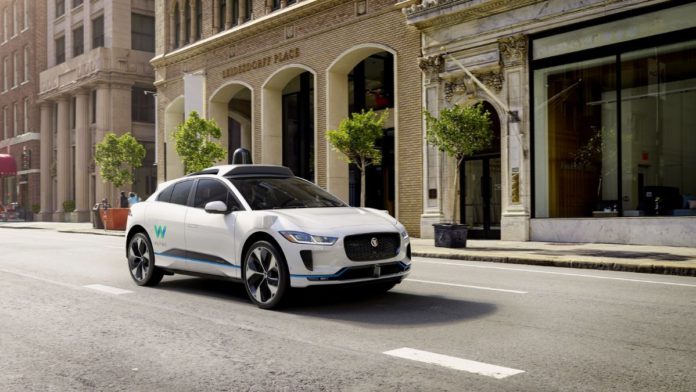
Watching robotaxis in the streets will be a new spectacle for the residents of the city of San Francisco. Waymo, Alphabet’s autonomous vehicle unit, formally launched its Waymo One Trusted Tester program in the city on Tuesday, with a fleet of all-electric Jaguar I-PACEs outfitted with the company’s fifth generation of its autonomous vehicle technology. While this robotaxi service is open to select riders, Waymo has become the first manufacturer to offer autonomous rides to the public in San Francisco.
Waymo One was launched to the general public (with safety drivers) in December 2018, expanding on an early rider program limited to pre-approved, NDA-bound Phoenix residents.
Waymo began limited testing in San Francisco in February 2021, with company employees acting as passengers. The company’s current testing zone for self-driving and safety-operated cars covers around 100 square miles.
The Trusted Tester program is a rebranding of Waymo’s prior Early Rider Program, which debuted in Metro Phoenix in April 2017. This program, according to Waymo, is accessible to all the interested San Franciscans who are interested. Apart from using Jaguars instead of modified minivans, another difference is that, unlike in Arizona, a safety driver, dubbed as “autonomous expert” by Waymo will be present in the front seat, monitoring the car while it navigates San Francisco’s notoriously steep hills and tight streets. The driver will take over if the computer fails to adapt to a variety of unforeseen circumstances while navigating small, crowded roadways alongside pedestrians and cyclists.
Though Waymo has not disclosed how many people will be in this test group or how many Jaguars will be transporting passengers in the fleet. To enroll, people can go to the iOS or Android app store and download the Waymo One app. Passengers will be needed to sign a non-disclosure agreement that prohibits them from publicizing their experience. They cannot bring guests on rides either.
Riders will be encouraged to use Waymo’s self-driving service to assist them with their daily mobility needs. For the time being, the Jaguar rides are free and will operate in a limited area of San Francisco, including the Sunset, Richmond, Pacific Heights, Noe Valley, Castro, Haight-Ashbury, and other neighborhoods, with plans to expand over time. The service will be available seven days a week, 24 hours a day.
The Jaguar vehicles are equipped with Waymo’s fifth-generation autonomous driving technology. Riders need to push the trip start button once they are seated and bucked up to begin their journey. The robotaxi features a monitor in the backseat, which displays the vehicle’s perception systems in real-time, giving passengers a better view of what the self-driving vehicle “sees” while it autonomously navigates around San Francisco.
In the event that a passenger has to cut their journey short, riders have a pullover button — when pressed — Waymo Jaguar will pull over to a safe location and let them out.
The race for self-driving vehicles is evolving into a marathon, with rivals experimenting in diverse ways in quest of finding the quickest, safest, and most profitable path to self-driving technology. And currently, the race is being dominated by robotaxi developers, who can attract private financing and borrow billions while bringing exorbitant valuations.
The robotaxi market is anticipated to rise due to increased demand for shared mobility, technical advancements in the autonomous vehicles sector, rising need for fuel-efficient public transportation, worldwide initiatives to minimize automobile ownership, and state-of-the-art infrastructure. Even the passenger market for robotaxis is bigger, while the industry consolidates further. Therefore, introducing robotaxis as one of the primary modes of transportation can encourage new business models and sources of revenue.
However, technological advancements necessitate a high level of creativity for self-driving robotaxis, and seamless navigation in congested areas might be a major ‘roadblock’ to their expansion. Even the pandemic effect cannot be ignored which rendered Uber to put a brake on its self-driving plans, while Zoox was acquired by Amazon. San Francisco is already lined with UBER and Lyft vehicles, so cruising in Waymo’s robotaxi will be a new phenomenon. At the same time, it will be interesting to watch how the autonomous vehicle leader navigates itself through the extremely diversified climatic conditions of San Francisco, tight curves and inclines of Lombard Street, and fog situations at Golden Gate.
Meanwhile, Waymo’s rivals are not lagging behind. Recently, Motional, an Aptiv-Hyundai joint venture, confirmed intentions to begin public route mapping and testing of its robotaxi in Los Angeles this month. It also plans to launch robotaxi services with Lyft in US locations beginning in 2023.
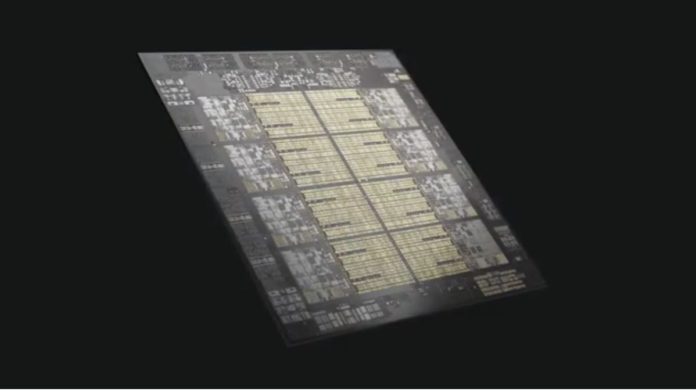
It is not uncommon that microchips and processors have contributed to the immense development of artificial intelligence-based applications. In recent years, chip developers have been partaking interest in designing AI-based chips to further the usage of artificial intelligence. Not only that, given the acute crisis in the semiconductor industry, the manufacturers are also looking forward to improving the efficiency of AI-based chips. This is why IBM and Samsung are working on the IBM Telum microprocessor, which has a specifically designed architecture for AI activities. The chip is reported to be available in the first half of 2022.
Dubbed as the next-generation CPU for IBM z and LinuxONE systems, IBM gave a sneak peek of IBM Telum chip during IEEE’s recent Hot Chips 33 conference.
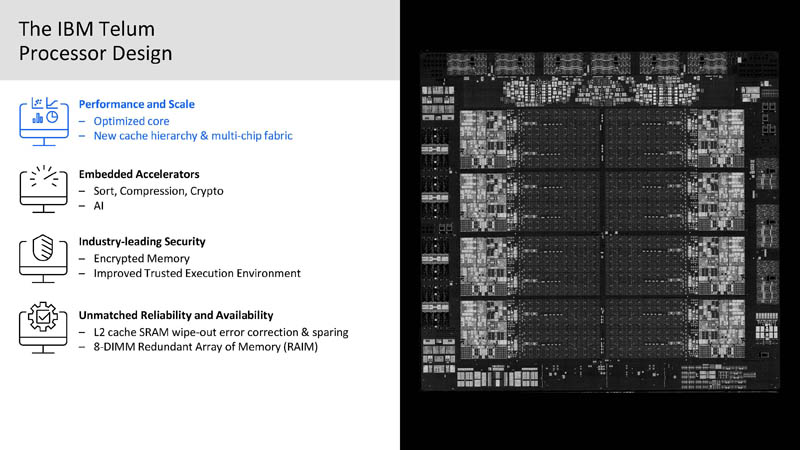
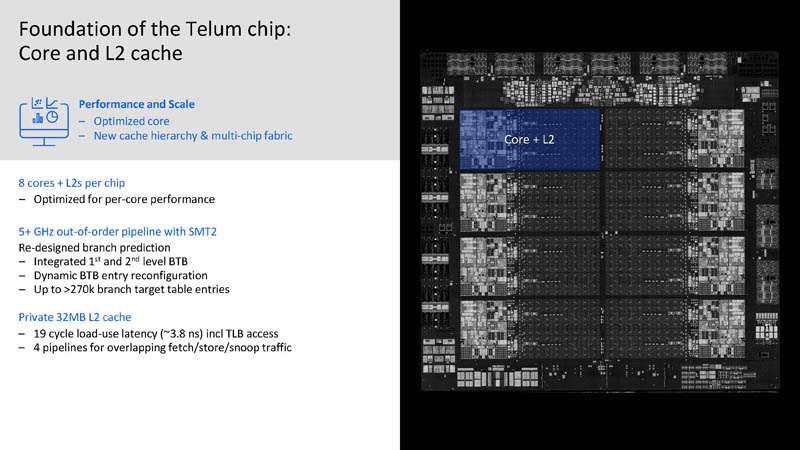
The Telum processor has eight CPU cores, on-chip task accelerators, and 32MB of semi-private cache, according to IBM. Each chip module will include two Telum dies that are closely linked for a total of 16 cores per socket. To give you an idea of how unusual this design is, the previous z15 CPU had twelve cores and a separate chip for a shared cache. In addition, the Telum CPU will be made on a Samsung 7nm Extreme Ultraviolet Lithography (EUV) technology, rather than the 14nm process utilized for the z15 chip. According to IBM, the chip represents the initial involvement of the IBM Research AI Hardware Center.
The new chip, according to a subsequent press release, is intended to aid in the detection of fraud in real-time.
HC33 IBM Z Telum Processor Summary 2
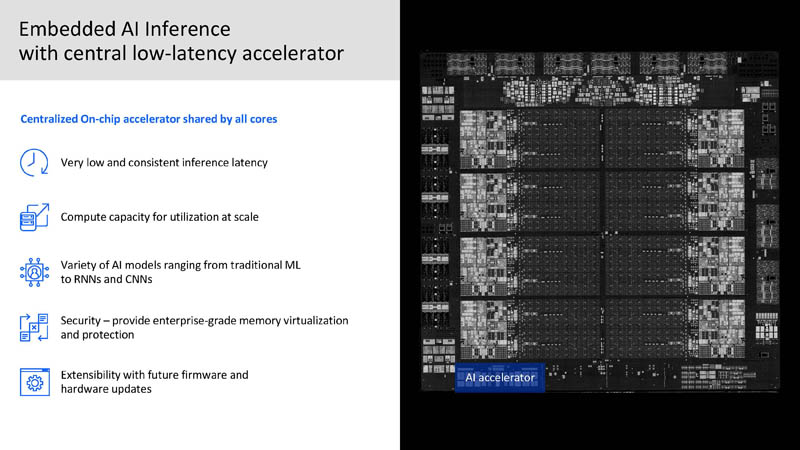
According to IBM, the concept for such a processor arose from a market study that revealed 90% of businesses wish to be able to build and run AI projects regardless of where their data is stored. Telum is built to accomplish precisely that, allowing businesses to execute high-volume inferencing for real-time critical transactions without relying on off-platform AI solutions that might slow down operations by impacting performance speeds.
The chip, as per IBM, features a deep superscalar out-of-order instruction pipeline with a clock frequency of more than 5GHz, making it ideal for heterogeneous enterprise-class workloads. This is crucial because calculations in CPUs of classical computing systems are executed by constantly relaying data and instructions between the memory and processor, while AI workloads have significantly greater processing requirements and operate on enormous amounts of data. To allow very low-latency AI inference, a heterogeneous system consisting of CPU and AI cores tightly integrated on the same chip is a must.
The practice of feeding live data points to machine/deep learning models in order to create the desired result is known as AI inference. It is the second step of the AI lifecycle, with training being the first — so without training, AI inference may be challenging. When AI inference is performed outside of the system where data is stored, it can result in low throughput and high latency. This is primarily why businesses are often late in discovering security and fraud issues.
HC33 IBM Z Telum Processor Embedded AI Inference
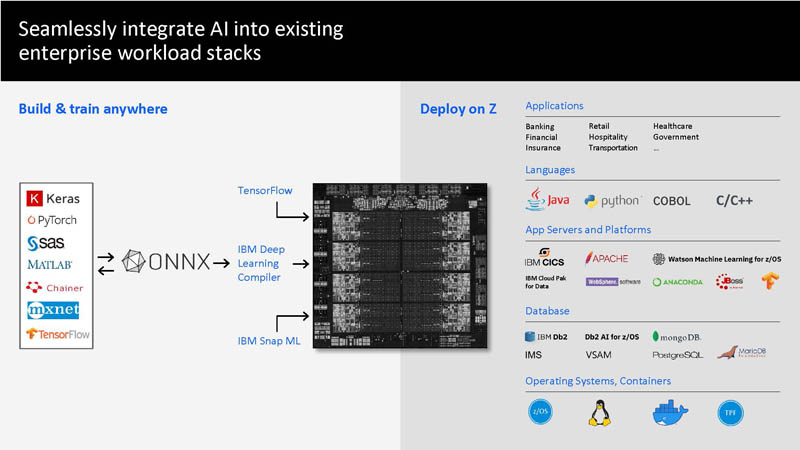
In the IBM Telum, the AI inference is made possible by processing real-time input data locally on the machine where data is being hosted. This AI accelerator uses a mix of the Open Neural Network Exchange standard (ONNX) and IBM’s proprietary Deep Learning Compiler to run models created with a range of mainstream AI frameworks.
HC33 IBM Z Telum Processor Integrate AI Into Existing Stacks
In simpler words, IBM Telum allows AI inference while processing data. This enables businesses to include deep learning models into their transactional workloads, allowing them to not only acquire insights from data during the transaction but also to use those insights to influence the transaction’s outcome. The AI accelerator has an inferencing performance of six teraFLOPS, which can be expanded up to a 32-chip mainframe with a performance of 200 teraFLOPS. So no more long waits for verifying if your card transaction is fraudulent or not.
HC33 IBM Z Telum Processor Core And L2 Cache
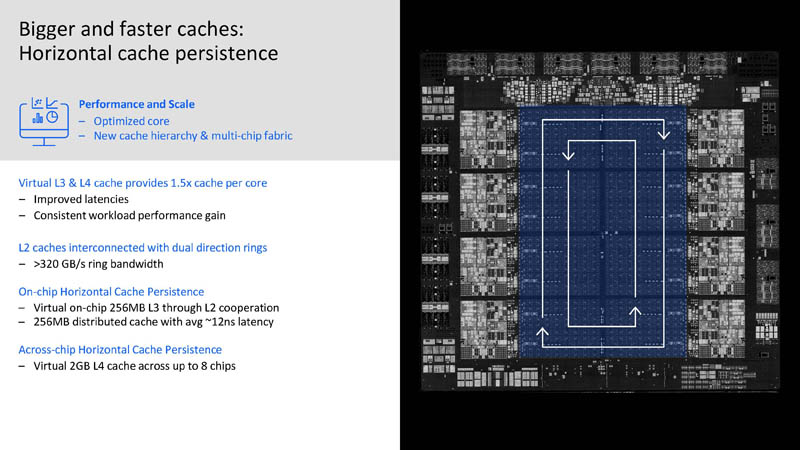
Each core in IBM Telum chip includes a dedicated L1 cache and 32MB of low-latency “semi-private” L2 cache. Because the L2 caches are combined to create a shared virtual 256MB L3 across the cores on the chip, it is referred to as “semi-private.” For communications, the L2 caches are connected through a bi-directional ring bus with a bandwidth of over 320 GB/s and an average latency of just 12ns. The L2 caches are also employed to develop a shared virtual L4 cache amongst all of the chips in a drawer. Each drawer has up to four sockets and two processors, for a total of eight chips and 64 CPU cores, as well as 2GB of shared L4 cache.
HC33 IBM Z Telum Processor Bigger And Faster Caches
The new cache and chip-interconnection technology provides 32MB cache per core and can extend to 32 Telum chips.
Along with processor core enhancements, the 1.5x increase in cache per core over the z15 generation is designed to provide a considerable boost in both per-thread speed and overall capacity delivered by IBM in the next generation IBM Z system.
According to IBM, the newly optimized Z core, in combination with its brand new cache and multi-chip fabric architecture, allows for a performance increase of over 40% per socket.
As per the IBM newsroom blog, Telum also offers important security advancements, such as transparent main memory encryption. Its Secure Execution enhancements are designed to improve speed and usability for Hyper Protected Virtual Servers and trusted execution environments, making Telum the perfect solution for sensitive data processing in Hybrid Cloud architectures. Other key advancements in Telum include a redesigned 8-channel memory interface capable of tolerating complete channel or DIMM failures and transparently restoring data without affecting response time.
After successfully hosting Autonomy Day in 2019 and Battery Day in 2020, this year on August 19 Tesla hosted AI Day. Tesla AI Day, which was broadcast live on YouTube for the common public to watch, was primarily a virtual event with actual invitations issued to a small group of attendees. The event began with 45 minutes of industrial music from The Matrix soundtrack.
1. Expanding processing capacity with D1 and Dojo
Tesla senior director of Autopilot hardware and lead of Project Dojo, Ganesh Venkataramanan introduced the company’s computer chip D1, which was created and produced in-house and is used to power Dojo, Tesla’s supercomputer.
Tesla has been promising the creation of an in-house supercomputer specialized for neural net video training for years. This is because the carmaker was unhappy with the current hardware alternatives for training its computer vision neural nets and felt it could do better internally.
The D1 chip is the result of TSMC’s manufacturing efforts, which took place on a 7nm semiconductor node. The device has a die size of 645 square millimeters and has over 50 billion transistors. Tesla created a network of functional units (FUs) that are linked to form a single enormous chip. Each FU is equipped with a 64-bit CPU that runs on a customized ISA and is optimized for transposes, gathers, broadcasts, and link traversals. The CPU is a superscalar implementation with four broad scalar and two wide vector pipelines.
Each FU has its own scratchpad SRAM memory of 1.25MB. The FU has 512 GB/s bandwidth in either direction in the mesh and can perform one TeraFLOP of BF16 (bfloat16 or brain floating point) and a new format called CFP8 (“configurable FP8”) computing and 64 GigaFLOPs of FP32 calculation. The mesh is designed to traverse the FUs in a single clock cycle, resulting in decreased latencies and improved performance.
This AI chip can output as much as 362 TeraFLOPs at FP16/CFP8 precision or about 22.6 TeraFLOPs of single-precision FP32 tasks. Each of D1’s lateral edges – all four of which have connections – has 4TBps off-chip bandwidth, allowing it to connect to and grow with other D1 chips without compromising performance.
This is the second chip designed by the Tesla team internally after the FSD chip found in the FSD computer hardware 3 in Tesla cars. “This chip is like GPU-level compute with a CPU level flexibility and twice the network chip-level IO bandwidth,” says Venkataramanan.
Tesla then created what it refers to as “training tiles” to contain the chips in its computer systems and add the interface, power, with better thermal management. Each tile is made up of 25 D1 processors in an integrated multi-chip module, delivering 9 PFlops training tiles with 36TB per second of bandwidth in a less than 1 cubic foot format.
Tesla intends to construct the first Dojo supercomputer by forming a computing cluster out of those training tiles. Dojo will be built by stacking two trays of six tiles in a single cabinet for a total of 100 petaflops of compute per cabinet, according to the firm. When finished, the business will have a single ‘Exapod’ capable of 1.1 exaflops of AI computation via 10 connected cabinets; the system will contain 120 tiles, 3,000 D1 chips, and over one million nodes.
2. Boosting Autonomy Using FSD
Dojo, according to several presenters at the Tesla AI Day, will not only be a technology for Tesla’s “Full Self-Driving” (FSD) system but also an amazing advanced driver support system that is not yet completely self-driving or autonomous.
FSD is a set of add-on services for Tesla’s Autopilot, a driver-assistance system that can be availed by spending as much as $10,000 for the Full Self-Driving package. The FSD moves around, senses its surroundings, and acts intelligently and autonomously depending on what it observes utilizing computer vision. This is accomplished by using data from eight cameras strategically positioned around the automobile to generate a 3D picture of its surroundings using neural networks. As a result, the vehicle is able to make precise decisions and responses.
The Tesla FSD system must be trained for all possible scenarios in the actual world in order for it to operate properly and allow the car to take action depending on what it sees. In 2017, Tesla launched FSD hardware version 2.5, and in 2019, FSD hardware version 3.0 was released. Tesla’s hardware 3.0 computer is now standard on all of its vehicles, including the newly built Model S.
Tesla also intends to develop fundamental algorithms for driving the automobile, which would “create a high-fidelity picture of the world and design routes in that space.” This will help the neural network to forecast while driving using video camera feeds.
Musk stated, “This is not intended to be limited to Tesla automobiles.” “Those of you who have seen the complete self-driving beta can appreciate the Tesla neural net’s rate of learning to drive. And while this is a specific application of AI, I believe there will be other applications in the future that make sense.” Earlier, prior to the Tesla AI day, the company had launched Full Self-Driving Beta 9.2. The auto steer on city streets function has been implemented in the new FSD Beta, albeit it is poor and incomplete. Meanwhile, Tesla said FSD will add the ability to automatically steer on city streets later this year, which has been a long-awaited function.
FSD Beta 9.2 is actually not great IMO, according to Elon Musk’s recent tweets, but the Autopilot/AI team is rallying to improve as quickly as possible. The company is attempting to create a single stack that can handle both highway and city streets, but this will need extensive NN retraining.
3. Tesla Bot: Using Autonomous Vehicles as Inspiration
The Tesla AI Day event also contained a big surprise: the unveiling of the Tesla Bot, a humanoid robot that operates on the same AI as Tesla’s fleet of autonomous vehicles. As a part of Musk’s showmanship presentation, he hired an actor who did breakdance to a soundtrack of electronic dance music in a bodysuit, but no working version of the robot was shown.
The robot, nicknamed Optimus, is likely to be launched as a prototype next year. It would stand approximately 5ft 8in (1.7m) tall and weigh 125 pounds (56kg). The Tesla Bot’s head will be equipped with eight autopilot cameras, which are already used to detect the environment by Tesla’s vehicles. The bot will have a screen on its head area for displaying any information. Tesla’s FSD computer will be employed to power these cameras, as well as 40 electromechanical actuators distributed throughout the prototype robot.
Tesla Bot would be capable of performing jobs such as connecting bolts to automobiles with a wrench and picking up groceries from shops. It will have a carrying capacity of 45 pounds, a lifting capacity of 150 pounds, a weight of 125 pounds and can run with a top speed of 5 miles per hour.
Musk believes that if a humanoid robot works and can perform repetitive jobs that only humans can now accomplish, it has the potential to revolutionize the global economy by lowering labor costs.
DeepMind is a British artificial intelligence-centric subsidiary of Alphabet Inc. Founded in September 2010 and acquired by Google in 2014, this research lab was created by Demis Hassabis, Shane Legg, and Mustafa Suleyman. Starting out by using gaming to develop state-of-the-art AI models, DeepMind has been at the forefront of many technological innovations that push the boundaries of Artificial General Intelligence. DeepMind was central to boost energy efficiency in Google’s already-optimized data centers. It also developed an AI system that used a dataset of anonymized retinal scans from Moorfields Eye Hospital patients to forecast the development of exudative Age-related macular degeneration (exAMD).
Below is a list of the top 10 most exciting innovations from DeepMind that were huge milestones for the scientific community.
1. AlphaGo
After being given millions of Go situations and plays from human-played games, AlphaGo utilizes deep learning and neural networks to effectively train itself to play. DeepMind keeps reinforcing and improving the system’s abilities by forcing it to play millions of games against modified versions of itself. This helps AlphaGo forecast the future moves by training a “policy” network, which then trains a “value” network to determine and assess those positions. AlphaGo considers all potential moves and permutations ahead of time, running through numerous scenarios before deciding on the one that is most likely to succeed.
2. AlphaGo Zero
An updated version of AlphaGo, but unlike its previous version, this software is entirely self-taught. By competing against itself, Zero honed its Go abilities. It began by making random moves on the board, but each time it won, Zero updated its own system and repeated the process millions of times. Zero was powerful enough to overcome the version of itself that beat 18-time world champion Lee Se-dol after three days of self-play, winning by a score of 100 games to nil. It also uses less processing power than its predecessor, with only four TPUs, Google’s advanced AI processors, compared to 48 in previous iterations.
3. AlphaZero
Similar to AlphaGo Zero, AlphaZero too was self-taught. Dubbed as the most popular innovation of DeepMind, AlphaZero has two components viz, Neural Network, which takes board configuration as input and outputs the board’s value, plus a probability distribution for all the possible moves. Monte Carlo Tree Search (MCTS), which is an algorithm that aids AlphaZero in analyzing board configurations and traversing nodes to determine the best next move.
After eight hours of self-play, it bested AlphaGo Zero that first beat the human world Go champion. Next, after four hours of training, it beat the 2016 TCEC (Season 9) world champion Stockfish. Later it trained for just two hours and defeated the 2017 CSA world champion version of a shogi game called Elmo.
4. AlphaStar
AlphaStar is likewise based on a reinforcement learning algorithm, in which agents generally play the game by trial and error while attempting to achieve certain goals such as winning or simply staying alive. They learn by imitating human players and then competing against one another to improve their abilities. The most powerful agents are kept, while the weakest are discarded. By the time of its presentation, AlphaStar had knowledge equivalent to 200 years of playing time-like competition.
During a pre-recorded session in January 2019, the AlphaStar system defeated top pro players 10 times in a row but ultimately lost to pro player Grzegorz “MaNa” Komincz in the final match, which was live-streamed online. By October in the same year, DeepMind made further improvements as it trained AlphaStar to play the Blizzard Entertainment game StarCraft II.
Despite having a limited view of the area of the map that a human would see, AlphaStar was able to reach Grandmaster level in the game. To match it with regular human movement, it also had a limited amount of mouse clicks, allowing it to register only 22 non-duplicated actions every five seconds of play.
5. AlphaFold
Understanding protein structures is critical for detecting and treating disorders caused by misfolded proteins, such as Alzheimer’s disease. It also brings up new possibilities for drug development. Considering experimental methods for determining protein structures are time-consuming and costly, there is a dire need for better computer algorithms that can calculate protein structures directly from the gene sequences that encode them. AlphaFold can predict the 3D shape that any protein will fold into.
AlphaFold won the 13th Critical Assessment of Techniques for Protein Structure Prediction (CASP) in December 2018, beating out 98 other competitors. It correctly anticipated the structure of 25 out of 43 proteins, leapfrogging the second-place team, which correctly predicted the structures of only three.
In November 2020, DeepMind unveiled Alpha Fold 2, a computational model that predicts how undeciphered proteins would fold based on 170,000 known protein structures. While the AlphaFold was made of convolutional neural networks, Alpha Fold 2 leveraged graph neural networks. A database including the 3D structures of nearly every protein in the human body was released in July this year by a team from DeepMind, the European Bioinformatics Institute, and others.
6. WaveNet
WaveNet is text-to-speech software that generates voices by sampling real human speech and modeling audio waveforms directly from it, as well as previously generated sounds. It analyses waveforms from a large database of human voices and recreates them at 24,000 samples per second. The final output includes details like lip-smacking and dialects to make the voice sound more ‘human.’
It was too computationally intensive for consumer products at first, but in late 2017, it was ready for use in consumer apps like Google Assistant. The team employed distillation where they reengineered WaveNet to run 1,000 times faster than our research prototype, creating one second of speech in just 50 milliseconds. In 2018, Google released Cloud Text-to-Speech, a commercial text-to-speech application based on WaveNet.
Former NFL player Tim Shaw, who suffers from Amyotrophic Lateral Sclerosis (ALS), has worked with Google AI, the ALS Therapy Institute, and Project Euphonia to improve his speech. WaveRNN was integrated with other speech technologies and a collection of previously recorded media interviews to generate a natural-sounding rendition of Shaw’s voice, which was used to help him read out a letter written to his younger self.
7. MuZero
This reinforcement learning algorithm is considered as a successor to the AlphaZero algorithm, but unlike AlphaZero, this algorithm was not given any training rules. MuZero predicts the quantities most significant to game planning such that it achieved industry-leading performance on 57 distinct Atari games and nearly equaled AlphaZero’s performance in Go, chess, and shogi during its first trial. It integrates a learned model with a Monte Carlo tree-based search (a tree is a data structure used for locating information inside a set).
The algorithm begins by receiving an input, such as an Atari screen, which is then translated into a hidden state. The hidden state is then iterated depending on the previous hidden state and a suggested next course of action. The model predicts three variables: policy (the move to playing), value function (the predicted winner), and immediate reward (the points scored by playing a move), every time the hidden state is changed. After that, the model is trained to properly predict the values of the three variables listed above.
This is a software library from DeepMind that helps researchers deploy their TensorFlow models on GPUs and Cloud TPUs with minimal effort and no previous experience with distributed systems. In other words, TF-Replicator is a framework that makes it easier to write distributed TensorFlow code for training machine learning models so that they may be deployed to a variety of cluster topologies with ease.
9. PonderNet
Neural network models are using everyday terms in ways that might be dangerously deceptive. This includes implying that the computer is doing human-like functions such as thinking, reasoning, knowing, perceiving, and wondering. Meanwhile, instead of analyzing the complexity of the problem being learned, the amount of computation run in typical neural networks is directly proportional to the size of the inputs.
This motivated DeepMind researchers to create PonderNet, a novel algorithm that teaches artificial neural networks to ponder for an indefinite amount of time before responding. This latest innovation by DeepMind increases the neural networks’ capacity to generalize outside their training distribution and answer difficult problems with greater certainty than ever before.
Pondering, in this context, refers to changing the number of network layers, and therefore the network’s compute, in order to determine if the computer should give up or continue. This is accomplished through the use of a Markov Decision Process, which is a state model in which the software calculates the likelihood that it is time to cease calculating at each layer of the network’s processing.
10. Perceiver
Perceiver is a cutting-edge deep-learning model that accepts and analyses a wide range of input data, from audio to pictures, in a manner comparable to how the human brain perceives multimodal data. It is based on transformers, which make no assumptions about the input data type. This allows it to ingest all of those sorts of input and execute the many tasks, such as image recognition, that need different types of neural networks.
Perceiver collects three types of data: pictures, videos, and point clouds, which are a collection of dots that depict what a LiDAR sensor mounted on the roof of a car “sees” of the road. Once trained, the system can do well on benchmark tests such as the famous ImageNet image recognition test; Audio Set, a Google-developed test that needs a neural net to recognize different types of audio samples from a movie; and ModelNet, a Princeton-developed test that requires a neural net to properly identify an object using 2,000 points in space.
In terms of accuracy, Perceiver outperforms the industry standard ResNet-50 neural network on ImageNet, as well as the Vision Transformer, released this year by Alexey Dosovitskiy and colleagues at Google.
Perceiver can process pictures, point clouds, audio, video, and their combinations, however, it is restricted to single classification label. As a result, Perceiver IO was created, which is a more generic version of the Perceiver model that can be used in complicated multi-modal activities like computer games.