According to IDC Worldwide Artificial Intelligence Spending Guide, China’s AI investment is expected to reach $26.69 billion in 2026, accounting for almost 8.9% of global investment and ranking second in the world.
In recent years, more enterprises are getting involved in the Digintelligence Era. They have started deploying digital transformation (DX) and intelligent upgrading, which has thus spawned more demand for AI.
For the next five years, the hardware market will be the most significant primary market in China’s AI market. It will account for more than half of the gross AI investment. According to IDC, China’s IT investment in the artificial intelligence hardware market will exceed $15 billion in 2026, almost reaching the AI hardware market size of the US.
With the steady improvement of AI infrastructure construction, hardware growth will gradually pace down, with the five-year CAGR remaining around 16.5%. The server market, as the central part of the hardware market, will account for over 80% over the five-year forecast period.
Simultaneously, the services market will expand faster, with the five-year CAGR expected to be almost 29.6%. Total investment in the services market is estimated to exceed $4 billion in 2026, which is near 4x the investment in 2021, with notable market growth. The AI services market is mainly dominated by the IT services segment. IDC has predicted that IT services will lead the services market growth at a five-year CAGR of 31.0%.
IDC predicts that the AI-related spending in the four major endpoint industries, viz. professional services, government, finance, and telecom, will continue to lead over the five-year forecast period, collectively exceeding 60% of the total spending of China’s AI market.
Activeloop.ai, a company leveraging deep learning services for complex data infrastructure, launches Deep Lake, a data lake for deep learning capabilities. Without compromising on GPU utilization, Deep Lake stores complex data in the form of tensors, such as photos, videos, annotations, embeddings, and tabular data. It rapidly feeds the data across the network to Tensor Query Language, in-browser visualization engines, and deep learning frameworks.
A data lake is a centralized storage where companies store data for governance, analysis, and management. First-generation data lakes collect data into distributed storage platforms like HDFS or AWS S3.
The second generation of data lakes, led by Delta, Iceberg, and Hudi, is a result of the transformation of data lakes into “data swamps” by unorganized data collections. Data lakes readily connect to query engines to run analytical queries.
Over the past ten years, deep learning algorithms have effectively handled complex and unstructured data, including text, images, videos, and audio.
Deep Lake maintains the advantages of a typical data lake with one notable exception: it saves complex data as tensors. It feeds it quickly to deep learning frameworks across the network without reducing GPU utilization. A seamless interface between deep learning frameworks like PyTorch, TensorFlow, and JAX is also supported by Deep Lake. On its GitHub page, DeepLake provides access to all of its resources.
India will soon test the ‘E-Rupee’ digital currency backed by India’s central bank; the national cryptocurrency will be tested in limited pilot launches. The Reserve Bank of India (RBI) has announced a phased pilot of its version of Central Bank Digital Currency (CBDC), said the paper released on Friday.
In what was referred to as a “concept note,” RBI outlined its vision for a digital version of the rupee, calling it the e-rupee. RBI also explained its rationale for implementing a central bank digital currency and how it would be tested in distinct phases.
The RBI plans on rolling out the e-rupee in limited pilot launches, with the intent of implementing it as an additional form of currency issued alongside paper money. The paper states the e-rupee will also serve as an alternative to cryptocurrencies.
CBDCs will provide the public with the advantages of virtual currencies while ensuring consumer protection by avoiding the damaging economic and social consequences of private virtual currencies.
The central bank is considering the release of two versions of a CBDC: one that people would use for making retail payments and another that would be used for settling transfers between banks and wholesale transactions. According to the RBI, a CBDC could make payments more efficient, robust, and trusted.
The Indian government first announced its plans to launch a CBDC in February, stating the technology would substantially boost the country’s economy.
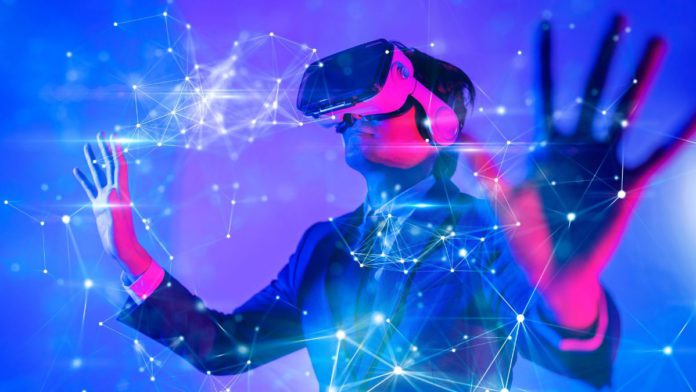
The flagship metaverse product of Meta, Horizon Worlds, is reportedly inundated with several quality issues. According to a report in The Verge citing internal memos, Meta’s VR social network, Horizon Worlds, holds little promise in its current avatar. Even those building the virtual reality social network at the company are barely using it.
Meta’s VP of Metaverse, Vishal Shah, allegedly told employees that the metaverse team will remain in a quality lockdown for the remaining year to ensure that they fix the quality gaps and performance issues before Horizon is opened to more users.”
In August, Meta CEO Mark Zuckerberg was forced to post new screenshots on Instagram and Facebook, presenting a more life-like version of himself, after the memes taunted his poorly-designed metaverse avatar.
In the same month, Vivek Sharma, VP of Meta’s Horizon social media virtual reality (VR) platform, departed at a time when Zuckerberg doubled down on his US$10 billion metaverse dream.
Sharma’s team now reports to Shah. Shah wrote in an internal memo that the feedback from their users, creators, and playtesters on the team is that the aggregate weight of stability issues, bugs, and papercuts is making it difficult for the community to experience the magic of Horizon.”
Horizon Worlds is a social VR experience where one can discover new places with friends, build your own unique worlds, and form teams to compete in action-packed games. The Horizon Worlds social metaverse platform is available only on the company’s Quest VR headsets. Zuckerberg said that significant updates to Horizon and avatar graphics are coming soon.
Airtel 5G Plus has been officially launched in eight cities in India, including Chennai, Mumbai, Hyderabad, Bangaluru, Delhi, Nagpur, Siliguri, and Varanasi. With this new generation of networks, Airtel keeps the cost the same as that of the 4G data plans.
Airtel users in such regions may wonder whether to switch to obtain faster speeds. You need to ensure that the smartphone is supported by Airtel’s 5G network officially. As you know, even if you have a 5G smartphone, you need proper 5G band support to use the network seamlessly across supported regions. However, some smartphones might need a software update to support 5G.
Airtel has now revealed the list of smartphone that supports 5G networks. It consists of the budget Narzo series, such as the Realme Narzo 50 5G, Nazro 30 5G, Nazro 50 pro, and Nazro 30 pro. The list also includes some Realme devices like Realme 8 5G, Realme 8s 5G, Realme GT ME, Realme GT Neo 2, Realme GT2 pro, and more.
The Airtel 5G network also supports the different smartphones of Samsung, Apple, Oneplus, Vivo, Oppo, Xiaomi, Poco, and Redmi. Airtel specifies that all the Apple iPhones in the list require software updates to use the 5G network, but Apple has not confirmed yet.
Meta Platforms said the usernames and passwords of around 1 million Facebook users on Friday have been ‘compromised.’ The parent company said that those affected would be notified about the situation.
Meta said that this year the company had identified more than 400 ‘malicious’ apps on iOS and Android that target internet users and steal their login information. The apps were disguised as photo editors, mobile games, or health trackers.
Some of these were downloaded from Apple and Alphabet (Google) software stores, both of whom have been informed about the issue, Meta added.
Meanwhile, Apple informed that 45 of the 400 apps were downloaded from its store, which have now been removed. Meanwhile, a Google spokesperson noted all its ‘malicious’ apps had been taken off.
The social media giant said it would share tips on how to avoid falling prey to the above-mentioned malicious apps with the users whose accounts have been compromised, whether for Facebook or any other networking website.
David Agranoivch, the company’s Director of Global Threat Disruption, said that out of the 1 million users, not all had their accounts compromised. Agranovich also informed that some ‘malicious activity’ occurred off Meta’s systems.
“If an app promises you something too good to be true, such as unreleased features for another platform or a social media site, chances are it has ulterior motives,” Agranovich remarked.
The global metaverse market is expected to reach US$996 billion in 2030, registering a compound annual growth rate (CAGR) of 39.8%. The metaverse market size reached a value of US$22.79 billion in 2021, according to GlobalData, a leading data, and analytics company.
Companies across the world, including those in non-tech sectors, are increasingly investing in technology for better engagement with customers, brand awareness expansion, and identification of new revenue streams. As of 2021, the media and entertainment market captured a sizable revenue share of the metaverse market. The entertainment experience through the metaverse has been through music and concerts.
Various players in the technology sector, including those manufacturing semiconductors, components, and application software, are also leveraging metaverse. Asia-Pacific and North America held a 50% metaverse market share in 2021.
According to the report, the strong presence of big technology giants in the advanced economies of North America and the emerging economies in the Asia-Pacific region are fuelling the metaverse market growth. Companies in these regions are focusing on Blockchain, machine learning, AR and VR, adtech, payment platforms, enterprise applications, gaming, data governance, and others.
According to Deepak Agarwal, Project Manager at GlobalData, the metaverse is still largely conceptual but can transform how people communicate, work, shop, and consume content. Though it is in the early stages of development, it has the potential to be the next mega-theme in digital media.
Furthermore, the report mentioned that the large-scale adoption of next-gen technologies, including AR and VR, will accentuate the metaverse adoption by most stakeholders involved.
This January, tourists in Manali will enjoy a giant swing backed by artificial intelligence, built by a startup incubated at the Indian Institute of Technology (IIT), Mandi. The swing is claimed to be the first of its kind in the world.
Founded by four childhood adventure enthusiast friends who are engineers, certified rock climbers, and mountaineers, the startup ‘ManaliSwing’ has completed its human jump trials. It is filing five patents for the concept and design.
The team claims it has already been approached by the Dubai government to launch the swing in the country and is in conversation with interested agencies in Switzerland too.
The concept will offer one of the world’s most creative and safe giant swings like bungy jumping, but instead of going down on a rubber bungee cord, it will be one freefall followed by a giant swing. It will use dual dynamic ropes with over 100 possible jump styles allowing one to experience the adrenaline of 70m free fall with AI promising impeccable safety like never before.
The tourists will have to pay Rs 3,000 for each jump. The cost will include transportation from a certain point and professional photography and videography service. The startup conducted a full-scale trial of 1,000 dummy jumps followed by successful Human Jumps under the special presence of IRATA experts at IIT Hyderabad.
The AI will also help track participants’ and jump master’s performance across millions of data points and deliver optimized approvals for jumping. Having a brilliant AI will be an edge for a Jump Master and his team making sure no injury, incident, or causality can happen on the site.
Boston Dynamics has joined forces with a group of other robotics industry titans to ask companies in the industry never to arm robots with weapons. Boston Dynamics signed a non-binding open letter, along with Agility Robotics, ANYbotics, Unitree, Clearpath, and Open Robotics, promising not to weaponize their platforms.
The group thinks that equipping robots with weapons presents new risks of injury and significant ethical dilemmas since such robots are easily accessible to the general public and may navigate to previously inaccessible regions where humans live and work. Because of this, the enormous benefits these increasingly sophisticated robots will have for society will be undermined by the weaponized uses of their technologies.
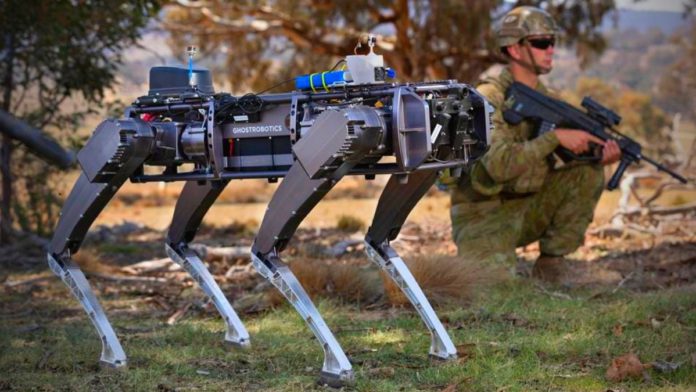
The party highlights the growing public concerns in recent months brought on by a tiny number of persons who have openly exposed their covert attempts to weaponize commercially accessible robots, including the Vision 60 from Ghost Robotics, or the Dallas PD’s use of an EOD bomb disposal robot as an IED.
In order to do this, the manufacturing leaders promise to refrain from weaponizing their general-purpose advanced-mobility robots or the software they provide to support advanced robotics, and we will not encourage others to do the same. Additionally, they reaffirmed that, wherever it is practicable, they will not permit their customers to turn any platforms they purchased into weapons. This is a significant warning considering the long and illustrious history of weapons like Toyota Technical, which are former Hilux trucks modified into homemade combat vehicles and have been the staple in unconventional warfare since the 1980s.
The decision seems reasonable given Boston Dynamics’s previous ties to the military. For instance, Bosto Dynamics has tested its robots in the past with the NYPD and the French Military. The same is true for Clearpath Robotics, which previously employed their robots in an unarmed test with the US Army.
In this age of advanced science, automated machines like robots are concerned with performing many services and making things easier. Robotics is an interdisciplinary skill combination of mechanical, electrical, and computer science. It involves the conception, design, manufacture, and operation of robots. The emerging era of robots came up with new opportunities for innovative minds interested in future technology. Although the jobs are promising and straightforward, the path to a robotics career will not be easy. Several institutions and colleges offer robotics engineering courses, and here is a list of the top 10 robotic engineering colleges in India. Note that this list does not rank the universities.
1. IIT Kanpur
Indian Institute of Technology at Kanpur, Uttar Pradesh, is one of the best colleges for robotics engineering in India. IIT Kanpur has a leading role among other engineering institutes in India for its outstanding performance and ‘engineering science’ based curriculum and teaching. It was established in 1959 and offered various courses in Solid Mechanics and Design, Fluid Mechanics and Thermal Sciences, Manufacturing Science, Mechatronics, and Nuclear Technology. IIT Kanpur offers an M.Tech and Ph.D. in robotics engineering under the mechanical engineering department in collaboration with the center for mechatronics, founded at IIT Kanpur in 1989. The M.Tech degree is a two-year course that touches the subjects like designing, testing, controlling, and implementing robotics devices. By the end of this course, the robotic engineer will be capable of building a simple robot performing kinetic and dynamic analysis with stimulation and design controls. In addition, the center of mechatronics constructs summer training and short-term courses and workshops as well.
2. IISc Bengaluru
Indian Institute of Science (IISc) is a premier advanced scientist and technological research and education Institue situated in Bengaluru, Karnataka. It is a leading robotics institute in India established in 1909 by an innovative partnership between the father of the Indian industry, Jamsetji Nusserwanji Tata, the Mysore royal family, and the Government of India. IISc has 42 academic departments and centers under six divisions, including biological sciences, chemical sciences, mechanical sciences, interdisciplinary sciences, electrical, electronics, computer sciences, and more. The Institution offers various courses in robotics, namely the foundation of robotics, design of cyber-physical systems, and dynamic and control of smart materials under the Robert Bosch Center for cyber-physical systems (CPS). These courses vary from short to semesters-long periods, and a Ph.D. program in cyber-physical systems also runs under interdisciplinary sciences. This research and academic center focuses on foundational and applied research to solve cutting-edge problems in robotics. It has a CPS laboratory called Makery that is involved in creating and running of drone research park and a 5G-V2X testbed for connected autonomous vehicle research.
3. Jadavpur University
Focused on being a public technical university, Jadavpur University ranked fourth on the NIRF list of universities in India in 2022 and 11th in the engineering category. The university is situated in Jadavpur, West Bengal, and was established in 1905 as Bengal Technical Institute and converted to Jadavpur in 1955. Jadavpur University offers an M.Tech program in intelligence automation and robotics in the electronics and telecommunication engineering department. This program is three years long, rather than a general two-year M.Tech program. Admission to this program is only through GATE/GPAT score or B.E./BTech score. Through this program, the university aims for students interested in developing core robotics systems. The program has only an intake of 18 students a batch to offer clear, precise, and well-focused knowledge to each student. The idea behind the syllabus of this program is to offer a unique combination of automation and cognitive technologies, covering automation, mathematical foundations, engineering theories and practical implementations.
The Indian Institute of information technology Allahabad (IIIT-A) is a deemed university established in 1999 and situated in Jhalwa, Allahabad, now known as Prayagraj, Uttar Pradesh. It was classified as an Institute of national importance in 2014 and is one of the top robotic engineering colleges in India. The Institution is a center of excellence in information technology (I.T.) and aims to develop professional expertise and skilled manpower in I.T. and allied research fields. IIIT-A offers master’s and Ph.D. programs in robotics, including M.Tech in robotics, integrated M.tech in robotics, and M.Tech-Ph.D dual degree in robotics. There is a limited number of intake in the programs, ten seats in M.Tech, resulting in a tight competition to get into one, and only four seats for M.Tech-Ph.D dual degree program. These courses focus on the mathematical formulation of robotics, computational intelligence and artificial life simulation, data mining and warehousing, and understanding humanoid robots. The idea is to build an international standard robotics environment for students to move forward with innovation in robotics.
5. SRM Engineering College, Kanchipuram
SRM Institute of science and technology (SRMIST) is one of the leading colleges in robotics engineering located at Kattankulathur, Kanchipuram, Tamil Nadu. The institute is rated as a global four-star university by the renowned ranking agency Q.S. and a diamond rating by QS-IGAUGE in the Indian context. SRMIST has a mechatronics department under the mechanical engineering school, which offers both bachelors and masters in mechatronics engineering and robotics. Namely, the programs are B.Tech in mechatronics engineering (robotics), M.Tech in mechatronics engineering, and M.Tech in robotics. The topics discussed in these programs are industrial automation, vision-guided robots, and intelligent mechatronics systems to emphasize both research and industry careers. The institute has advanced facilities such as an industrial collaborative robot arm, autonomous mobile robots, advanced control panels, and programmable logic controllers to give students a more profound knowledge of mechatronics and its complex function.
6. Indian Institute of Robotics
Indian Institute of Robotics (IIR) is one of the most innovative robotic engineering colleges in India. The institute is run by young engineers who are equipped with the latest technologies, advanced tools, and zeal to achieve the best in the field of robotics. They started in 2010 with a commitment to offering quality education in robotics training both online and offline. The Institution provides on-campus training to engineering students and working professionals. The robot kits available in IIR may revolutionize the idea of building robots, as they help to understand the concepts behind robots and robot building comprehensively and accurately. There are other robotics modules available in the market to create their projects but what makes IIR different is the way of teaching. The custom module training in IIR makes you learn from creating their own motherboards to building their own controlling modules, allowing them to think out of the box with custom designs and applications. Robotics engineering needs an advanced robotics lab to function, and IIR has a world-class robotics lab and also, they help individuals, institutions, and others to set up robotics labs on their own with required components, machines, and the rest.
Lovely Professional University is a private university in Jalandhar, Punjab, established in 2005 by Lovely International Trust. The university appeared in several national and international ranking lists of best and A++ grade universities, such as NIRF, the world university rankings 2022, world’s universities with real impacts, times higher education impact rankings 2022, and so on. It is a premier academic institution and now stands as one of the top robotic engineering colleges in India. LPU has collaborated with BN-Hitech machine, a machinery company, to offer two bachelor’s degrees and one master’s degree, B.Tech in robotics and automation, B.Tech in mechanical engineering (robotics and mechatronics), and an M.Tech degree in robotics. These programs are designed to connect the robotics concepts to basic science to relevant industry practice with labs and projects and help understand the working of robotics under industry requirements for designing, manufacturing, and thermal specialization. The vision of LPU is to contribute more and more to the industries and society through excellence in teaching, learning, research, entrepreneurship, and leadership.
8. Manipal Institute of Technology (MIT)
Manipal Institute of Technology is a private constituent institution of the Manipal Academy of Higher Education specializing in engineering. It was established in 1957 as a self-financing engineering college in India, which has been a 60-year-old legacy of excellence now. The Institution has stood as a leading college among other robotic engineering colleges in India since 2015 when it first introduced its master’s degree in robotics. M.Tech in industrial automation and robotics is a two-year master’s program that aims to provide hands-on training with relevant theoretical inputs and make them industry read. The program covers topics like mathematics for simulation and modeling, robot kinematics and dynamics, and motion and path planning. Furthermore, the Institution has advanced labs for robotics, hydraulics and pneumatics, PLCs, sensor and actuators, and more.
9. Osmania University, Hyderabad
Osmania University is a collegiate public state university situated in Hyderabad, Telangana. In 1918, it was founded by and named after Osman Ali Khan, the 7th Nizam of Hyderabad. It is one of the largest university systems in the world, with over three hundred thousand students. Osmania University offers a master’s in engineering, that is, M.E. in automation and robotics, and admission to this M.E. degree is through TS PGECET or GATE score.
10. PSG College of Technology, Coimbatore
PSG College of Technology is a government-aided, autonomous, affiliated to Anna University, established in 1951 by PSG and Sons’ charities trust. It is situated at Coimbatore, Tamil Nadi, and has 15 engineering and technology departments in addition to computer applications, management sciences, basic sciences, and humanities departments. PSG college of technology has the vision to be recognized as one of the leaders in engineering education, research, and application of knowledge to benefit society. Now in 2022, it is one of the top robotic engineering colleges in India that offers a bachelor’s degree in robotics. It offers B.E. in robotics and automation engineering, and students can get into this program through Tamil Nadu engineering admissions (TNEA).