

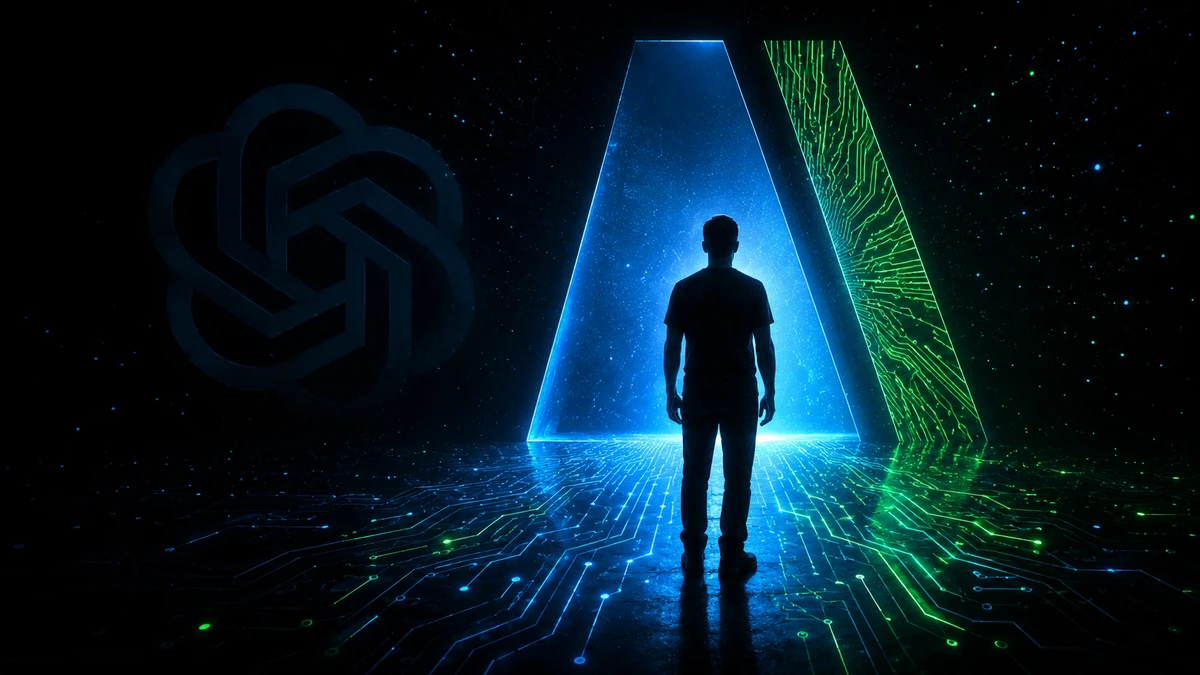
Andrej Karpathy joins Anthropic, and the AI industry should pay attention. Not because of the hire itself, but because of what the choice reveals about where the frontier is actually being fought.
On May 19, 2026, Karpathy announced on X that he is joining Anthropic’s pre-training team. “I think the next few years at the frontier of LLMs will be especially formative,” he wrote. “I am very excited to join the team here and get back to R&D.” He started the same week.
What Karpathy Will Actually Do at Anthropic
Karpathy joins the pre-training division, which handles the large-scale training runs that give Claude its core knowledge and capabilities. It is one of the most compute-intensive and expensive phases of building a frontier model, and one of the least glamorous. There are no product launches, no demos, no viral moments. Just the hard, foundational work of making the base model better.
Anthropic confirmed that Karpathy will start a new team focused on using Claude itself to accelerate pre-training research. That is a significant mandate. It means Anthropic is betting that AI-assisted research (using the model to improve the model) is how it competes with OpenAI and Google on capability without needing to simply outspend them on compute.
Karpathy is one of the few researchers in the world who can credibly lead that effort. He holds a PhD in computer science from Stanford, was a founding member of OpenAI where he focused on deep learning and computer vision, then left in 2017 when Elon Musk recruited him to lead Tesla’s Full Self-Driving and Autopilot programs. After leaving Tesla in 2022, he briefly returned to OpenAI before departing again in 2024 to found Eureka Labs, an AI education startup. He also created the widely used course Neural Networks: Zero to Hero and has a YouTube channel with millions of followers in the AI community.
Also Read: Cursor Composer 2.5 Proves Application Layer AI Companies Can Own the Stack
The Choice No One Is Talking About
The headline is Karpathy joining Anthropic. The more important story is where he did not go.
He did not go back to OpenAI, the lab he helped found. He did not join Google DeepMind, which has the resources and research depth to match any offer. He did not stay independent, which would have been the easiest path given his platform and reputation.
Of all the places Karpathy could have gone, he chose Anthropic. That choice is not a footnote.
And Karpathy is not the only signal. A pattern has been building quietly for months. Mike Krieger (Instagram co-founder and CTO), Peter Bailis (Workday CTO), Bryan McCann (You.com CTO), Niki Parmar (Adept AI CTO), and Henry Shi (Super.com co-founder) all left their roles to take Member of Technical Staff positions at Anthropic. Not VP titles, not advisory roles. Research positions. These are people with equity worth preserving and career trajectories that were entirely comfortable. They made the same choice Karpathy just made.
When the people who understand this technology most deeply consistently converge on the same organization, that is not a coincidence. It is a verdict on where the real work is happening.
Why Pre-Training Is the Right Bet
Much of the industry focus in 2025 and 2026 has been on post-training: fine-tuning, RLHF, alignment techniques, agentic scaffolding. These matter. But pre-training is where the fundamental capability ceiling is set. If your base model has a higher ceiling, every downstream application benefits.
Anthropic’s decision to use Claude itself to accelerate pre-training research is notable for a second reason: it is a direct test of whether AI can meaningfully compress the research timeline. If Karpathy’s team can demonstrate that Claude-assisted pre-training research moves faster than purely human-driven research, that becomes a compounding advantage. Every improvement to Claude improves the tool used to build the next version of Claude.
This is the kind of recursive improvement loop that researchers have theorized about for years. Anthropic is now staffing it with the most credible researcher it could find.
What This Means for the AI Race
Anthropic is closing in on a $1 trillion valuation. Its ARR surpassed $30 billion in 2026, and it counts PwC, Blackstone, and Goldman Sachs among its major enterprise clients. It has a compute partnership with SpaceX at the Colossus 1 data center in Memphis. It just won a legal argument in the background of the Musk vs. Altman trial, which concluded the day before Karpathy’s announcement, ruling in OpenAI’s favor. Yet Karpathy still chose Anthropic.
The three inputs that determine who wins a frontier AI race are compute, data, and talent. Anthropic has been accumulating all three. The Karpathy hire is the most visible data point in the talent column, but it reflects a broader reality: Anthropic is winning the argument that safety and capability are the same bet, not competing ones.
The AI race is often framed around funding rounds and GPU clusters. The talent data is pointing somewhere else.
