


Everyone is watching the model wars. The benchmark releases. The demo videos. The CEO posts on X. But if you want to know whether the AI boom is actually real — not hyped, not narratively convenient, actually real — you need to read a supply chain, not a press release.
TSMC just gave you one.
Taiwan Semiconductor Manufacturing Company reported Q1 2026 revenue of $35.71 billion, up 35% year over year, beating analyst forecasts and landing at the top of its own guidance range. March alone came in at 45.2% growth year over year, the strongest single month of the quarter. Every dollar of that outperformance came from AI chip demand.
Why TSMC Is the Most Honest Signal in AI
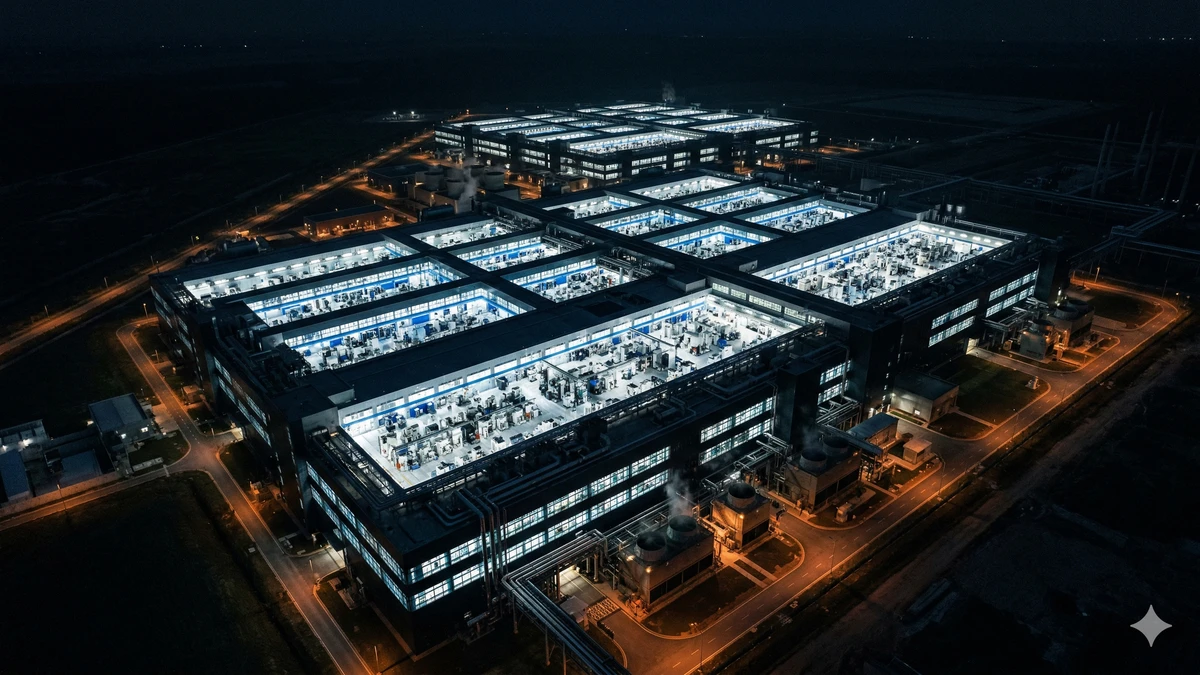
TSMC doesn’t sell narratives. It sells wafers. When Nvidia, AMD, Apple, Google, and Amazon need chips built, they go to TSMC. The company fabricates roughly nine out of every ten advanced AI accelerators on the planet. Its advanced 3-nanometer and 5-nanometer process technologies, critical for energy-efficient AI accelerators, accounted for a growing share of wafer revenue, with gross margins expanding on premium pricing for cutting-edge nodes.
Smartphone and PC end markets took a hit in Q1 due to memory shortages. But the AI segment carried the entire semiconductor industry. That’s not a talking point from a model lab. That’s revenue data from the company building the physical infrastructure every AI product runs on.
The Infrastructure War Nobody Is Talking About
Here’s what makes the TSMC numbers even more significant: they arrived the same week that multiple major AI players moved to reduce their dependence on outside chip suppliers.
Elon Musk’s Terafab project — a joint venture between Tesla, SpaceX, and xAI — announced on March 21, 2026, targets 1 terawatt of annual AI compute capacity from a vertically integrated facility in Austin, Texas, with Intel joining on April 7 to contribute manufacturing expertise. The project carries a $20–25 billion price tag for its pilot phase.
Meanwhile, Reuters reported on April 9 that Anthropic is internally evaluating whether developing proprietary silicon could make sense for its future AI systems, including the Claude family of models. Designing an advanced AI chip could cost roughly half a billion dollars, a significant bet, but one that reflects the strategic logic of controlling your own compute at scale. Meta and OpenAI already have similar chip projects underway.
Every major AI lab, in the same week TSMC posted a record quarter, is racing to own silicon. That convergence is not a coincidence. It is the chip bottleneck becoming the defining constraint of AI’s next phase.
Also Read: Meta Might Actually Pull Off This AI Comeback
What This Means
The AI boom is real. The proof isn’t a benchmark score or a demo video. It’s $35.7 billion in quarterly revenue from the company that physically manufactures the hardware the boom runs on. It’s Nvidia booking TSMC’s most advanced packaging capacity through 2027. It’s Anthropic, OpenAI, Meta, and Musk all independently concluding that depending on someone else for chips is a risk they can no longer accept.
Everyone is asking which AI model will win. The smarter question is: who controls the hardware to build and run it? Right now, there’s only one answer — and it’s a company in Taiwan that most people in the AI conversation aren’t watching closely enough.
TSMC’s full Q1 earnings call is scheduled for April 16, where the company is expected to update its full-year guidance. Watch for any signals on capacity expansion and 2nm node timelines — that’s where the next chapter of this story gets written.
