On August 13, 2024, Google introduced Gemini Live, a voice assistant for Android mobile devices, in its annual Made by Google event. The event also saw the launch of Google’s mobile phone, Pixel 9 series, Pixel Buds Pro 2 and Pixel Watch 3.
Gemini Live is a chat assistant that will provide users with a free-flowing conversational experience with Gemini, Google’s AI-powered assistant. It works on the new Gemini 1.5 Pro and 1.5 Flash AI models, which utilize advanced text-to-speech technology.
Fully integrated with Android, Gemini Live can be used in English on mobile devices such as Pixel and Samsung. Google plans to make it multilingual and expand it further for iOS devices. To provide a natural interaction experience, Gemini Live offers ten voices to choose from according to the user’s preference for tone and style.
Currently, only users who have subscribed to Gemini Advance can use Gemini Live. To start a conversation with Gemini Live, users can tap the live button at the bottom right of the Gemini app and enter text-based or hands-free input. One can interrupt the conversation and change topics, just like having a conversation on a phone call.
The assistant works in the background even when the phone is locked. Users can turn off the microphone by tapping the Hold or End buttons or saying “Stop.”
To further enhance Gemini Live’s capabilities, Google is set to launch new extensions in a few weeks. These extensions include Keep, Tasks, Utilities3, and expanded features on YouTube Music, which will strengthen Gemini’s integration with other Google apps and make them more efficient.
Sissie Hsiao, Google’s vice president for Gemini experience, told WIRED, “This chatbot is not just revamped Google Assistant, but its interface has been completely rebuilt using generative AI. Over the years, users have asked us for two things repeatedly. One, an assistant with whom they can talk naturally without changing their tone, and two, the assistant should be more capable of solving real-life problems. Gemini can now be your personal assistant and manage your calendar appointments and email invites.” Google’s AI strategy emphasizes improving user experience through the responsible use and development of artificial intelligence. The launch of Gemini Live aligns with the tech giant’s resolve and can give users a more personalized AI experience.
Adobe has introduced Magic Fixup, a cutting-edge AI tool that is changing the game in photo editing. This innovative technology simplifies complex adjustments, letting users edit with a straightforward cut-paste approach. Fixup takes a rough edit and refines it into a photorealistic image. It aligns perfectly with the user’s vision while preserving the details and essence of the original photo.
How it Works
Made Fixup harnesses the power of dynamic video data to supervise the editing process. By analyzing frames from videos, the AI learns how objects interact with their surroundings, adapting to various lighting conditions and perspectives.
The tool first aligns a reference frame with a target frame using motion models, then fine-tunes the rough edit into a polished, realistic image. This method ensures that global lightning is consistent, objects blend seamlessly, and any changes in perspective or focus are handled adeptly.
Editing Capabilities
The tool shines in diverse editing tasks, such as perspective changes, color adjustments, and spatial configurations. With the help of Magic Fixup, tasks that previously took significant hours can now be completed in seconds. Additionally, Magic Fixup’s ability to adapt to different styles and content beyond traditional photographs makes it versatile and robust, even in new contexts.
Compared to other text-based editing tools like InstructPix2Pix and Masa-ctrl, Magic Fixup stands out for its accuracy and speed. Text prompts often fall short of capturing the user’s intent as effectively as direct image edits.
While other methods can struggle with faithfully constructing the input image, Magic Fixup constantly delivers results that align closely with the user’s original edits.
Future Ahead
Adobe’s Magic Fixup marks a major advancement in AI-driven photo editing. It offers a more intuitive and efficient way to achieve high-quality results. The future looks bright for this AI technique as it continues to evolve and refine the art of photo editing.
Ideogram AI has launched Ideogram 2.0, a significant advancement in AI-driven text-to-image generation technology. With this release, Ideogram AI aims to elevate creative potential by offering new features and tools that set a new standard in the industry. The platform includes features like realistic style, design style, API, and advanced text prompts.
Let’s look at the new transformative features of Ideogram AI.
The realistic image generation style helps produce lifelike textures and visuals. This feature is perfect for users looking to create images that could pass as real photos.
Ideogram 2.0’s new design style feature boosts text accuracy within images. This feature substantially improves workflow efficiency for graphic designers who want to create premium-quality materials such as cards, posters, or social media posts.
Another key feature of Ideogram is Color Palette Control, which allows users to generate images that adhere to their brand or art’s specific color palette needs. In addition, the Ideogram public library, with text-based search functionality, provides access to over 1 billion images.
Ideogram also offers an official dedicated iOS application, which brings Ideogram’s powerful image generation capabilities to users on the go. Along with this, the beta version of the IdeogramAPI is now available to developers and businesses.
The API offers superior image quality at a competitive price and is expected to open up new possibilities for integrating Ideogram’s technology into various applications.
Lastly, the advanced promoting features of Ideogram, like Describe and Magic Prompt, enable users to create detailed text prompts based on existing images and generate fresh visuals.
Ideogram 2.0 promises to inspire innovations across various fields by continuously pushing the boundaries of what’s possible through advanced technology, user-friendly tools, and creative freedom.
Founded in July 2023, Sarvam AI is a Bengaluru-based GenAI startup that has officially launched its full-stack GenAI platform. It offers diverse products designed to enhance AI accessibility across India. This GenAI platform includes Sarvam Agents, Sarvam 2B, Shuka 1.0, Sarvam Models, and A1, each service catering to different aspects of AI and its applications.
Reflecting on the platform’s potential, Hemant Mohapatra, a partner at Lightspeed and one of the investors in Sarvam AI, said, “In a huge and diverse country like India, multilingual AI holds the potential to not only bridge the digital divide but also unlock transformative use cases for ‘Bharat.’” He stated, “We are committed to supporting the team and applaud them for their mission of driving meaningful impact for billions of Indians.”
Let’s take a look at five key products of the Sarvam platform.
The flagship product, Sarvam Agents, offers voice-enabled, action-oriented custom business agents available in 10 languages, including Hindi, Tamil, Telugu, and Bengali. Starting price of this service is INR 1 per minute. These agents can be deployed via telephone, WhatsApp, and in-app services and are already used by several companies.
Sarvam 2B is India’s first foundational, open-source Indic small language model. It is trained with 4 trillion tokens and can be used for tasks like translation and summarization in vernacular languages. These capabilities make Sarvam 2B a tool that bridges the linguistic divide in AI applications.
Shuka 1.0 is touted as India’s first open-source audio language model. This model extends the capabilities of the Llama 8B model, supporting Indian languages and offering a more accurate and accessible voice-to-text translation.
Sarvam Models are Indic models used in Sarvam Agents and accessible via APIs. They can be used for tasks such as translation, speech recognition, and document parsing.
A1 is designed specifically for the legal sector. It is a GenAI workbench that enhances legal operations through features like regulatory chat, document drafting, redaction, and data extraction. A1 also includes tools for drafting contracts and share purchase agreements.
Sarvam AI has quickly established itself as a significant player in the AI landscape. The startup has received $41 million in Series A funding, marking the largest fundraise by an Indian startup to date. Sarvam AI’s diverse product range and innovative approach aim to make advanced AI technologies accessible and practical across India’s varied linguistic and socio-cultural contexts.
On August 20th, 2024, researchers at Meta Fair announced the Self-Taught Evaluator technique, which can train LLM evaluators using synthetic data. This approach is being adopted to reduce the human efforts required to train evaluation models.
The current LLM evaluation method requires human-annotated data, which increases the associated costs and time needed to generate accurate results. The Self-Taught Evaluator will be a big leap in the artificial intelligence domain, significantly improving the scalability and efficiency of LLM evaluators.
Meta’s new evaluation model eliminates the requirement for human-labeled data by introducing the concept of LLM-as-a-judge. In this method, the model is given input, two possible answers, and an evaluation prompt, which the model uses to judge the response with a reasoning chain.
The Self-Taught Evaluator process begins with a base language model and a large pool of unlabeled data, later split into ‘chosen’ and ‘rejected’ categories. The model then trains iteratively, sampling each example and examining traces and judgments.
Meta researchers tested this model using the Llama-70B-Instruct model and the WildChat dataset, containing over 20,000 examples without human involvement. After five iterations, model performance for the RewardBench benchmark increased from 75.4% to 88.7%. Similarly, the performance of the MT-Bench benchmark significantly improved.
This research explored the fine-tuning of LLM evaluation models using automated loops to reduce manual work. This is beneficial, especially for large enterprises, for creating language models and automating the model evaluation. However, there are potential setbacks if the seed model is not thoughtfully considered.
On 20th August 2024, Soumith Chintala, Meta’s AI lead, stormed the social media platform ‘X’ by announcing Metamate, a generative AI assistant, to enhance productivity.
This product will extend the capabilities of artificial intelligence assistant applications, like Perplexity AI, by allowing users to create custom agents using Python scripts. Each agent will cater to the responsibilities of the specific team that has created the bot.
Soumith, along with Zach Rait and Aparna Ramani, developed this product to handle the requirements of large-scale organizations like Meta that operate multiple workflows simultaneously.
According to sources, Metamate offers features for a vast range of applications. Some of its most common benefits include data visualizer, document summarizer, information retrieval, and monitoring work recaps.
Along with these features, Metamate enables Meta employees to generate complex queries and perform advanced mathematical calculations. However, this product is only available for Meta employees, as it is trained on massive volumes of internal company documents.
Esther Crawford, the director of products at Meta, stated, “Any sizable company operating without an internal AI tool is already behind the curve.” Integrating machine learning algorithms with Metamate will further enhance the product.
Data management is critical to modern businesses. It enhances operations’ overall efficiency and drives growth. By implementing the proper data management strategies, you can ensure data availability, integrity, and compliance across your organization.
Enterprise data management (EDM) is a comprehensive process that assists you in managing data strategically. It ensures data is available, consistent, and protected to meet organizational goals and facilitate business continuity.
This article provides an overview of enterprise data management (EDM) and why it is essential for your business. You will also learn how to implement a robust EDM strategy for effective data management.
What is Enterprise Data Management?
Enterprise data management is a systematic approach to managing and governing data. It helps to create assurance and confidence in an organization’s data assets.
EDM involves establishing policies and procedures to ensure data accessibility, consistency, accuracy, security, and compliance with industry standards. It enables you to consolidate data from various sources and store it in a standardized and accessible format to optimize business operations.
Why Is Managing Enterprise Data Critical to Business?
Managing enterprise data is critical to business for several reasons:
Informed Decision-Making
When the data is accurate, you can make informed decisions based on factual figures rather than intuition. Enterprise data management practices ensure your data is correct by allowing you to identify inconsistencies or errors within the data. You can take preventive measures to clean and transform it. This way, your team can identify high-performing products and adjust marketing strategies.
Operational Efficiency
Within the enterprise data management framework, you can define policies and procedures that help maintain data consistency across the organization. Standardizing data across different systems and departments enables you to enhance operational efficiency and improve data accessibility and collaboration.
Customer Insights
EDM allows you to consolidate data from multiple sources, such as marketing platforms, social media, CRM systems, and more, in one place. It helps you gain a comprehensive view of customer data. By analyzing this information, you can identify areas of improvement and enhance customer satisfaction by addressing their concerns about your products and services.
Compliance and Risk Management
Enterprise data management helps you know what regulations to comply with to mitigate data security risks. You can establish protocols for monitoring data usage and access controls, protecting data from unauthorized access, and complying with regulatory standards. The security measures reduce the risk of invasion, compliance penalty risk, and reputational damage.
How to Implement Enterprise Data Management Strategy
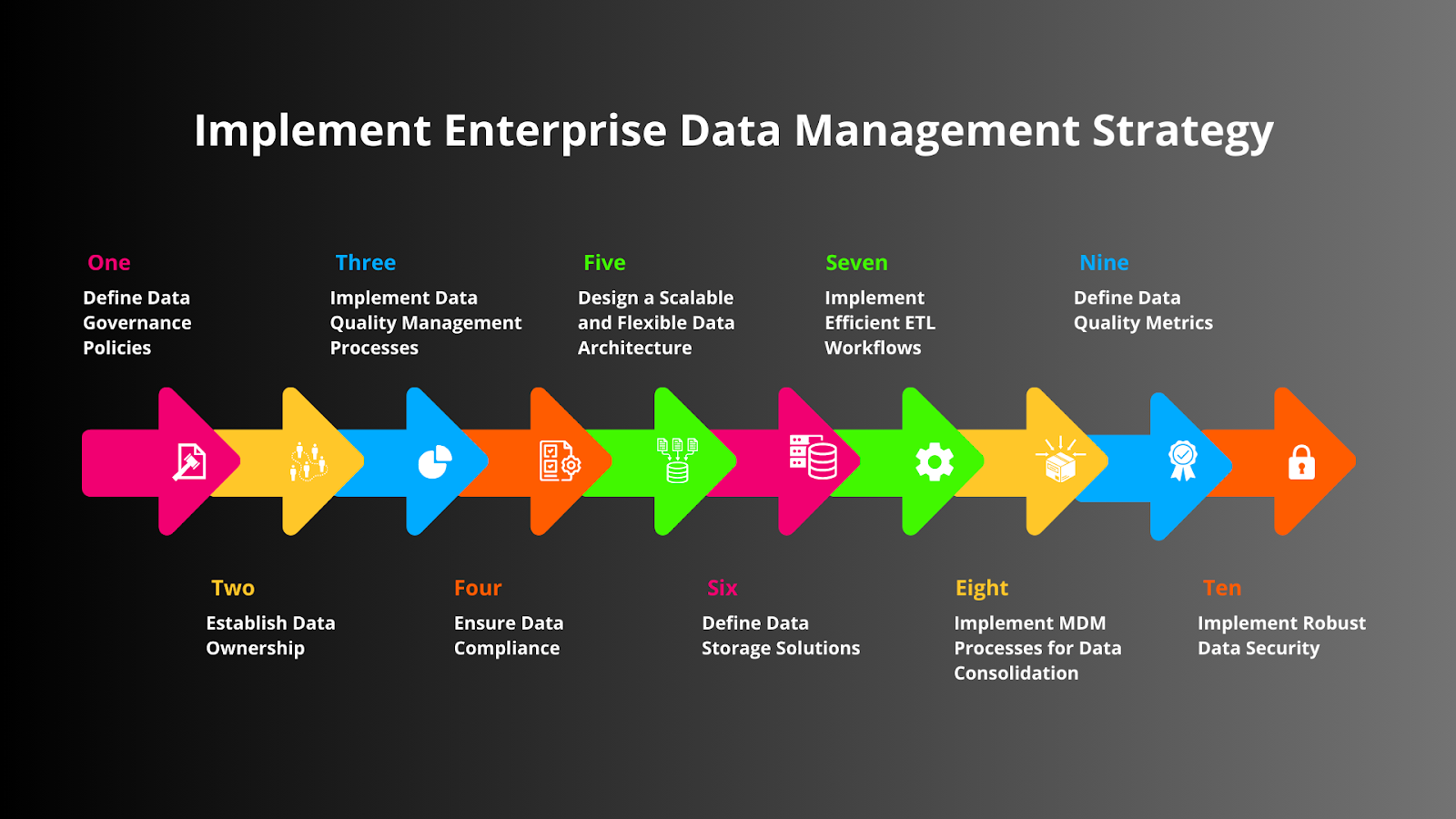
Implementing a robust enterprise data management strategy includes several factors. Here is a detailed guide to the factors involved in creating a data management framework for your organization:
Define Data Governance Policies
Data governance policies are a set of regulations, procedures, and guidelines that define how to manage, access, and use data. These regulations include policies for data classification, access permission, quality standards, compliance, integration, security, and retention. You must define all the necessary policies to conduct your business operations efficiently.
Establish Data Ownership
When you establish data ownership, you define the roles and responsibilities of individuals accountable for managing and protecting specific datasets. Clearly define the authority of the data owners to ensure data quality and integrity.
Implement Data Quality Management Processes
Data quality is essential for making accurate and informed decisions. Implementing a data quality management process includes activities like data cleaning, validation, and enrichment, which help identify errors, inconsistencies, and duplicate data.
Ensure Data Compliance
Data compliance is essential to protecting your organization’s critical data assets, mitigating risks related to legal obligations, and ensuring data credibility. Identify the relevant regulatory compliance specific to your industry to conduct regular audits and comply with regulatory obligations such as HIPAA, GDPR, PCI DSS, etc.
Design a Scalable and Flexible Data Architecture
A well-designed data architecture allows you to scale data and be flexible with data management, enhancing your business’s operational efficiency. A sturdy data architecture must have the following capabilities:
Smooth data integration
Scalable data storage
Efficient data processing
Data Analytics
Define Data Storage Solutions
You must analyze your organization’s requirements before choosing a data storage solution to implement an enterprise data management framework. Some of the specifications can include:
The type of database, relational or non-relational
Scalability
Data compression for storage efficiency
Data indexing and partitioning are needed for better data accessibility.
Implement Efficient ETL Workflows
ETL workflows use integration tools, such as Airbyte, to extract data from different sources, transform it, and load it into the target system for further analysis. By implementing the ELT process, you can automate your workflows and increase data performance and reliability.
Implement MDM Processes for Data Consolidation
Master data management (MDM) is a process for centralizing and governing critical organization data. By establishing data governance controls and quality rules within the MDM environment, you can ensure consistency and synchronize master data across your organization.
Define Data Quality Metrics
Data quality measures are essential for managing enterprise data with consistency and timeliness. Within the quality measures, you must define the metrics and KPIs to help you evaluate data quality across the organization.
Implement Robust Data Security
Nowadays, data security is the most critical concern for organizations. A comprehensive data security strategy should include encryption methods, access controls, and authentication mechanisms. By implementing data security, you can conduct regular assessments to detect and prevent intrusion and allow role-based access to protect sensitive information.
Master Data Management Vs. Enterprise Data Management
Enterprise and master data management are related but have distinct scopes and functions. EDM is a broader concept that covers the entire lifecycle of your data across the organization. In contrast, MDM focuses on managing the master data (critical data entities within the business environment). Let’s look at some of the essential differences between MDM and EDM.
Basis of Difference
Master Data Management (MDM)
Enterprise Data Management (EDM)
Definition
It is the process of creating uniform data related to a single entity, such as a product, customer, or supplier, across different departments.
It is managing, storing, and governing data within an organization.
Purpose
To make data more consistent for operational and analytics use.
To oversee the entire data lifecycle and ensure effective data management and governance.
Scope
Limited for managing and maintaining the master data.
It has various attributes and manages all the data within the organization, including the data types and sources.
Functionality
MDM centralizes the management of crucial data entities of your business by integrating in one place and synchronizing the workflows
There are many aspects of EDM, including data management, governance, quality management, integration, security, architecture, and compliance
Example
A retail company can use MDM to create a single view of customer data, including interactions with products, website visits, products bought, and feedback. This will help the company better understand the customer and create targeted campaigns to improve performance efficiency.
A finance company can implement EDM to govern data from various sources, including payment gateways, account information, and daily transactions. This helps identify unusual activity and optimize investment strategies to provide a personalized customer experience.
Few Enterprise Data Management Tools
Enterprise data management tools are vital in establishing, monitoring, and optimizing organizational data practices. These tools facilitate data quality management, ensuring the data is accurate, complete, and consistent for developing and implementing strategic business decisions.
Let’s look at some of the enterprise data management tools:
Tableau: Tableau is a data visualization tool that simplifies raw data and helps you present it in an understandable format. It allows you to create interactive dashboards and reports, providing a clear view of your enterprise data and resources.
Dell Boomi: This enterprise-grade platform is designed to provide high productivity by enabling you to synchronize data within a centralized hub. It lets you connect various systems and applications to streamline data flow, ensuring the information is updated across the organization.
SAP Master Data Governance: This tool focuses on managing the master data entities within your organization. It integrates with both SAP and non-SAP systems. SAP Master Data Governancegives you a unified view of your data and helps you meet industry standards for better compliance.
IBM InfoSphere QualityStage: This data management tool specializes in quality management through data profiling, cleaning, and standardization. It helps you identify duplicate values and reduce redundancy, enhancing data quality.
Key Takeaways
Enterprise data management (EDM) is a strategic practice that helps you manage your enterprise data through data quality, governance, and security measures. By implementing EDM, you can make informed decisions, foster a data-driven culture, mitigate risks related to security and compliance, and increase operational efficiency. You can also use third-party tools to apply EDM to streamline workflows within your organization.
FAQs
What are the examples of enterprise data?
Examples of enterprise data include:
Operational data, such as transactions, inventory levels, customer orders, accounting, and HR statistics.
Strategic data that includes reports, CRM platform data, market trends, and opportunity analysis.
Application-specific data like GPS for transportation.
Network alerts for maintaining IT infrastructure.
What is the EDM framework?
An enterprise data management framework is a set of practices implemented within your organization’s environment to manage the data effectively.
Which team is responsible for EDM?
The enterprise data managers, including database and IT administrators or project managers, manage enterprise data.
Data has evolved over the years from simple paper records to complex digital formats, encompassing various forms, including numbers, text, and electronic bits. As the data volumes and the complexity of handling data continue to increase, the need for structured data management has become more imperative.
Data structures are specialized formats for efficiently organizing, storing, and accessing data. With the help of these data structures, you can classify and categorize data into organized formats. This categorization enhances retrieval speed and processing efficiency.
This article explores data structure fundamentals, types, and uses. It also examines how you can apply data structures in real-world applications to enhance computational efficiency.
What is a Data Structure?
Data structures offer a systematic way to organize, manage, and process data. They extend beyond primitive data types such as integers or floating-point numbers, providing a more sophisticated organization of varied data.
A data structure encompasses both the logical format of the data and its implementation in a program. This systematic approach enhances both computer and human understanding and usage of the data.
For example, a list of objects can be used to manage employee details. Each object represents an employee and stores attributes like name, position, and department. This allows you to store and retrieve information about any employee by quickly iterating through the list or accessing specific entries.
Classification of Data Structures
Data structures can be broadly classified into two types:
Linear Data Structure: In a linear data structure, the data elements are organized sequentially, and each element is connected to its previous and next elements. Some examples of these structures include arrays, linked lists, stacks, and queues.
Non-Linear Data Structure: The data elements in non-linear data structures are not organized sequentially. They are either connected in a hierarchical order or a network-like fashion. Some examples of these structures include trees and graphs.
Basic Terminologies Related to Data Structure
Here are some of the key terms related to data structures:
Data: It is a piece of information that consists of basic values or a collection of values. For example, an employee’s name, ID, position, and salary are pieces of information about that employee.
Data Item: A data item represents a single piece of data within the data. For instance, a person’s first name is a data item.
Group Item: This is a collection of related data items. For example, an employee’s name might include first, middle, and last names.
Elementary Items: The data items that can not be divided further. For example, an employee’s ID is an elementary item because it is a single value.
Entity and Attribute: An entity is a category of objects within the dataset, such as an employee. On the other hand, an attribute is characteristic of that entity, such as ID, gender, and job title.
File: A file is a component that includes a collection of records of the same entity type. For example, a file containing records for 100 employees would include data for each employee.
Need for Data Structures
A data structure offers a formal model that outlines how to logically arrange data elements within your application or organization’s storage system. These structures serve as building blocks for developing complex applications.
Factors to Consider While Choosing a Data Structure
When selecting a data structure for a program or an application, you should consider the following factors:
Required Operations: Determine the specific functions and operations your program or application will perform. For example, if your program frequently needs to search the data elements, a data structure with fast search capabilities would be beneficial. Options like a binary tree or a hash table might be appropriate for this purpose.
Processing Time: Evaluate the time complexity associated with each data structure for your needed operations. Processing time will impact how quickly an algorithm can complete a task as the size of the data increases. For example, simple arrays or linked lists might take linear time, which is manageable for smaller datasets but slow for large ones.
Ease of Use: Some data structures, like arrays and linked lists, are simple, while others, like graphs and trees, might require more complex implementations. The complexity of the data structure should match the requirements of your application.
Type of Data Structure
Different data structures are good for other tasks. The type of data structure used in a particular situation depends on what you need to do with that data and the methods you want to use.
For example, some data structures are better for finding specific items, while others are better for adding and removing items. Choosing the proper data structure helps you program data more efficiently.
Here are some of the commonly used data structures:
Array
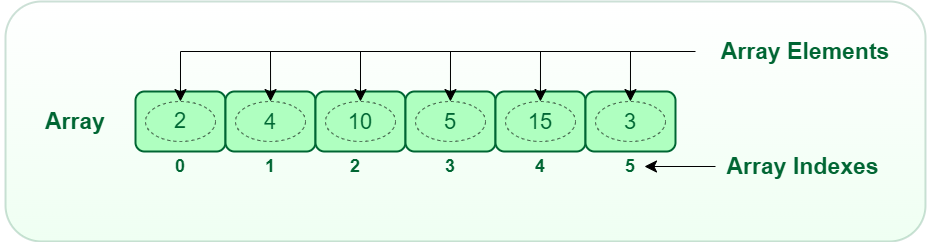
An array data structure allows you to store multiple elements of the same type in a single variable. It can store a collection of data elements, such as numbers or strings.
Each component of an array is identified by an index, which is a unique number indicating its position within the array. The indexing makes accessing, modifying, and managing the data easy for an array.
Types of an Array
One- Dimensional Array: Stores elements in a single row and are accessed using a single index number.
Two-Dimensional Array: This array consists of rows and columns resembling a matrix, and the values inside it are accessed using two indices.
Multi-Dimensional Array: It is an array of arrays with multiple indices and dimensions.
Linked Lists
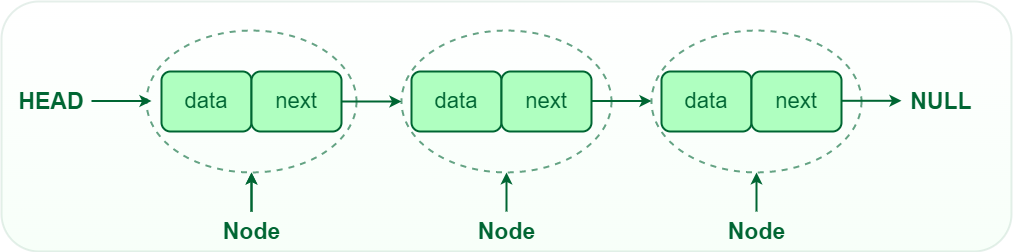
A linked list consists of elements, called nodes, stored in a sequence and connected using pointers. Each node contains two fields: one stores the data, and the other includes the address of the next node. The pointer of the last node is a null pointer, which indicates that there are no more nodes to follow, signifying the end of the list.
Types of Linked Lists
Singly Linked List: A linked list where you can move in only one direction. It consists of data and a pointer field referencing the next node.
Doubly Linked List: A doubly linked list consists of one data field and two pointer fields. One pointer field refers to a node before, and the other field refers to the node after. This list allows you to go in both directions, backward and forward.
Circular Linked List: Acircular linked list is similar to a singly linked list. The key difference is that, in a circular linked list, the pointer field of the last node consists of the address of the first made, creating a circular structure.
Stacks
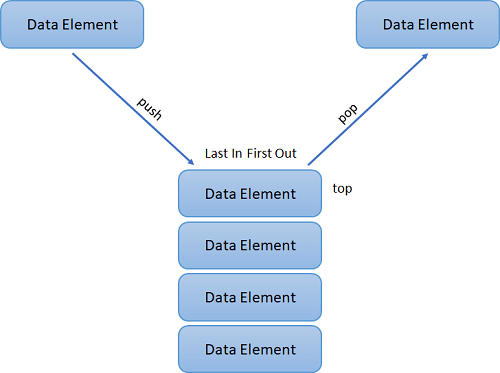
Stack is a data structure that manages the data elements using ‘Last in, First Out’ (LIFO) to manage the data elements. The LIFO method implies that the last element added will be the first to be removed.
Key Operations You Can Perform on a Stack
Push: It is the operation to add an element to the stack.
Pop: Pop is an operation that removes an element from the stack.
Queues
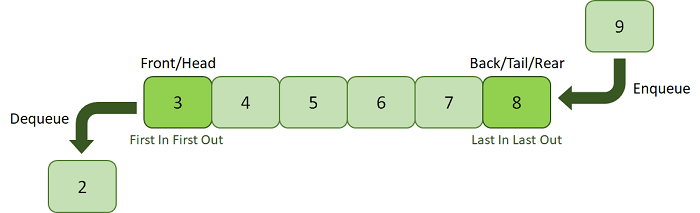
A queue is a data structure that follows the ‘First In, First Out’ (FIFO) principle. It implies that the first element added to the queue will be the first to be removed.
Key Operations You Can Perform On a Queue
Enqueue: Enqueue allows you to add an element to the rear (end of the queue from where you add an element) of the queue.
Dequeue: Dequeue allows you to remove an element from the front (end of the queue where the element is removed) of the queue.
Trees
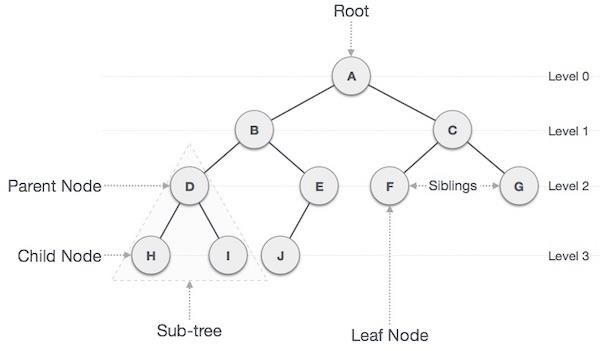
A tree is a nonlinear data structure that helps you organize data hierarchically. It consists of nodes connected by edges, with a single node called the root. A node can have child nodes, creating a parent-child relationship.
Types of Trees
Binary Tree: In this data structure, a parent node can have at most two children, a left node and a right node.
Binary Search Tree: A BST is a binary tree in which each node has a specific order of its elements. The value of each left child node is smaller than that of the parent node, and the value of each right node is larger than that of the parent node.
AVL Tree: An AVL tree is a special BST particular that automatically balances itself, maintaining a roughly even shape. Each node in the AVL tree has a balance factor; if the balance becomes uneven, the tree performs rotation to rebalance itself.
Graphs
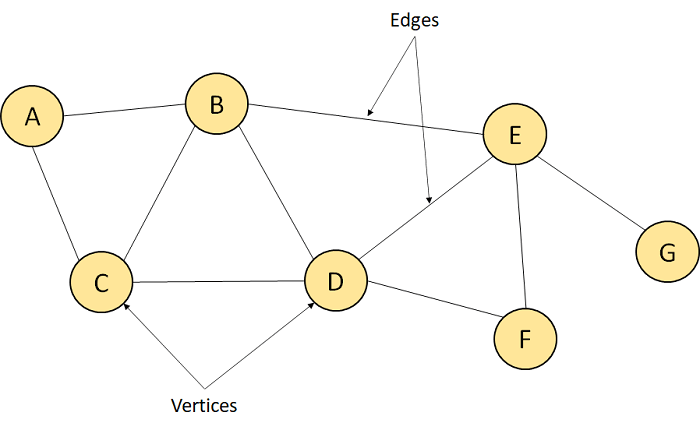
A graph is a nonlinear data structure consisting of vertices (nodes) and edges (connections between nodes). Graphs can represent various real-world systems, such as social and communication networks.
Depending on the structure and properties, graphs can be categorized into several types: directed, undirected, weighted, unweighted, null, trivial, simple, and more. Each type of graph serves a different purpose based on the nature of the connection and the data it represents.
Operations on Data Structures
Operations on data structures are fundamental actions performed to manipulate and manage the data stored within them. Let’s look at some operations that apply to the above data structures.
Insertion: Insertion is adding a new element to a data structure. For example, you can use an insert operation to add details of a new employee, such as name, ID, or position, to a linked list.
Deletion: It involves the removal of a data element from a data structure. For example, you can delete the record of an employee who just left the company.
Searching: You can search operations for a specific element within the data structure. This involves checking each element to locate a value, such as searching for a node in a binary search tree.
Sorting: Arranging elements in a specific order, such as ascending or descending, allows you to organize the data efficiently. For instance, sorting a list of contacts alphabetically by last name in a contact management app will enable you to find and access specific contacts quickly.
Merging: Merging is combining two data structures into one. This could involve merging two sorted arrays into a single sorted array or combining two linked lists. For instance, a company with separate online and in-store transaction databases can merge their datasets into a single comprehensive database.
Splitting: Splitting involves dividing a data structure into smaller parts, such as splitting a large array into multiple sub-arrays or partitioning a graph into separate components.
Updating involves modifying an existing element’s value in the data structure, such as updating an employee’s salary in an employee management system.
Applications and Use Cases of Data Structures
Data structures are essential for efficiently managing and processing data in various real-world applications. Here are some key uses of data structures:
Linked lists are useful for managing collections of items that don’t need to be ordered, such as playlists in a music app or collections of bookmarks in a web browser. This allows you to add or remove a data element without worrying about the order.
Queues are suited for collections needing first-in and first-out orders, like print queues, which ensure jobs are processed in the order they are received.
Graphs can be used to analyze connectivity and relationships. For example, you can utilize them for map routes in transportation networks by representing locations as vertices and routes as edges. It allows for the calculation of shortest paths and the optimization of travel routes.
Key Takeaways
Data structures are fundamental for structuring data to allow for efficient processing, storage, and retrieval. You can broadly classify data structure into two types: linear (array, linked lists, stacks, queues) and non-linear (trees, graphs) structures, each suited to different tasks. Data structures support various operations, including insertion, deletion, searching, sorting, merging, splitting, and updation. Understanding their properties and applications helps you make informed data management and programming decisions.
The Indian government has continuously invested in cutting-edge technologies to promote robotics and enhance industrial productivity. In 2021, the sales of industrial robots in India surged by 54% and reached a new record, with 4,945 units installed. As a result, the World Robotics Report, released by the International Federation of Robotics (IFR), ranked India 10th in annual robot installations in 2022.
In addition to industries, robots are used extensively in many other sectors, such as medicine, education, agriculture, and hospitality. Let us look at some of the top robots that are changing the picture of robotics in India in 2024.
Top Robots in India in 2024
Here is a list of top 10 robots in India in 2024:
1. IRIS
IRIS is India’s first AI-powered humanoid teacher robot. Developed by Makerlabs, it was first deployed at a school in Kerala in March 2024. The robot is created using generative AI technologies and delivers educational content from preschool to high school through an Android app.
IRIS has a 4-wheel chassis and 5 degrees of freedom, allowing it to move freely and demonstrate various learning activities. It uses visual aids, games, and quizzes to make learning more interactive. It also has a voice assistant that can comprehensively answer questions asked by students.
2. KARMI-Bot
KARMI-Bot is a robot built by Asimov, a Kerala-based robotics company. It is used extensively in the healthcare sector to protect healthcare workers from viral infections. The robot can navigate in isolation wards independently to deliver food and medical kits to infected patients. This minimizes direct interaction between medical staff and patients.
KARMI-Bot has a transportation speed of 1m/sec and can be monitored remotely through video streaming. It was used in some government hospitals in India during the COVID-19 outbreak. Asimov also developed a variant of the KARMI-Bot called KARMI-CLEAN to facilitate the disinfection of large areas using UV light.
3. Manav
Manav is India’s first 3D-printed humanoid robot, developed by A-SET Training and Research Institute, Delhi. It is a two-foot-tall humanoid designed primarily for research purposes. The outer body of Manav is designed using the 3D printing technique and is made up of acrylonitrile butadiene styrene (ABS).
Manav has two degrees of freedom in the head and neck to facilitate sideways and up-and-down movement. It supports WiFi and Bluetooth connectivity and uses binocular vision processing to gain an in-depth perspective. It can also walk, talk, and dance in response to human voice commands.
4. Athena
Athena is a surveillance robot developed by an Indian company named Kody Technolabs. It is highly vigilant and can be used for round-the-clock security of spaces such as shops, malls, or industries. The robot has powerful vision because its ultra-high-definition cameras enable it to see even in low-light conditions.
Athena has cognitive security capabilities allow it to differentiate threats from harmless instances by analyzing its surroundings. It has facial recognition technology and can identify suspects or offenders. It also has an instant alert mechanism with a two-way intercom system that helps prevent crime before it can be committed.
5. DRDO Daksh
Daksh is a remote-controlled robot created by the Defence Research and Development Organization (DRDO). It can safely track, handle, and destroy hazardous objects such as bombs. Daksh is fully automated and can navigate through staircases, steep slopes, and narrow corridors to reach the target object.
After reaching its target, it lifts the suspicious object and scans it using a portable X-ray device. If it is a bomb, Daksh defuses it with its water jet disrupter. It also has a shotgun that can break locked doors and scan explosives in vehicles. With such a high functionality, Daksh can be dubbed an anti-terror robot that can help our nation fight terrorism.
6. Mitra
Mitra is a humanoid robot created by Invento Robotics, a Bengaluru-based startup. It was launched in 2017 at the Global Entrepreneurship Summit. The robot became famous as it greeted Indian PM Narendra Modi and former US President Donald Trump at this summit. Mitra is five feet tall and was created with high-performance capacity within a year.
Since its appearance, Mitra has found applications in various areas, such as banks, movie theatres, malls, airports, and hospitals. After its success, Invento Robotics also launched upgraded versions, Mitra 2 and Mirta 3. These variants have more robust facial recognition features and can interact effectively with humans.
7. RADA
RADA is an AI-powered robot developed by Vistara Airlines, a joint venture of Tata Sons and Singapore Airlines, to assist airport passengers. It was first deployed at Delhi’s Indira Gandhi International Airport in 2018. RADA can scan boarding passes and provide passengers with information about the weather conditions of the destination city and real-time flight status.
RADA can rotate 360 degrees as it is built on a chassis of four wheels. It also has three built-in cameras that enable it to interact cognitively with the air passengers using its effective voice technology.
8. SSi Mantra
SSi Mantra is a robotic surgeon developed by SS Innovations. It was designed to make surgeries efficient and cost-effective. The first telesurgery performed by SSi Mantra was a robotic cholecystectomy conducted over a distance of five kilometers.
Since its launch, SSI Mantra has assisted surgeons in several surgeries and has become a popular healthcare robotic system in other countries. SSI Innovations recently unveiled SSI Mantra 3, an upgraded version of its predecessors. It has a 3D HD headset and 4K vision to enable surgeons to conduct and monitor surgeries efficiently from a distance.
9. IRA
IRA (Interactive Robotic Assistant) is a humanoid robot developed by Asimov Robotics. HDFC Bank first deployed it to assist bank staff in serving customers. The robot can greet customers and guide them to the relevant counters to perform their desired banking operations.
The bank later launched IRA 2.0, an upgraded version of IRA in collaboration with Invento Markerspaces and Senseforth Technologies. It can answer banking FAQs and has voice-based navigation capabilities to guide customers through various counters. It also recognizes customers using its facial recognition algorithm.
10. PuduBot
PuduBot is a robot developed by Pudu Robotics, a service robotics company. It is used for smart delivery services in the hospitality sector, makes intelligent voice announcements while marketing, and provides essential amenities to patients in the healthcare sector.
PuduBots can immensely improve the operational efficiency of any organization by taking care of goods and services that are delivered. This allows workers to direct their efforts on product development and marketing. They are durable bots as they can work 24 hours with just four hours of battery charging. Thus, PuduoBot is a highly reliable and durable solution that can enhance the operability of any industry.
11. BRABO
BRABO, a short name for ‘Brave Robot,’ is an articulated robot developed by Tata Group with MSMEs as the focus domain. It was designed by TAL, styled by TAL Elxsi, manufactured by Tata AutoComp, and financed by Tata Capital. BRABO was launched in 2017 and is the first ‘Made in India’ robot.
Articulated robots have rotary joints and can mimic human arm movements. Thus, BRABO can perform various industrial tasks, such as sorting with a vision system, press and machine tending, picking, packing, sealing, and welding. It is used extensively in electronics, logistics, food packaging, and the pharmaceutical industry.
12. Milagrow Robots
Milagrow Humantech, a robotics company in India, manufactures Milagrow Robots at affordable prices. It provides a wide range of products, namely Milagrow iMap, Window Seagull, and RoboTiger, for various domestic purposes, such as floor cleaning, lawn mowing, and pool cleaning.
Milagrow also manufactures educational robots that enhance students’ learning experiences by helping them learn STEM concepts and cognitive skills. Its body massaging robots facilitate health care.
Future of Robotics in India
With the emergence of artificial intelligence, the Indian robotics industry is expected to be dominated by AI-powered robots in 2024. Generative AI, a subset of AI, is used globally to program robots. It will help developers focus more on research and development instead of investing much time in coding.
Predictive AI helps analyze robot performance trajectory, saving time and resources required for infrastructure maintenance. In the coming time, you will also see increased human-robot collaboration through cobots that assist humans in performing repetitive or hazardous tasks in industries.
Mobile manipulator, or MoMa, is a combination of mobile elements of robotic systems such as wheels and robotic arms as manipulators. It excels in operations and infrastructure maintenance in heavy industries.
Another significant trend that will see growth is the assimilation of humanoid robots into daily life. According to research by Goldman Sachs, the humanoid robot market may increase to $38 million by 2035. They have cited rapid enhancement in AI and the affordability of robotic components as the main reasons behind this positive trend.
Way Forward
India’s robotic landscape is growing rapidly across various sectors, reflecting the country’s increasing aptitude for innovation. The twelve robots featured in this article highlight the numerous ways in which robots can be integrated into our lives.
From defense to medicine to education, robots are becoming drivers of human and industrial development in India. With continuous AI and machine learning advancements, India will incorporate even more sophisticated robotic systems in different facets of life and industry.
OpenAI partners with the U.S. AI Safety Institute to provide early access to its next-generation AI model. This collaboration aims to address safety risks with AI by prioritizing responsible practices in AI development.
OpenAI has taken a significant step to improve AI safety by providing the U.S. AI Safety Institute early access to its next AI model. OpenAI CEO Sam Altman recently announced on X that the organization will work with the government’s executive body for better safety evaluation.
In May, OpenAI faced criticisms over its internal security system protocols. The organization dissolved its safety team, which made headlines because lawmakers raised concerns about it.
Reports said that the company prioritized launching new features over safety. These incidents led to the resignations of important OpenAI employees Jan Leike and Ilya Sutskever.
In response to all these criticisms and allegations, OpenAI said it would remove the clauses from the company’s guidelines that forbade employees from speaking. The company also plans to set up a security commission.
The company had previously committed to dedicating 20% of its funds to security, but it has not been fulfilled. Sam Altman has pledged to complete this commitment and stated that restrictive terms were removed for all new and old employees.
OpenAI increased its budget spending on government policies and legislatures compared to the previous year. The previous whole year’s budget was $260,000. In 2024, the half-year budget was $800,000.
The news of the partnership came when the new proposed bill, “The Future of Innovation Act,” was passed. This bill makes the U.S. AI Security Institute responsible for making rules and regulations for the safety of AI. The executive body under the Commerce Department will now work with OpenAI to improve AI security in the future.
This collaboration marks a significant step in addressing AI safety concerns. It highlights the commitment of both OpenAI and the U.S. AI Safety Institute to promote responsible AI development presently and also in the future.