

NVIDIA launched something quietly significant yesterday. Not a new GPU. Not a faster chip. A family of open-source AI models called Ising, named after a foundational physics model, designed to solve the two problems that are actually preventing quantum computing from being useful: calibration and error correction.
The announcement landed on World Quantum Day, April 14, 2026. The timing was deliberate. The strategy underneath it is even more deliberate.
What Ising Actually Does
Quantum processors are unstable by nature. Qubits decohere. Noise creeps in. Before you can run any useful computation, the hardware has to be tuned, and that tuning process has historically taken days of manual effort. Then, during any computation, errors accumulate and have to be caught and corrected in real time or the output is garbage.
NVIDIA Ising attacks both problems. Ising Calibration is a vision language model that reads measurements from quantum processors and automates continuous tuning, cutting calibration time from days to hours. Ising Decoding is a 3D convolutional neural network, available in two variants, one optimized for speed, one for accuracy, that performs real-time quantum error correction.
Both models are open-source, available on GitHub, Hugging Face, and build.nvidia.com. They integrate with NVIDIA’s existing quantum software stack: CUDA-Q and NVQLink, NVIDIA’s QPU-GPU hardware interconnect.
Who’s Already Using It
This isn’t vaporware with a press release. Ising Calibration has been picked up by Atom Computing, IonQ, Infleqtion, and Lawrence Berkeley National Laboratory’s Advanced Quantum Testbed. Ising Decoding is running at the University of Chicago, Sandia National Laboratories, SEEQC, and IQM Quantum Computers. That adoption list reads like a who’s-who of serious quantum hardware research — not startups chasing hype.
Also Read: The Stanford AI Index 2026 Is Out
The Real Play Here
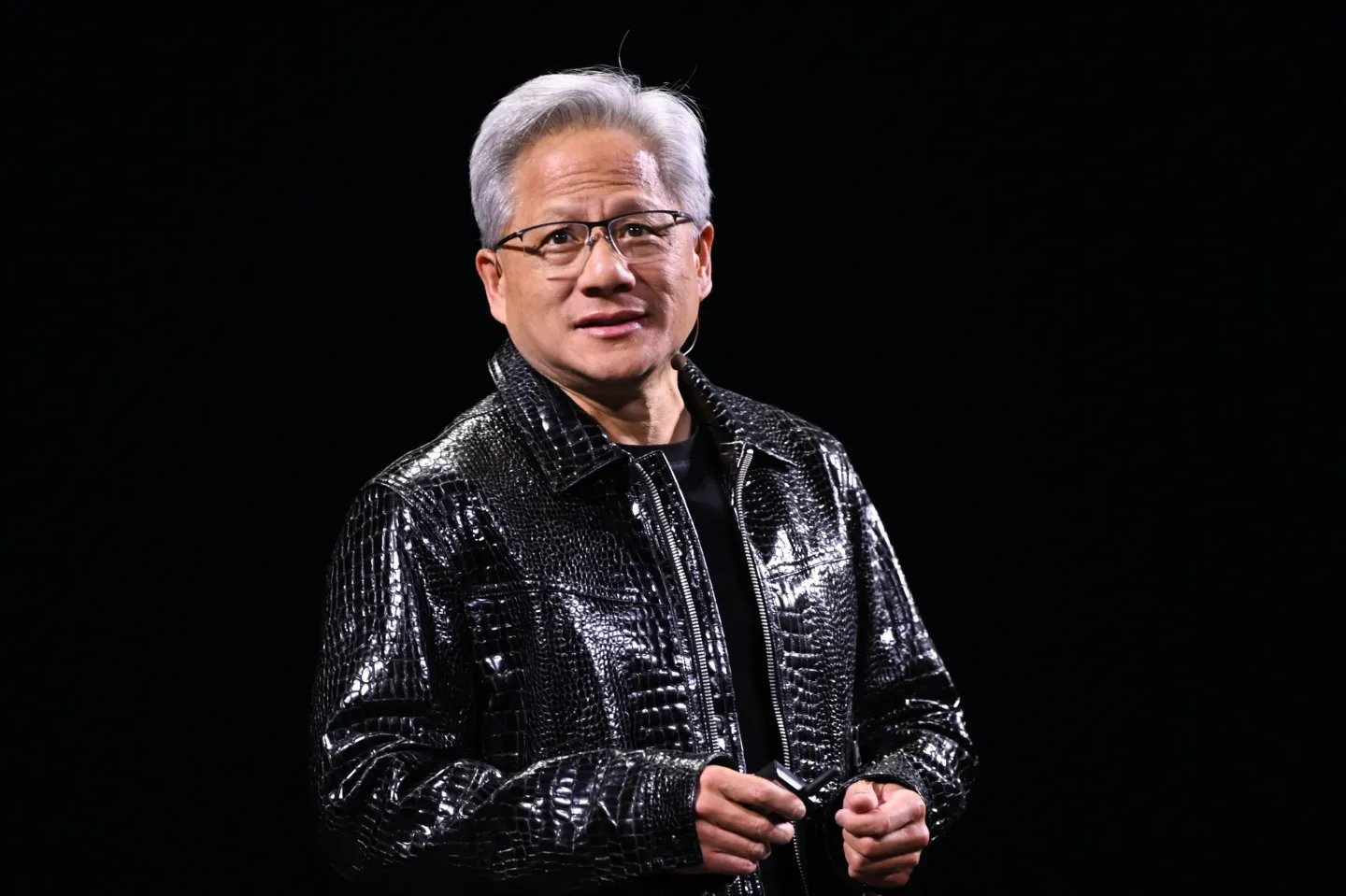
Jensen Huang’s quote from the announcement is the clearest signal of what NVIDIA is actually doing: “With Ising, AI becomes the control plane — the operating system of quantum machines.”
That’s not a technical description. That’s a positioning statement.
NVIDIA is not making a bet that quantum computing will replace classical computing or displace GPUs. It is making a very different bet: that quantum computers, when they eventually become useful, will require AI to function — and that AI will run on NVIDIA hardware.
It’s the same logic NVIDIA used to lock in the AI training market before most companies knew they needed GPUs. Get into the infrastructure layer early, make it open source so adoption has no friction, and become the default. Dynamo did this for inference. Ising is doing it for quantum.
Ising joins a growing portfolio of NVIDIA open model families: Nemotron for agentic AI, Cosmos for physical AI, Isaac for robotics, Clara for biomedical, Apollo for physics, Alpamayo for autonomous vehicles. Each one extends NVIDIA’s surface area into a vertical that will eventually need serious compute. Quantum is just the latest frontier.
What This Means for the Industry
The quantum computing market is projected to surpass $11 billion by 2030. Right now, the dominant narrative in that space is about hardware — who builds the best qubits, which modality wins (superconducting, trapped ion, photonic). NVIDIA is reframing that narrative. Hardware without a reliable control layer is a science experiment. Ising is the argument that AI is that control layer, and NVIDIA owns it.
For quantum hardware companies, this is a double-edged development. NVIDIA is solving real problems they’ve been stuck on for years. But the solution comes with a dependency: the better Ising gets, the more deeply quantum processors are tied to NVIDIA’s software and hardware stack.
That’s not a conspiracy. It’s a business model. And it has worked every time NVIDIA has run it.
